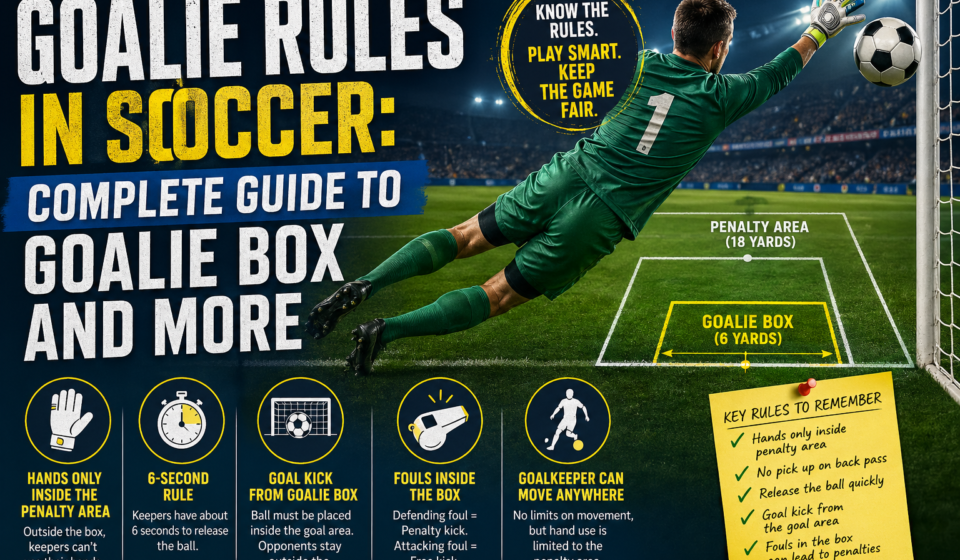

Discover how rules for soccer goalies are evolving in 2026, including goalkeeper diving techniques, safety updates, and modern game strategies.
Football continues to evolve at every level, and goalkeeping has become one of the most strategically demanding positions in the sport. From advanced tactical systems to updated officiating standards, the expectations placed on modern goalkeepers are significantly higher than they were a decade ago. Understanding the latest rules for soccer goalies is now essential for players, coaches, and academies aiming to compete effectively in 2026.
Professional clubs and youth training programs are placing greater emphasis on goalkeeper intelligence, ball distribution, positioning, and reaction speed. As the game becomes faster and more technical, governing bodies have refined several regulations to improve fairness, player safety, and match consistency.
For brands such as Elp Goalkeeping, these developments create new opportunities to educate young athletes and improve specialized goalkeeper training methods.
The Growing Importance of Goalkeeper-Specific Regulations
Goalkeepers are no longer limited to traditional shot-stopping responsibilities. In modern football systems, they often act as an additional defender during build-up play. This tactical shift has increased the importance of understanding goalkeeper-specific laws.
One major development in recent years has been the stricter enforcement of time-wasting rules. Referees are monitoring possession delays more carefully, especially during high-level competitions. Goalkeepers are expected to release the ball efficiently while maintaining tactical awareness.
At the same time, handball interpretations around the penalty area have become more precise. Officials now rely heavily on video technology and advanced positioning reviews, which means even small decision-making errors can affect match outcomes.
According to multiple international football development reports released in 2025, goalkeeper involvement in ball circulation increased by nearly 35% compared to previous seasons. This statistic highlights how the position has transformed into a crucial tactical component rather than a purely defensive role.
How Training Methods Have Changed in 2026
Modern goalkeeper coaching focuses on complete athletic development instead of isolated drills. Reaction training, distribution accuracy, and movement efficiency are now prioritized alongside traditional catching techniques.
The evolution of goalkeeper diving training has also played a major role in reducing injuries. Coaches are teaching controlled landing mechanics and body positioning to protect shoulders, hips, and wrists during high-impact saves.
In elite academies, goalkeepers are increasingly trained using match-simulation environments that replicate real-game pressure. These sessions often include:
- Quick transition scenarios
- One-on-one reaction drills
- High-speed crossing situations
- Ball distribution under pressure
Rather than emphasizing repetitive physical exercises alone, modern coaching methods encourage decision-making and situational awareness.
This shift has improved goalkeeper consistency across professional and youth levels alike.
Why Safety Standards Are Receiving More Attention
Player safety has become a central focus across global football organizations. Goalkeepers face unique physical challenges because they frequently dive, collide with opponents, and absorb high-impact contact during matches.
Recent updates to officiating guidelines now provide stronger protection against dangerous aerial challenges. Referees are instructed to penalize reckless contact involving goalkeepers more aggressively than before.
Protective equipment standards have also improved. Many modern goalkeeper gloves now include advanced finger support technology and impact-absorption materials designed for long-term injury prevention.
Sports science experts have noted that specialized recovery programs are helping reduce muscular strain caused by repetitive diving movements. This development is especially important for youth players who train multiple times per week.
As football becomes more physically intense, structured goalkeeper conditioning is expected to remain a major priority throughout 2026 and beyond.
Tactical Intelligence Is Now Essential
The modern goalkeeper must think several steps ahead during every phase of play. Coaches increasingly expect keepers to organize defensive lines, anticipate attacking movements, and contribute to possession-based systems.
Because of this tactical evolution, understanding positioning has become just as important as reflex ability.
Goalkeepers who communicate effectively often reduce defensive errors before they happen. This leadership role is one reason why professional clubs now invest heavily in specialized goalkeeper coaching departments.
Data analytics also influence modern training. Many clubs use video analysis software to study save percentages, positioning efficiency, and passing accuracy. These insights allow coaches to refine goalkeeper performance with greater precision.
For young players, adapting to these expectations early can significantly improve long-term development opportunities.
The Role of Technology in Goalkeeper Development
Technology has reshaped nearly every aspect of football training, and goalkeeping is no exception.
Wearable performance trackers are now commonly used to monitor movement intensity, jump frequency, and reaction timing during sessions. Coaches can identify fatigue levels and adjust workloads to prevent injuries.
Virtual training systems have also gained popularity in elite academies. These systems simulate attacking scenarios that help goalkeepers improve reaction speed and visual processing.
Video-assisted analysis continues to influence officiating as well. Goalkeepers must remain disciplined because positioning errors and fouls are reviewed more accurately than ever before.
This increased scrutiny has encouraged more technically refined goalkeeping across all competitive levels.
Mental Preparation Is Becoming a Competitive Advantage
Modern football places enormous psychological pressure on goalkeepers. One mistake can change the outcome of an entire match, particularly in knockout competitions.
As a result, mental resilience training has become a standard part of professional goalkeeper development programs.
Sports psychologists frequently work with players to improve concentration, confidence, and emotional control during high-pressure situations. Visualization techniques and match simulation exercises are also widely used to prepare athletes mentally.
Goalkeepers who maintain composure under pressure often demonstrate stronger long-term consistency than those relying purely on athletic ability.
This mental aspect of performance is expected to become even more important as football continues evolving in 2026.
Conclusion
The goalkeeper position has undergone a remarkable transformation in modern football. Updated regulations, tactical evolution, safety improvements, and technological innovation have collectively changed how the role is performed at every level of the game.
Understanding modern rules for soccer goalies is now essential for athletes seeking long-term success in competitive football. From improved officiating standards to advanced training systems, the position demands intelligence, adaptability, and technical precision.
As organizations continue refining player development methods, goalkeepers who embrace these modern expectations will remain better prepared for the future of the sport.
FAQs
What are the most important rules for soccer goalies in 2026?
Modern goalkeeper regulations focus heavily on possession timing, player safety, and fair contact inside the penalty area. Officials are enforcing these rules more consistently with the help of video review systems.
Why is goalkeeper diving technique important today?
Proper diving mechanics help reduce injuries while improving reaction efficiency. Modern training programs emphasize controlled movement and safe landing techniques during competitive play.
How has technology improved goalkeeper performance?
Advanced tracking systems, video analysis tools, and virtual simulations allow coaches to analyze positioning, reaction speed, and overall decision-making with greater accuracy.
Why are goalkeepers more involved in attacking play now?
Modern tactical systems require goalkeepers to assist with ball distribution and defensive build-up. Their ability to play with their feet has become an essential part of competitive football strategy.