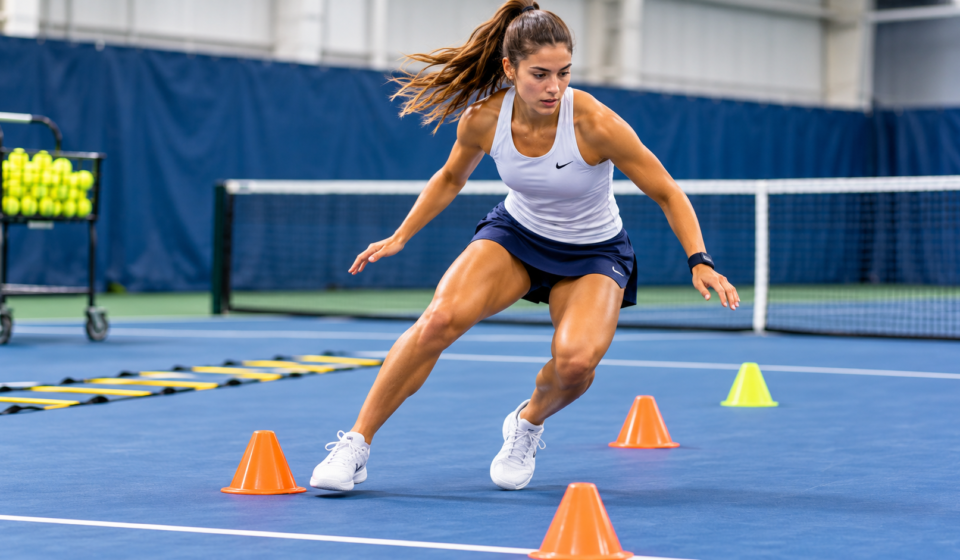

Tennis requires more than powerful serves and accurate groundstrokes. Players need stamina, speed, balance, coordination, and the ability to stay focused throughout long rallies. Whether you are a beginner learning the fundamentals or an experienced player preparing for competitive matches, physical conditioning plays an important role in improving your performance.
One effective way to develop these qualities is through rally-based training. Unlike traditional fitness exercises that focus on individual movements, rally drills combine physical activity with real tennis skills. They encourage players to move continuously, react quickly, and maintain consistency while hitting the ball.
Incorporating tennis rally drills into regular practice can make workouts more enjoyable while supporting endurance, movement, and overall athletic development. Let’s explore why these drills are valuable for players of different skill levels.
1. Build Cardiovascular Endurance Through Continuous Movement
Cardiovascular endurance is essential for tennis players because matches involve repeated bursts of movement followed by short recovery periods. Players must run, change direction, recover toward the center of the court, and prepare for the next shot.
Rally-based exercises naturally recreate these physical demands. During a cooperative rally, players move around the court while maintaining consistent exchanges. As the rally continues, their heart rate increases, helping develop aerobic fitness and stamina.
Regular rally practice supports improving cardiovascular fitness without making every training session feel like a traditional running workout.
For example, players can begin with three-minute cooperative rallies followed by one-minute recovery periods. As their endurance improves, they can gradually increase rally duration or reduce rest time.
This approach helps players become more comfortable staying active for extended periods, making it easier to maintain energy during longer matches.
2. Improve Footwork, Speed, and Court Coverage
Good tennis conditioning is not simply about running longer distances. Players must also move efficiently in different directions and reach the ball without losing balance.
Rally-based drills help develop these abilities because every shot creates a new movement challenge. Players may need to move sideways, step forward, retreat behind the baseline, or recover quickly after hitting the ball.
These movements improve footwork patterns and encourage better court awareness.
A useful exercise is the cross-court rally drill. Two players exchange forehands diagonally while trying to maintain consistent depth and placement. They must adjust their positioning after every shot rather than standing in one place.
Another option is the two-corner movement drill, where players alternate between hitting balls directed toward different sides of the court.
These exercises help develop:
- Faster directional changes.
- Better balance during groundstrokes.
- More efficient recovery movements.
- Improved reaction time.
- Greater court coverage.
Practicing these movements regularly can help players reach more balls while using their energy efficiently.
3. Develop Consistency While Maintaining Physical Fitness
Consistency is one of the most important skills in tennis. Players who can keep the ball in play, control their shots, and avoid unnecessary mistakes often perform better under match pressure.
Rally-based training combines technical improvement with physical conditioning. Instead of focusing only on hitting powerful shots, players work on maintaining control while their bodies are moving.
For example, players can complete a cooperative rally challenge in which the goal is to reach 20, 30, or 40 consecutive shots without making an error.
As players become more comfortable, they can introduce additional challenges, such as hitting cross-court shots, alternating between forehands and backhands, or targeting specific areas of the court.
This type of tennis conditioning practice develops concentration and physical endurance simultaneously.
It also teaches players an important lesson: good tennis is not always about hitting harder. Maintaining control, choosing the right shot, and staying balanced can make a significant difference.
4. Make Training More Match-Like and Engaging
Traditional conditioning exercises, such as running laps or performing repetitive fitness movements, can improve physical fitness. However, they do not always recreate the decisions and movement patterns involved in actual tennis matches.
Rally drills offer a more realistic training experience because players must respond to changing ball direction, speed, height, and placement.
For example, a coach can organize a rally drill where one player hits consistently while the other moves between different court positions. Another variation involves changing the direction of the rally after every three shots.
These activities challenge players physically and mentally.
They also make practice more enjoyable because players have a clear objective rather than simply repeating exercises.
For junior players, this approach can be especially useful. Fun rally challenges encourage participation, develop confidence, and introduce important fitness concepts without making training feel overly demanding.
Adult beginners can also benefit because they develop physical fitness while improving their ability to control the ball.
5. Create an Effective Rally-Based Conditioning Routine
The benefits of rally training become more noticeable when exercises are organized into a consistent routine. Players should select drills that match their current fitness level and gradually increase their intensity.
Here is a simple routine that can be adapted for different abilities:
Sample 25-Minute Tennis Rally Workout
Warm-up rally
5 minutes
Begin with gentle groundstroke exchanges, focusing on control and comfortable movement.
Cross-court rally
5 minutes
Maintain diagonal rallies while recovering toward the correct court position after each shot.
Movement rally
5 minutes
Alternate between wider shots to encourage lateral movement and quicker recovery.
Consistency challenge
5 minutes
Work with a partner to achieve a target number of consecutive shots without errors.
Cool-down
5 minutes
Finish with light movement, walking, and gentle stretching.
Players should adjust the intensity and duration according to their experience and fitness levels. Beginners can use shorter rallies and longer recovery periods, while advanced players can introduce faster exchanges and more demanding movement patterns.
The goal is to maintain good technique rather than sacrifice shot quality for speed.
6. Support Long-Term Athletic Development
One of the biggest advantages of rally-based conditioning is that it develops several important tennis abilities together. Players improve endurance, coordination, movement, concentration, and shot consistency through exercises that closely resemble the demands of the sport.
Over time, regular practice can help players feel more comfortable during extended rallies and recover more effectively between points.
These benefits are valuable for junior athletes developing their foundational skills, adults returning to tennis, and competitive players looking to improve their match performance.
Coaches can also use rally-based exercises to identify areas that need additional attention. A player who struggles to maintain a rally may need to work on footwork, shot preparation, balance, or stamina.
Combining rally drills with strength training, mobility exercises, and appropriate recovery creates a more complete conditioning program.
At WNY Tennis, players can make their training more productive by focusing on skill development and physical fitness together. Consistent court time, structured coaching, and purposeful practice can help players build confidence and enjoy the game at every level.
Conclusion
Rally-based drills are an effective way to make tennis conditioning more practical, engaging, and skill-focused. They help players develop cardiovascular endurance, improve footwork, maintain shot consistency, and prepare for the physical demands of real matches.
Whether you are just starting your tennis journey or working toward a higher competitive level, adding structured rally exercises to your routine can make a meaningful difference.
The key is to practice consistently, focus on movement quality, and gradually challenge yourself. With the right approach, every rally becomes an opportunity to improve both your tennis skills and overall fitness.