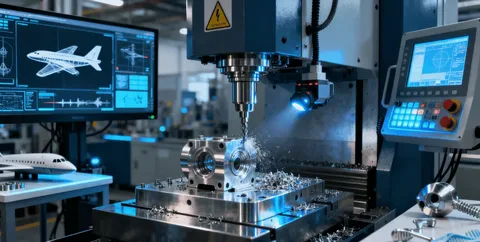

In today’s highly competitive manufacturing landscape, industrial companies are constantly looking for ways to improve efficiency, reduce costs, and maintain precision. One of the most effective strategies is CNC machining outsourcing, which allows businesses to delegate complex machining tasks to specialized external providers while focusing on core operations. This approach has become a key driver of productivity and scalability across multiple industries.
This guide explores everything industrial companies need to know about CNC machining outsourcing, including its benefits, selection process, applications, and best practices to ensure success.
Understanding CNC Machining Outsourcing
CNC machining outsourcing refers to the practice of hiring external manufacturers or service providers to produce precision parts using Computer Numerical Control (CNC) machines. Instead of investing heavily in in-house equipment and skilled operators, companies rely on third-party experts to handle production requirements with advanced machinery and technical expertise.
This model has gained popularity due to increasing demand for high-precision components and faster production cycles. Outsourcing enables companies to stay competitive without the burden of maintaining expensive machining infrastructure.
Key points:
- Involves third-party manufacturing of precision CNC components
- Reduces need for in-house machining equipment and staff
- Provides access to advanced manufacturing technologies
- Helps companies scale production quickly and efficiently
- Common in automotive, aerospace, and industrial engineering sectors
Beyond cost savings, CNC machining outsourcing also ensures consistent quality and improved production flexibility, especially for companies dealing with complex or custom parts.
Major Benefits of CNC Machining Outsourcing
One of the primary advantages of CNC machining outsourcing is cost efficiency. Industrial companies can significantly reduce capital investment by avoiding the purchase of expensive CNC machines, maintenance costs, and operator training. Instead, they only pay for the services they need.
Another major benefit is access to specialized expertise and advanced technology. Outsourcing partners often operate state-of-the-art facilities with highly trained engineers, ensuring higher precision and faster turnaround times compared to in-house production.
Key points:
- Lower operational and equipment costs
- Access to advanced CNC technologies and software
- Improved product quality and precision
- Faster production and reduced lead times
- Scalable production capacity based on demand
Additionally, outsourcing allows companies to focus on core business activities such as design, innovation, and marketing, while manufacturing experts handle production with efficiency and accuracy.
How to Choose the Right CNC Machining Partner
Selecting the right partner for CNC machining outsourcing is critical for ensuring product quality and timely delivery. Companies should evaluate potential providers based on their technical capabilities, experience, certifications, and production capacity.
It is also important to assess communication efficiency and quality control processes. A reliable outsourcing partner should offer transparency in production updates and maintain strict quality assurance standards throughout the manufacturing process.
Key points:
- Check industry experience and technical expertise
- Evaluate machine capabilities and production capacity
- Review certifications (ISO, quality standards, etc.)
- Assess communication and customer support systems
- Analyze quality control and inspection procedures
Industrial companies should also request sample parts or prototypes before committing to long-term contracts. This helps ensure the provider can meet required specifications and tolerances.
Industries That Rely on CNC Machining Outsourcing
CNC machining outsourcing plays a vital role in several industries that demand high precision and consistency. The automotive industry, for example, uses outsourced CNC machining for engine components, transmission parts, and custom fittings.
Similarly, the aerospace sector depends heavily on CNC machining outsourcing for producing lightweight yet highly durable parts that meet strict safety and performance standards. Medical device manufacturers also rely on this process for creating precise surgical instruments and implants.
Key points:
- Automotive industry: engine and transmission components
- Aerospace industry: high-precision structural parts
- Medical sector: surgical tools and implants
- Electronics industry: housings and micro components
- Industrial machinery: gears, shafts, and mechanical parts
In addition, heavy machinery and energy sectors also benefit from outsourcing CNC machining to meet large-scale production demands without compromising accuracy or durability.
Challenges and Best Practices in CNC Machining Outsourcing
While CNC machining outsourcing offers many benefits, it also comes with challenges such as communication gaps, quality inconsistencies, and dependency on external suppliers. These risks can impact production timelines and product reliability if not managed properly.
To overcome these challenges, companies should implement strong vendor management strategies and maintain regular communication with their outsourcing partners. Clear documentation and precise design specifications are essential to avoid errors.
Key points:
- Potential communication and coordination issues
- Risk of inconsistent product quality
- Dependency on external suppliers
- Possible delays in production timelines
- Need for strict quality control measures
Best practices include establishing long-term partnerships with trusted suppliers, using digital collaboration tools, and conducting regular audits. These steps help ensure that CNC machining outsourcing remains efficient, reliable, and cost-effective.
Conclusion
CNC machining outsourcing has become an essential strategy for modern industrial companies aiming to improve efficiency, reduce costs, and access advanced manufacturing capabilities. By leveraging external expertise, businesses can focus on innovation and core operations while ensuring high-quality production standards.
As global manufacturing continues to evolve, companies that strategically adopt CNC machining outsourcing will be better positioned to scale, compete, and succeed in increasingly demanding markets.