
Pasta machine
Product wastage has become a growing concern inside industrial food manufacturing facilities where rising raw material costs, energy expenses, and commercial competition are increasing pressure on operational efficiency.
For pasta manufacturers, wastage does not only affect production economics. It also impacts workflow continuity, packaging efficiency, storage planning, and overall manufacturing stability.
Industry specialists explain that many processors previously treated wastage as an unavoidable part of large-scale production. That attitude is changing rapidly.
Modern food manufacturers are now examining how production inconsistency develops throughout the manufacturing cycle and how synchronized operational systems can reduce avoidable losses before they become larger commercial problems.
This shift is influencing how processors evaluate pasta machines across industrial food processing environments.
Manufacturers are increasingly prioritizing operational precision, stable processing conditions, and coordinated workflow management designed to reduce material loss during continuous production schedules.
Most Manufacturing Losses Develop Gradually
Inside many production facilities, wastage rarely originates from a single operational failure.
Instead, losses often develop slowly across multiple manufacturing stages.
Minor hydration imbalance during dough preparation may create unstable extrusion pressure. Inconsistent extrusion may later influence thermal drying behavior. Uneven drying can increase product breakage during cooling, handling, or packaging operations.
Industry engineers explain that when production stages operate independently, small operational irregularities become more difficult to control before they spread across the manufacturing cycle.
This is one reason synchronized pasta production line systems are becoming increasingly important inside large-scale food processing facilities.
Integrated manufacturing environments allow processors to maintain greater operational coordination between ingredient preparation, extrusion, drying, cooling, and packaging systems.
This coordinated approach helps reduce production instability that may eventually increase wastage.
Ingredient Control Is Becoming More Technically Important
Raw material consistency now plays a larger operational role than many manufacturers previously recognized.
Inside industrial production environments, even small inconsistency in dough hydration can affect downstream processing conditions significantly.
Excess moisture may weaken structural integrity during shaping and drying. Insufficient hydration may create rough texture, shaping irregularity, or unstable product density.
Because of these risks, modern pasta machine systems increasingly incorporate controlled ingredient preparation technologies designed to maintain stable dough consistency during long manufacturing schedules.
Manufacturers producing multiple pasta varieties also require more accurate recipe transitions between production cycles to reduce unnecessary material loss during operational adjustments.
Large processors are therefore placing greater emphasis on preparation precision as part of broader manufacturing efficiency planning.
Extrusion Stability Helps Reduce Product Rejection
The pasta extrusion machine plays a major role in controlling product uniformity throughout industrial manufacturing operations.
Pressure instability during shaping may create inconsistent dimensions, surface defects, internal air pockets, or structural weakness that later affects drying and packaging performance.
Products with irregular density often experience higher breakage rates during downstream handling operations.
Industry specialists explain that product rejection frequently increases when extrusion systems cannot maintain stable operational pressure during long production schedules.
Modern pasta machines increasingly integrate precision-controlled extrusion environments designed to improve shaping consistency throughout continuous manufacturing.
This operational stability helps processors reduce structural irregularities while improving product durability across later processing stages.
Manufacturers supplying organized retail and export markets especially prioritize extrusion precision because visual consistency directly affects commercial acceptance.
Drying Instability Is a Major Source of Wastage
Drying operations continue to represent one of the largest technical challenges inside industrial pasta manufacturing.
An unstable pasta drying system may create uneven moisture distribution, brittleness, cracking, or texture inconsistency across production batches.
Industry engineers explain that rapid thermal exposure frequently weakens product structure while poor airflow coordination may create inconsistent moisture reduction inside drying chambers.
Products leaving drying systems with unstable internal moisture balance often experience increased breakage during cooling, packaging, storage, or transportation.
To address these operational risks, modern industrial pasta dryer systems increasingly rely on staged temperature regulation, airflow balancing, and humidity management technologies.
Manufacturers are recognizing that stable drying behavior directly influences both product quality and material efficiency.
Reducing wastage during thermal processing is becoming a major operational priority across industrial food manufacturing facilities.
Packaging Damage Creates Hidden Production Losses
Packaging operations are now receiving greater operational attention because many manufacturers previously underestimated how much wastage develops during final handling stages.
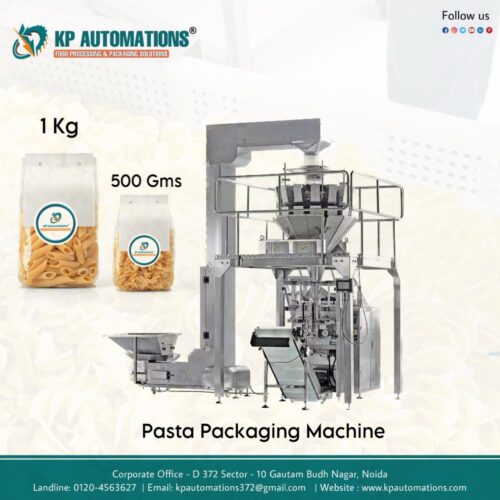
The pasta packing machine must maintain synchronized throughput with upstream production systems while minimizing breakage during transfer, filling, and sealing operations.
Industry specialists explain that packaging inefficiency often creates hidden product losses that accumulate significantly over long manufacturing schedules.
Cooling coordination also remains important because unstable product temperature before sealing may affect package integrity and shelf stability.
Products weakened during earlier production stages are especially vulnerable during packaging transfer operations.
Manufacturers are therefore increasingly integrating packaging coordination into broader operational planning instead of treating packaging as a separate finishing activity.
Continuous Manufacturing Requires Better Operational Balance
Factories moving toward continuous industrial production face greater pressure to maintain stable workflow conditions throughout extended manufacturing schedules.
Unlike smaller batch-oriented operations, continuous manufacturing environments are more sensitive to operational imbalance because disruptions in one section quickly affect the entire production line.
Modern pasta machines are therefore increasingly engineered around synchronized operational control designed to maintain stable throughput during long industrial runs.
Industry specialists explain that reducing wastage now depends heavily on maintaining production continuity rather than simply increasing processing speed.
Factories able to stabilize workflow coordination often experience lower product rejection rates and more predictable manufacturing performance.
This operational philosophy is influencing equipment investment decisions across multiple food processing sectors.
Mid-Sized Manufacturers Are Focusing More on Efficiency
Mid-sized food processors entering organized retail and regional export markets are becoming more focused on manufacturing efficiency than before.
Many of these companies operate under tighter operational margins where uncontrolled wastage can significantly affect profitability.
Industrial pasta making machine systems are increasingly selected according to operational reliability, maintenance accessibility, and production consistency rather than production volume alone.
Semi-automatic pasta making machine systems continue supporting flexible regional manufacturing environments, while larger facilities increasingly adopt automatic pasta-making machine technologies designed for synchronized continuous production.
Manufacturers researching pasta making machine price are also evaluating long-term material efficiency, downtime reduction, energy optimization, and product stability instead of acquisition cost alone.
For industrial production consultations related to synchronized pasta manufacturing systems, KP Automations can be contacted through +91 9310738142 or kpautomations372@gmail.com.
Automation Is Improving Production Monitoring
Modern manufacturing facilities are increasingly using digital monitoring technologies to reduce operational instability throughout the production cycle.
Factories can now monitor extrusion pressure, airflow conditions, moisture consistency, thermal behavior, and packaging synchronization during continuous industrial schedules.
Predictive maintenance systems are also helping processors identify operational irregularities before larger production disruptions occur.
Industry experts expect future pasta production line systems to become increasingly data-driven as manufacturers prioritize operational visibility and material efficiency.
Factories capable of maintaining stable production coordination are expected to reduce manufacturing losses more effectively over time.
Conclusion
Industrial pasta manufacturing is steadily shifting toward operational models where material efficiency, workflow stability, and synchronized production coordination directly influence long-term profitability.
Manufacturers are increasingly investing in pasta machines designed to maintain controlled extrusion conditions, stable thermal processing, coordinated packaging operations, and predictable manufacturing continuity.
From ingredient preparation and shaping precision to drying balance and packaging synchronization, every operational stage now contributes directly to reducing industrial production wastage.
Modern food manufacturing success increasingly depends on the ability to maintain stable production performance while minimizing avoidable material loss across the entire manufacturing cycle.
Suggested Industrial Images
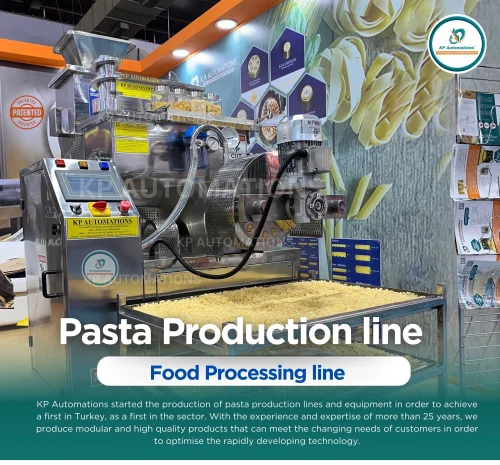
Automated pasta production line operating with synchronized processing systems
Industrial drying chamber designed for controlled moisture reduction
Integrated packaging section minimizing product breakage during handling