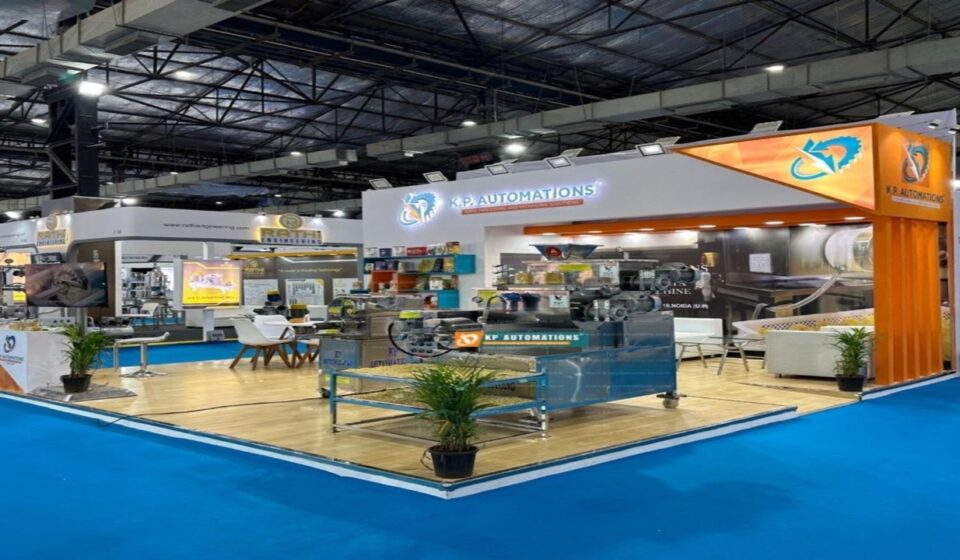
KP Automations Pasta Machines: Why Moisture Control Defines the Success of Industrial Pasta Production

It’s Not Just About Drying — It Starts Much Earlier
When people talk about industrial pasta machines, they usually focus on mixing speed, extrusion pressure, or production capacity.
That’s important, no doubt.
But honestly, if you ask me, moisture control is one of the biggest factors behind whether the final product turns out consistent or problematic.
And the interesting part is — it doesn’t start at the drying stage.
It begins right from the first batch of dough.
If moisture is not controlled properly, every stage after that starts working harder.
Why Moisture Matters in the Mixing Stage
Let’s start from the beginning.
The first place moisture makes an impact is during dough preparation.
Too much water, and the dough becomes overly soft. Too little, and it turns stiff and difficult to process.
In industrial pasta machines, even a small variation in moisture percentage can change how the dough moves through the line.
You’ll notice what stands out is texture.
The dough should feel stable, workable, and repeatable from batch to batch.
That’s what keeps the rest of the process smooth.
Moisture and Pasta Extrusion Machine Performance
Now move to extrusion.
The pasta extrusion machine depends heavily on consistent dough moisture.
If the dough is wetter than expected, it may flow too quickly through the die.
If it’s drier, pressure inside the machine increases.
That directly affects product shape, thickness, and surface finish.
In industrial pasta machines, moisture consistency helps maintain stable extrusion pressure and better shape accuracy.
Honestly, this is where many hidden quality issues begin.
Product Shape and Structural Stability
Here’s something practical.
Moisture directly affects how well pasta holds its shape after extrusion.
If internal moisture is uneven, some pieces may look perfect while others slightly deform.
That becomes a bigger issue in large-volume production where uniformity matters.
For B2B buyers and food processors, this consistency is critical.
Why Drying Depends on Correct Initial Moisture
Now let’s talk about drying.
The pasta drying system is designed to remove moisture gradually and evenly.
But if the product enters with inconsistent moisture content, drying becomes difficult.
Industrial pasta dryer systems perform best when the incoming product has a predictable moisture range.
Otherwise, the outer layer may dry faster than the core.
That can create cracks, weak texture, or shelf-life issues.
Moisture Balance Across the Pasta Production Line
In a full pasta production line, moisture control is not limited to one stage.
It affects mixing, extrusion, cooling, drying, and even packaging.
If one stage adds or removes moisture unevenly, the next stage gets affected.
That’s why good plants monitor moisture as a process parameter, not just a final quality check.
Packaging and Shelf-Life Impact
Even at the final stage, moisture still matters.
If the product reaches the pasta packing machine with slightly higher moisture than intended, shelf stability may be affected.
Condensation risk increases.
Packaging performance may also drop.
So yes, moisture control continues till the very end.
Real Factory Situation: Seasonal Variations
Let’s be real.
In industrial areas like G.B D-372, D Block, Sector 10, Noida, Uttar Pradesh 201301, seasonal humidity changes can affect both raw material and final product handling.
Summer and monsoon conditions especially can change moisture behavior.
That’s why plants often need slight process adjustments through the year.
And if technical support is required, teams are usually reachable at +91 9310738142 or kpautomations372@gmail.com.
Moisture and Waste Reduction
Here’s where it gets commercially important.
Poor moisture control often leads to rejected batches.
Cracked product.
Inconsistent texture.
Breakage during transport.
But when moisture is controlled well, rejection reduces significantly.
And honestly, even a small improvement here can save a lot of material cost.
Choosing Pasta Machines with Better Moisture Control
If you’re planning to invest, don’t just compare pasta making machine price.
Look at how well the system allows moisture monitoring and process adjustment.
Some industrial pasta making machine setups offer better control over feed, temperature, and drying parameters.
That makes moisture management much easier.
Where the Industry Is Heading
The industry is moving toward sensor-based process control.
Modern automatic pasta making machine systems increasingly use moisture sensors and programmable drying cycles.
Not every setup uses advanced systems yet.
But honestly, that’s where the future is heading.
Final Thoughts
Moisture control may sound like a technical detail, but in industrial pasta machines, it defines the success of the entire production process.
From dough preparation to final packaging, it influences quality, efficiency, and shelf life.
If you’re running a pasta production unit or planning one, this is definitely something worth focusing on.
Because sometimes the smallest percentage change makes the biggest difference.