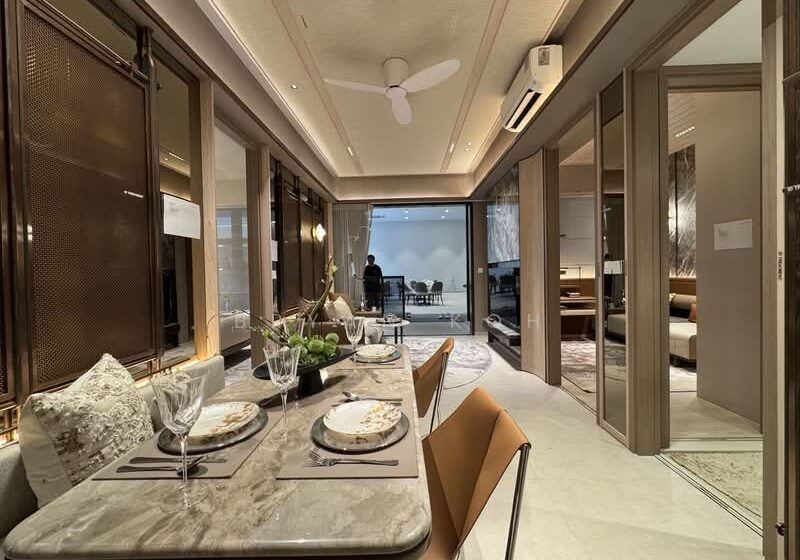

A showflat visit can provide valuable information about a home’s layout, finishes, storage, and overall functionality. However, it can be difficult to remember every detail after viewing several rooms or comparing different properties.
A well-prepared visit to the Dorset Gardens Showflat can be more useful when buyers know what to photograph or record in their notes. Subject to the property’s photography guidelines, documenting key details can make it easier to review the home objectively after the viewing.
Check the Photography Policy First
Before taking photographs or videos, ask the sales representative whether photography is permitted.
There may be restrictions around certain areas, documents, models, or other visitors. Following the property’s guidelines allows you to focus on collecting information that can be used for your own comparison later.
Photograph the Overall Layout
Start with broad views of the main rooms.
If photography is allowed, capture the living room, dining area, bedrooms, kitchen, and other significant spaces from useful angles. These images can help you remember the relationship between different areas after leaving the showflat.
Avoid taking only decorative close-ups. Wider images usually provide more useful context.
Record Room Dimensions
Measurements are among the most useful details to record.
Note the dimensions of rooms where furniture placement is particularly important. If official measurements are provided, compare them with the dimensions of your existing bed, sofa, dining table, desk, or wardrobe.
This can help you assess whether your belongings are likely to fit comfortably.
Photograph Storage Areas
Storage can be difficult to evaluate from memory.
Where permitted, photograph the inside and outside of wardrobes, cabinets, and other storage spaces. Record details such as shelf arrangements, drawers, hanging sections, and approximate dimensions.
Also note whether storage is included as part of the unit or represents additional interior design work.
Note Kitchen Details
The kitchen contains many functional elements worth documenting.
Record the arrangement of:
- Cabinets and drawers
- Sink
- Hob and hood
- Oven or other appliances
- Countertop areas
- Refrigerator space
- Electrical points
- Lighting
- Ventilation provisions
Rather than simply photographing attractive finishes, focus on how the kitchen might support your normal cooking routine.
Capture Bathroom Features
Bathrooms can contain details that are easy to forget between property visits.
Note the placement of sanitary fittings, vanity storage, shower area, mirrors, ventilation features, and available floor space.
If material or fixture specifications are provided, record those separately rather than relying solely on photographs.
Photograph Windows and Views
If permitted, take photographs from the main windows and balconies.
These images can help you remember the outlook and surrounding environment. Record which room each photograph was taken from because several views can otherwise become difficult to distinguish later.
Also note whether surrounding structures may affect privacy or the amount of daylight entering the room.
Record Natural-Light Conditions
Lighting conditions can change throughout the day.
Write down the approximate time of your visit and make a brief note about how bright different rooms appeared. If photography is permitted, photographs can provide additional context.
However, remember that a single visit represents only one set of weather and daylight conditions.
Note Ceiling Height and Vertical Features
Some spatial characteristics are difficult to capture accurately in photographs.
Record observations about ceiling height, beams, bulkheads, recessed areas, and other vertical features. These details may affect how furniture can be arranged or how spacious a room feels.
If official specifications are available, use those for precise measurements.
Photograph Flooring and Finishes
Finishes can look different under showroom lighting and through photographs.
If permitted, take close-up images of flooring, wall finishes, cabinetry, countertops, and other materials you may want to remember. Pair each image with a note identifying where the material is located.
Ask for the official material or finish specifications where relevant.
Record Lighting Fixtures
Take note of the location and type of lighting fixtures.
Consider whether lighting is concentrated in certain areas or distributed across the room. Also record the positions of switches and other controls where they may affect furniture placement.
The purpose is to understand the practical lighting arrangement rather than simply documenting decorative fixtures.
Note Electrical Points
Electrical outlets can have a major impact on how rooms are used.
Record the location of sockets, switches, television points, and other relevant connections. Think about where you would place beds, desks, televisions, appliances, and other equipment.
A small note about outlet positioning can become particularly useful when comparing different layouts.
Photograph the Floor Plan
If an official floor plan is provided and photography is permitted, keep a copy for reference.
The floor plan can help you understand dimensions, room relationships, door positions, windows, and other features after the visit.
If photographing it is not permitted, ask whether a copy or digital version can be provided.
Note Which Items Are Standard
Showflat interiors often contain furniture, appliances, decorations, and custom features that may not form part of the standard unit.
Ask which elements are included with the property and which are added for display purposes. Record the information clearly so that photographs are not mistaken for the actual handover specification.
Record Questions Immediately
Do not rely on memory for questions that arise during the visit.
Keep a running list of items that require clarification, such as:
- Included appliances
- Built-in cabinetry
- Finish specifications
- Ceiling heights
- Window features
- Storage provisions
- Renovation considerations
- Maintenance requirements
You can review these questions with the sales representative before leaving.
Photograph the Same Areas From Consistent Angles
If you are comparing several layouts, consistency can make your photographs more useful.
Try to capture similar rooms from comparable positions. This makes it easier to compare room proportions, window placement, storage, and furniture arrangements later.
Avoid filling your camera roll with random images that lack context.
Take Notes About Movement
Some important observations cannot be captured effectively in a photograph.
Write down how you felt moving between key areas. Note whether the entrance felt open, whether kitchen circulation seemed convenient, or whether bedroom furniture created tight passages.
These observations can complement visual records.
Record Measurements Alongside Photos
Photographs become more useful when paired with measurements.
For example, instead of simply photographing a wardrobe, record its approximate width and depth. For a dining area, note the available clearance around the table.
Keeping measurements and photographs together can make post-visit comparisons much easier.
Create a Simple Room-by-Room Checklist
A structured checklist can prevent important areas from being missed.
| Area | What to Photograph or Note |
|---|---|
| Entrance | Storage, doors, circulation |
| Living room | Layout, windows, electrical points |
| Dining area | Table space and clearance |
| Kitchen | Cabinets, appliances, work areas |
| Bedrooms | Wardrobes, dimensions, windows |
| Bathrooms | Fixtures, storage, ventilation |
| Balcony | Space, outlook, access |
| Other areas | Utility features and storage |
Adjust the checklist according to your own priorities.
Keep Personal Impressions Separate
Try to distinguish factual observations from subjective reactions.
For example, note that a bedroom has a particular dimension or that a window faces a certain direction separately from saying that the room feels spacious.
This makes it easier to review the property later without allowing an initial impression to dominate the assessment.
Organise Your Notes After the Visit
A few minutes of organisation can make your records much more useful.
Label photographs by room and group notes under categories such as layout, storage, finishes, appliances, and questions. If you are visiting multiple properties, use the same categories for each one.
This creates a consistent basis for comparison.
Confirm Important Details With Documentation
Photographs and personal notes should supplement, not replace, official information.
For specifications, dimensions, included fittings, and other contractual details, rely on the relevant documentation provided by the developer or sales team.
If something is important to your decision, ask for clarification rather than making assumptions based on the showflat display.
Final Thoughts
A showflat visit is more valuable when you leave with useful records rather than relying entirely on memory. Photographs can capture layouts and finishes, while written notes can preserve measurements, questions, observations, and details that images cannot fully explain.
When visiting the Dorset Gardens Showflat, focus on documenting information that will help you understand how the home could work in everyday life. A combination of photographs, measurements, room-by-room notes, and official specifications can provide a much clearer reference for reviewing the property afterward.