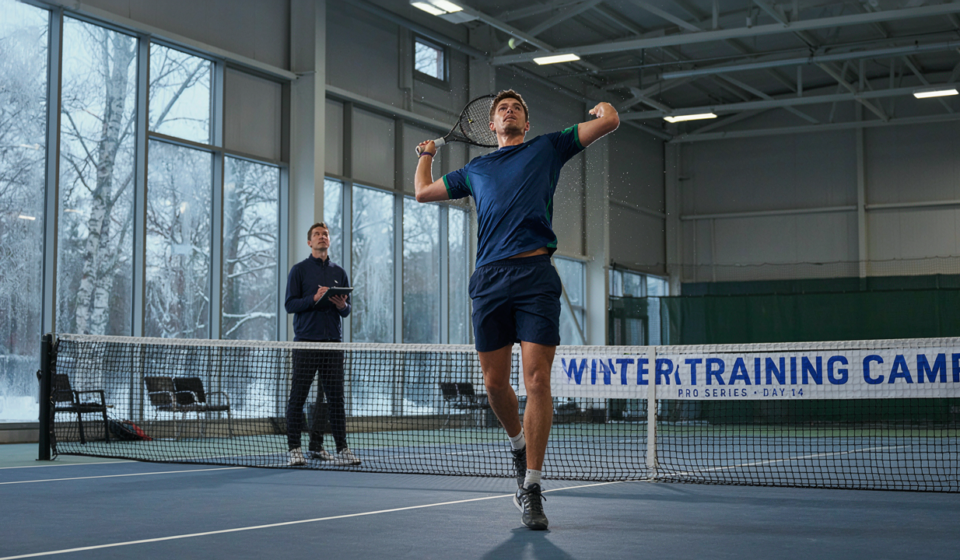

Winter can make it harder to maintain a regular tennis routine. Cold temperatures, snow, ice, and shorter days often limit outdoor court time, leaving players with fewer opportunities to practice. But winter does not have to mean putting your tennis development on hold.
With indoor tennis practice, players can continue working on their technique, movement, fitness, and match skills in a controlled environment. Instead of spending several months simply waiting for warmer weather, winter can become an important part of a player’s overall development.
Whether you are a beginner learning the fundamentals or an experienced competitor preparing for the next season, winter tennis practice offers a practical way to stay active and continue improving.
1. Maintain Consistency Throughout the Winter
One of the biggest advantages of indoor tennis is consistency. Tennis skills are built through repetition, and long breaks can make it more difficult to maintain timing and confidence.
Regular indoor tennis practice gives players the opportunity to keep hitting throughout the winter. Rather than having to restart their routine when spring arrives, they can continue building on the skills they developed during the previous season.
Consistency does not necessarily mean practicing every day. A manageable schedule of weekly sessions can provide valuable repetition. The key is creating a routine that keeps players connected to the sport.
For developing players especially, consistent court time helps reinforce basic skills such as grip, preparation, footwork, contact point, and follow-through.
2. Work on Technique Without Weather Distractions
Outdoor tennis conditions can change quickly. Wind, temperature, sunlight, and court conditions can all affect how a player approaches a practice session.
Indoor facilities provide a more controlled setting, allowing players to concentrate on technique without worrying about changing weather.
This makes indoor tennis training particularly useful for focused skill development. Players can spend time working on specific areas of their game, such as improving their serve motion, developing a more reliable groundstroke, or practicing volleys.
Because there are fewer environmental distractions, players can pay closer attention to their movement and shot execution. Coaches can also identify technical habits and provide corrections during repeated drills.
The goal is not simply to hit more balls. It is to make each practice session purposeful.
3. Keep Footwork and Movement Sharp
Good tennis technique depends heavily on movement. Players need to get into position efficiently, recover after shots, and remain balanced while changing direction.
Without regular court time, movement patterns can become less natural. Winter tennis practice provides an opportunity to keep those patterns active.
Indoor sessions can include movement-focused drills such as split-step exercises, lateral movement, short sprints, recovery steps, and directional changes. These activities help players become more comfortable moving around the court.
Footwork practice can also make technical training more realistic. A player may be able to hit a strong forehand from a stationary position, but tennis requires that same shot while moving into position under pressure.
Combining movement with stroke practice helps bridge the gap between practice drills and real match situations.
4. Build Fitness While Playing the Sport You Enjoy
Tennis is both a technical and physically demanding sport. Matches require repeated bursts of movement, quick reactions, balance, coordination, and endurance.
Indoor tennis allows players to stay physically active during months when outdoor exercise may be less appealing. A well-structured session can provide a combination of cardiovascular activity, agility work, and sport-specific movement.
Players can also use indoor sessions to improve physical qualities that directly support their tennis game. For example, movement drills can develop agility, while extended rally exercises can challenge endurance.
For younger players, this active approach can make fitness feel more engaging than traditional conditioning alone. Adults can also benefit by combining tennis sessions with appropriate strength and mobility work outside the court.
The objective is to enter the spring season feeling physically prepared rather than needing several weeks to rebuild fitness.
5. Improve Confidence Through Repetition
Confidence on the tennis court often comes from preparation. When players regularly practice their strokes and movement, they become more familiar with the situations they encounter during matches.
Indoor tennis training provides an opportunity to repeat important patterns in a comfortable environment. Players can work on serves, returns, rally consistency, attacking shots, defensive recovery, and point construction.
For beginners, repetition can make unfamiliar skills feel more natural. For experienced players, it can provide an opportunity to refine details that are difficult to address during competitive matches.
Indoor practice can also be a good environment for trying something new. Players may have more freedom to experiment with shot selection or tactical patterns without worrying about the result of a competitive match.
Over time, those repetitions can help players approach future matches with a clearer understanding of their game.
6. Use Winter to Prepare for the Next Season
Rather than viewing winter as an interruption, players can treat it as a preparation period.
The colder months provide several weeks or months to identify weaknesses and work on them before outdoor competition and recreational play become more active again. A player who struggled with their second serve, backhand consistency, net play, or movement during the previous season can use winter sessions to address those areas.
Coaching can make this process even more effective. A tennis professional can help establish realistic goals, select appropriate drills, and monitor progress over time.
A good winter plan should balance skill development with enjoyment. Players should have opportunities to work seriously while also enjoying rallies, games, and match play.
By the time outdoor courts become available again, players who maintained their routine can transition more smoothly into the new season.
Keep Your Tennis Game Moving All Winter
Winter does not have to create a gap in your tennis development. With regular indoor tennis practice, players can maintain consistency, refine technique, improve movement, stay physically active, and prepare for future matches.
Most importantly, indoor tennis gives players a way to keep enjoying the sport when outdoor conditions make regular play difficult.
For players in Western New York, having access to indoor courts can make year-round tennis much more practical. Instead of waiting for winter to pass, use the season as an opportunity to work on your game, establish good habits, and build a stronger foundation for the months ahead.
A consistent approach to winter tennis practice can turn the offseason into productive court time—and help you return to outdoor play ready to keep improving.