
You’ve recently installed a cool roof, expecting your home to feel more comfortable during the intense Texas summer. The roofing materials are designed to reflect sunlight, yet your attic still feels unusually hot. Even more frustrating, the upstairs rooms remain uncomfortable despite the upgrade.
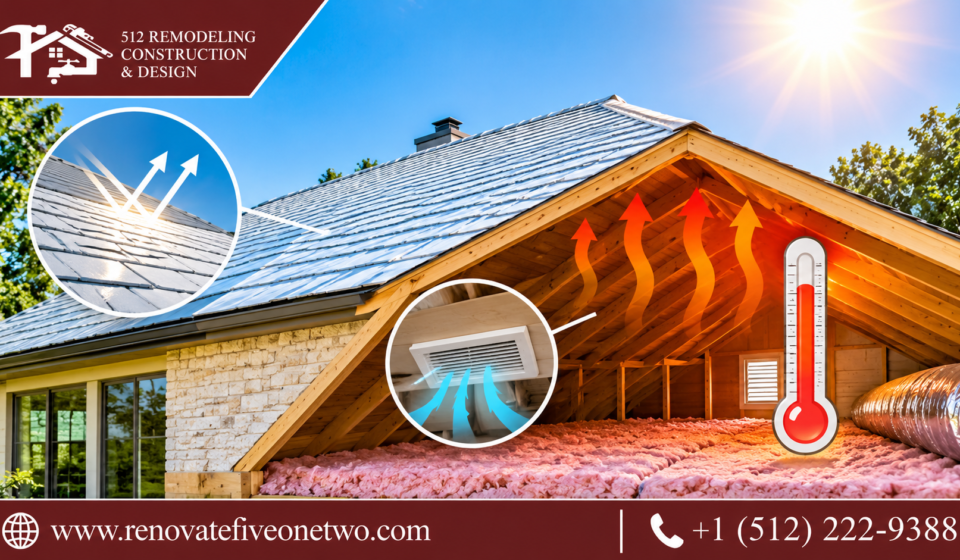
So, why isn’t your cool roof delivering the results you expected? The answer lies in how heat moves through the entire roofing system. Reflective roofing materials can reduce solar heat absorption, but attic temperatures also depend on ventilation, insulation, air leakage, and roof construction.
Before considering additional roofing services in Leander, TX, understanding these factors can help you identify what your roof upgrade may not have addressed.
What Does a Cool Roof Actually Do?
A cool roof reflects more sunlight and releases absorbed heat more effectively than conventional roofing materials.
Two properties influence its performance:
- Solar reflectance: How much incoming sunlight the roofing surface reflects.
- Thermal emittance: How effectively the surface releases absorbed heat through thermal radiation.
According to the U.S. Department of Energy, these characteristics help determine how hot a roof becomes under sunlight. However, a cooler roofing surface does not guarantee that the attic beneath it will maintain the same temperature. Heat can still enter through the roof assembly, and other attic conditions may contribute to temperature buildup.
Why Your Attic Remains Hot Under a Reflective Roof?
A cool roof primarily addresses solar heat absorption at the exterior surface. It does not eliminate every source of heat affecting the attic. For example, an attic may receive heat through the roof deck, surrounding building materials, and outdoor air entering through ventilation openings.
Its temperature also changes throughout the day as outdoor conditions and sunlight exposure fluctuate. Research from Oak Ridge National Laboratory examines how reflective roofing works alongside ventilation, radiant barriers, and insulation.
The research highlights an important distinction: reducing heat entering through the roof and controlling the entire attic’s temperature are related but different objectives.
Can Poor Attic Ventilation Reduce Cooling Benefits?
In a conventional ventilated attic, airflow helps remove accumulated heat and moisture. Fresh outdoor air generally enters through lower openings, such as soffit vents, while warmer attic air exits through higher openings.
However, blocked vents, poorly positioned openings, or insufficient airflow can interfere with this process. For example, insulation placed against soffit openings may restrict incoming air.
A roofing upgrade may improve surface reflectivity without correcting these existing ventilation problems. Homeowners exploring roofing services in Leander, TX should therefore consider whether the roof’s ventilation arrangement is functioning as intended.
Ventilation requirements also depend on attic design. An intentionally unvented, conditioned attic uses a different approach and should not be treated like a conventional ventilated space.
Why Is Attic Insulation Just as Important?
Insulation and cool roofing perform different functions. Reflective roofing reduces solar heat absorption, while insulation slows heat transfer between the attic and conditioned living areas.
Even when attic temperatures remain high, properly installed insulation can reduce the amount of heat reaching rooms below. However, missing insulation, compressed materials, or uneven coverage may create areas where heat transfers more readily. The Department of Energy’s Building Science Education resources emphasize continuous insulation and proper installation for effective thermal protection.
During home remodeling in Austin, Texas, evaluating existing ceiling insulation can help homeowners determine whether their comfort problems originate from the roof surface or the building envelope beneath it.
Could Air Leaks Be Making the Problem Worse?
An attic can affect indoor comfort even when its insulation appears adequate. Openings around recessed lights, plumbing penetrations, attic access panels, and electrical wiring can allow air to move between the living space and an unconditioned attic.
During summer, these pathways may allow unwanted heat transfer and increase the cooling system’s workload. Air sealing addresses these openings, while insulation limits heat movement through building materials. Neither improvement should be confused with simply installing reflective roofing. A comprehensive assessment can help identify which conditions need attention before you begin additional renovations.
Does Your Attic’s Design Influence Cooling Performance?
Not all attics are constructed alike. A traditional vented attic generally has insulation at the ceiling level, separating the living space from the unconditioned area above. An unvented, conditioned attic typically places insulation and air-control layers along the roofline instead. These differences affect how heat enters, moves through, and leaves the attic.
Roof pitch, available ventilation space, and the location of HVAC ductwork can also influence overall performance. For homeowners considering home remodeling in Austin, Texas, understanding the existing attic configuration is essential before changing roofing materials or planning improvements that affect the roof structure.
Conclusion: A Cooler Roof Is Only Part of the Solution
A cool roof can reduce solar heat absorption, but it can’t control every factor that influences attic temperatures on its own. Ventilation, insulation, air leakage, and attic construction all contribute to thermal performance. Addressing these elements together is often more effective than relying on reflective roofing materials alone.
Before investing in additional roofing services in Leander, TX, determine whether the concern involves roofing performance, attic airflow, or inadequate insulation. The goal isn’t simply to cool the roof surface. It is to understand how the entire roof and attic system affects comfort inside the home.