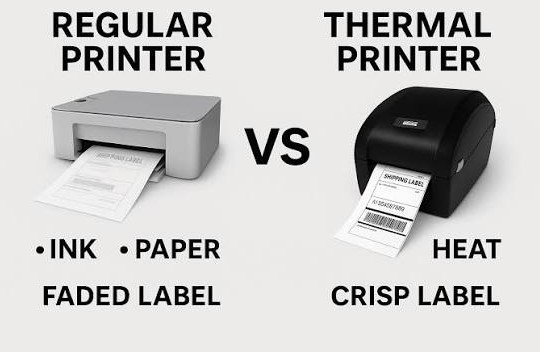

Thermal printing has become a practical option for businesses that need clear labels without relying on conventional inkjet or laser printing. The technology works particularly well for repetitive tasks where speed and consistent output matter.
A thermal label printer can produce shipping labels, barcodes, product tags, receipts, inventory labels, and many other types of printed media. Its usefulness depends on the printing method, label material, print width, and the requirements of the application.
Shipping and Delivery Labels
Shipping remains one of the most common uses for thermal printing. Online retailers, warehouses, fulfillment centers, and home-based sellers often need to produce package labels throughout the day.
A typical shipping label may include an address, tracking number, barcode, carrier information, and handling instructions. Thermal printing can produce these details quickly and consistently.
Direct thermal technology often suits shipping because these labels generally only need to remain readable during transportation and delivery.
Barcode and QR Code Labels
Thermal printers can create machine-readable barcodes and QR codes when the printer, media, and settings provide suitable print quality.
Businesses use barcode labels to identify products, inventory, packages, and assets. QR codes can connect physical items to digital information such as product pages, records, or instructions.
Clear printing matters because scanners need to distinguish the code accurately. Correct sizing, contrast, resolution, and surrounding space all contribute to reliable scanning.
Product Labels
Manufacturers and retailers use thermal printing to identify products with names, model numbers, prices, barcodes, and other information. They are product labels.
The appropriate printing method depends on how long the label needs to last. Direct thermal labels may suit short-term identification, while thermal transfer can provide greater durability for products exposed to demanding conditions.
Retail Price Tags
Retail stores regularly update prices, promotions, and product information. Printing labels on demand allows employees to create new tags without maintaining large quantities of preprinted stock.
Labels can contain prices, item numbers, barcodes, promotional details, or shelf information.
Thermal printing also works well for repeated small-format jobs where producing individual labels through a conventional printer would be inconvenient.
Inventory Management
Inventory systems depend on accurate identification. Thermal printers can create labels for products, bins, shelves, cartons, and storage locations.
A warehouse may use a combination of text and barcodes to help employees locate products and record stock movements. Consistent labels can make scanning and identification easier.
Warehouse and Pallet Labels
Large warehouses often require labels that remain visible throughout storage and handling. These may identify cartons, pallets, racks, picking areas, or specific storage locations.
The required label material depends on the environment. Labels exposed to moisture, abrasion, chemicals, or extreme temperatures may require more durable media and thermal transfer printing.
Asset Tracking
Organizations use asset labels to identify equipment such as computers, tools, machinery, office furniture, and other physical items.
An asset label may contain an identification number, barcode, QR code, or department information. The organization can link this identifier to records in an asset management system.
Durable thermal transfer labels may provide an advantage when assets remain in use for several years.
Manufacturing and Production
Manufacturers can use thermal printing throughout production and packaging processes. Labels may identify components, work orders, finished products, batches, or production stages.
Thermal transfer printing often suits manufacturing environments where labels may encounter heat, chemicals, moisture, or physical handling.
Food and Beverage Labeling
Restaurants, bakeries, food manufacturers, and grocery businesses use labels for product identification, pricing, preparation dates, storage information, and internal tracking.
The choice of label material matters in food-related environments. Products stored in refrigerators or freezers may require media designed to remain attached and readable under those conditions.
Businesses should also follow applicable food labeling requirements for their products.
Healthcare and Laboratory Labels
Healthcare facilities and laboratories handle samples, containers, supplies, and records that require clear identification.
Thermal printing can produce labels for specimen containers, laboratory materials, medical supplies, and other items. Specialized media may provide better resistance to moisture, chemicals, or temperature changes when the application requires it.
Tickets and Event Materials
Thermal technology can also produce tickets, admission labels, badges, wristbands, and other event materials.
Event organizers can print attendee information, ticket numbers, barcodes, or access codes on demand. This can simplify last-minute registration and reduce the need to prepare large quantities of printed material in advance.
Office and File Organization
Thermal printing is not limited to warehouses and commercial operations. Offices can use small labels to organize files, folders, storage boxes, cabinets, cables, and equipment.
Consistent printed labels can make shared workspaces easier to manage and help employees locate supplies or documents more quickly.
Home Organization
Home users can also find practical applications for thermal labels. A compact printer can help organize kitchens, storage rooms, home offices, and personal belongings.
You could use printed labels for:
- Pantry containers
- Storage boxes
- Files and folders
- Cables and chargers
- School supplies
- Seasonal decorations
The advantage comes from being able to create labels whenever you need them instead of relying on handwritten markings.
When Should You Use Thermal Printing?
Thermal printing makes the most sense when you need consistent labels regularly and want a dedicated system for producing them.
Consider the following before choosing a thermal setup:
- How long the labels need to last
- Whether they face heat, moisture, sunlight, or chemicals
- Required label size
- Printing volume
- Need for barcodes or QR codes
- Direct thermal or thermal transfer requirements
These factors help determine the right printer and label material for the job.
Final Thoughts
A thermal printer can support far more than shipping. Businesses and individuals use the technology for product identification, inventory management, retail pricing, asset tracking, manufacturing, healthcare, events, and everyday organization.
The best application depends on the environment and the expected lifespan of the printed label. Choosing the right thermal technology and compatible media helps ensure that the finished labels remain clear and functional for their intended purpose.