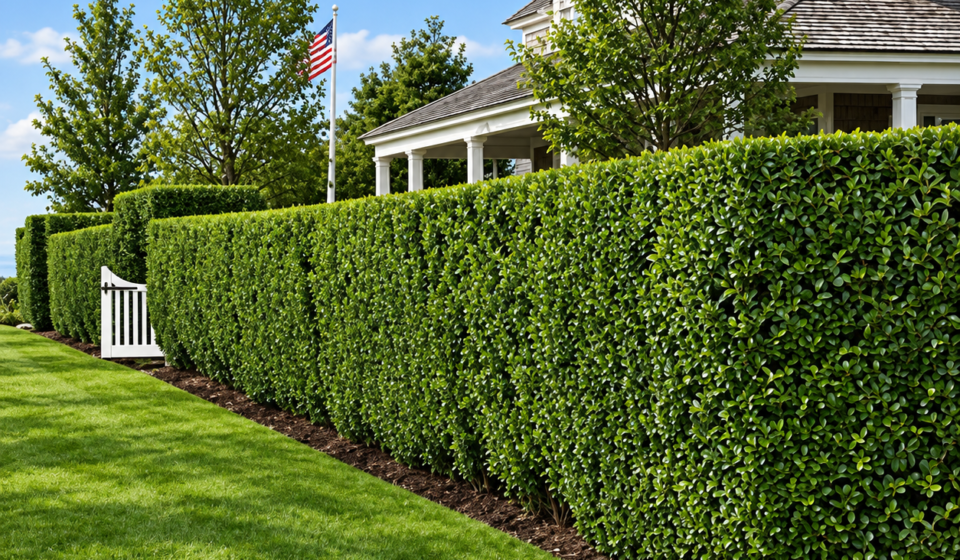

Wax-leaf privet is a popular evergreen shrub for creating privacy screens, formal hedges, borders, and structured landscape plantings. Known botanically as Ligustrum japonicum, it is native to Japan and eastern Asia and is valued for its dense growth, glossy foliage, adaptability, and ability to tolerate regular pruning.
For gardeners considering wax leaf privet, understanding its mature size, light requirements, watering needs, pruning habits, and regional suitability is important. Although it can be an effective screening plant, its growth characteristics and potential invasiveness vary by location, so local recommendations should always be considered before planting.
What Is Wax Leaf Privet?
Wax-leaf privet, also called Japanese privet, is a broadleaf evergreen shrub belonging to the olive family, Oleaceae. Its scientific name is Ligustrum japonicum. The plant typically develops dense, upright growth and can be maintained as a hedge or allowed to develop into a small tree.
Its foliage is one of its most recognizable characteristics. The leaves are dark green, glossy, leathery, opposite, and generally oval to oblong. Under suitable conditions, the plant can reach approximately 8 to 12 feet in height, although size varies according to cultivar, climate, pruning, and growing conditions.
This combination of evergreen foliage and dense branching makes it useful where year-round screening is desired.
Why Is Wax Leaf Privet Used for Hedges?
One reason wax leaf privet is frequently selected for hedging is its ability to develop dense foliage and respond well to pruning. Extension sources describe Japanese privet as suitable for hedges, screens, specimens, containers, and other landscape applications.
Regular pruning can help maintain a particular height and shape. It can also encourage branching, which is useful when the goal is to create a visually dense screen.
Unlike plants that naturally maintain a narrow form, privet can become broader as it matures. Gardeners should therefore allow sufficient planting space rather than assuming the shrub will remain confined to its initial size.
What Growing Conditions Does It Need?
Wax-leaf privet is adaptable to several growing environments. It can grow in full sun or partial shade, although exact performance can vary by climate and site conditions. It generally performs best in well-drained soil and can tolerate several soil textures.
Poor drainage is more problematic than many other soil differences. Constantly wet conditions can contribute to root problems, so planting areas should allow excess water to drain away.
Once established, Japanese privet has moderate drought tolerance according to UF/IFAS, although newly planted shrubs need consistent moisture while their root systems become established.
How Much Sunlight Does It Need?
When planning wax leaf privet, evaluate the amount of direct sunlight available throughout the day. Full sun can support strong growth, while partial shade is also tolerated.
Light levels can influence foliage density and overall plant form. In areas with intense summer conditions, some afternoon shade may be beneficial, particularly if the planting site becomes extremely hot or dry.
Before planting a row of shrubs, observe how nearby buildings, fences, mature trees, and other structures affect sunlight throughout the year.
How Should Wax Leaf Privet Be Pruned?
Pruning is an important part of maintaining a formal privet hedge. The plant responds well to shaping and can tolerate substantial pruning.
For a traditional hedge, the base should generally be kept slightly wider than the top. This shape allows more sunlight to reach the lower branches and can help prevent the bottom of the hedge from becoming sparse.
Timing also matters. Japanese privet produces flowers on new growth, so heavy pruning can influence flowering. Gardeners interested in maintaining flowers should consider the plant’s growth cycle when scheduling major pruning.
Avoid repeatedly cutting only the outer surface of the hedge without periodically addressing older or congested growth. A thoughtful pruning routine can help maintain both density and structure.
Does Wax Leaf Privet Produce Flowers and Berries?
Yes. Japanese privet produces clusters of small white flowers, generally appearing in late spring or early summer depending on the climate. The flowers attract a variety of insects, although their fragrance is considered unpleasant by some people.
After flowering, the plant can produce small dark berries that mature toward blue-black or black. These fruits can attract birds.
However, fruit production is also relevant when considering the plant’s potential to spread. In regions where privet is invasive, preventing unwanted seed production and dispersal may be an important management consideration.
Is Wax Leaf Privet Invasive?
This question requires a location-specific answer. Japanese privet is considered invasive or problematic in some regions, while other regional extension programs assess it differently. For example, North Carolina Extension identifies Japanese privet as invasive, while the UF/IFAS assessment lists it as not currently considered a problem species in Florida but notes regional considerations.
Virginia Cooperative Extension also warns that many Ligustrum species have become invasive and recommends consulting local extension resources before selecting them.
Therefore, gardeners should check local invasive-plant lists before establishing a hedge. A plant that performs well horticulturally may still be unsuitable in an area where it can spread into natural habitats.
What Pests and Diseases Can Affect It?
Wax-leaf privet is generally adaptable, but it is not completely free from pest or disease problems. North Carolina Extension lists whiteflies, Japanese and ligustrum weevils, white peach scale, and privet rust mites among potential insect problems. Diseases can include anthracnose, twig blight, cankers, powdery mildew, and root rot.
Good site selection and proper watering can help reduce stress. Overwatering, poor drainage, overcrowding, and inadequate airflow can contribute to problems in many landscape shrubs.
Regular inspection is useful. Look for unusual leaf discoloration, distorted growth, premature leaf loss, scale insects, or declining branches before problems become widespread.
Conclusion
Wax-leaf privet can provide dense evergreen foliage, attractive structure, and considerable flexibility for hedge and screening applications. Its glossy leaves, moderate-to-rapid growth, tolerance of different soil conditions, and response to pruning make it useful for gardeners seeking a structured landscape plant. Before planting Wax Leaf Privet, however, it is important to evaluate sunlight, drainage, mature dimensions, pruning requirements, and local regulations or invasive-plant guidance. Ficus hedge can be considered as another screening option where its growing requirements are better suited to the site. Most importantly, selecting a hedge plant should be based on climate, available space, maintenance expectations, and regional ecological considerations rather than appearance alone.