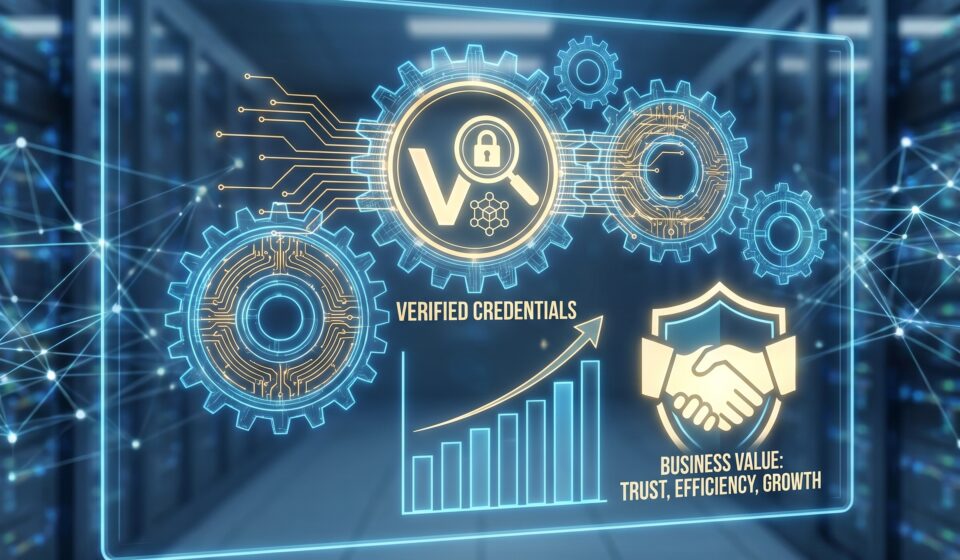

In today’s digital economy, trust is not just a technical requirement – it’s a business advantage. Organizations are expected to verify users quickly, prevent fraud, and deliver seamless experiences, all while staying compliant with evolving regulations.
Traditional identity verification methods, built around documents and repeated checks, struggle to meet these expectations. They introduce delays, increase operational costs, and create friction for users.
This is why many organizations are shifting toward verified credentials as the foundation of modern digital systems.
Moving beyond traditional verification
Most digital identity verification processes rely on identity proofing software and centralized systems. Users are required to upload documents, verify details, and repeat the process across multiple platforms.
This approach leads to:
- Slower onboarding and reduced conversion rates
- Higher operational costs due to manual checks
- Increased risk of fraud and duplicate identities
- Poor user experience from repeated verification
As businesses scale, these inefficiencies become more costly and harder to manage.
What are verified credentials?
Verified credentials are digital credentials that represent trusted information – such as identity, qualifications, or permissions. These can include digital certificates, digital badges, and digital id cards issued through digital credential platforms.
Once issued, these credentials can be reused across systems for instant credential verification. Digital credential software ensures secure credential management, making it easier to issue, store, and validate credentials at scale.
This transforms identity verification from a repetitive process into a reusable trust model.
Driving efficiency and cost savings
One of the biggest business benefits of verified credentials is efficiency. Instead of verifying users multiple times, organizations can rely on credentials that have already been validated.
This results in:
- Faster onboarding and quicker service access
- Reduced manual workload and operational costs
- Improved process efficiency across departments
Digital identity compliance automation software further enhances this by embedding compliance into workflows, ensuring that verification processes meet regulatory standards without slowing down operations.
Strengthening security and reducing fraud
Security is another critical advantage. Verified credentials reduce the need to store sensitive data across multiple systems, lowering the risk of data breaches.
Blockchain identity solutions add an extra layer of protection. Blockchain credentials are tamper-proof, ensuring that once issued, they cannot be altered. Blockchain identity verification allows organizations to validate credentials instantly, improving reliability and trust.
Decentralized identity models also give users control over their data, enhancing privacy while maintaining security.
Enhancing user experience
In a competitive digital landscape, user experience is key. Repeated identity verification steps can frustrate users and lead to drop-offs.
Verified credentials simplify this process. Users can share their credentials instantly without going through multiple verification steps, resulting in:
- Faster and smoother interactions
- Reduced friction during onboarding
- Higher user satisfaction and retention
This improved experience directly contributes to business growth.
Enabling scalability and growth
As organizations expand, their identity systems must scale efficiently. Digital identity management solutions and credential platforms enable organizations to manage large volumes of users without compromising performance.
Digital trust platforms bring together identity verification, credential management, and digital trust services into a unified system. This ensures that trust is maintained across all interactions, even as systems grow more complex.
Real-world applications
Verified credentials are already delivering value across industries:
- Financial services: Faster KYC processes and reduced fraud
- Government: Digital government solutions for citizen identity and services
- Enterprise: Streamlined onboarding and access control
- Education: Issuance of verifiable digital certificates and badges
In each case, the focus is on improving efficiency, security, and trust.
Final thoughts
The business value of verified credentials goes far beyond identity verification. They enable organizations to reduce costs, improve security, enhance user experience, and scale efficiently.
As digital systems continue to evolve, verified credentials will become a key component of modern identity strategies helping organizations build trust at every interaction.
If you’re exploring how to implement verified credentials, digital credential platforms, or blockchain identity solutions, you can connect with us.
A quick conversation can help you unlock the full business potential of verified credential systems.