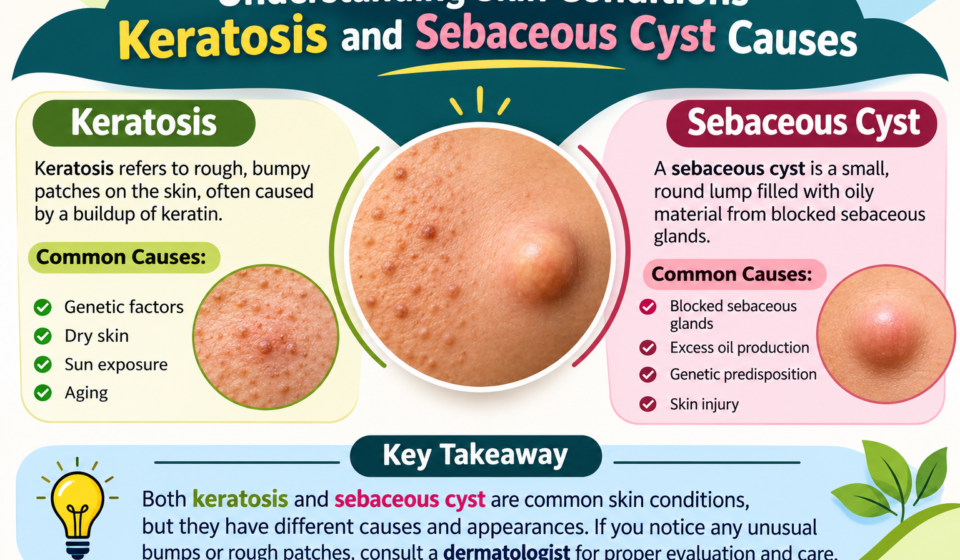

The skin is the largest organ of the human body and plays an essential role in protecting internal tissues from bacteria, environmental pollutants, injuries, and harmful substances. However, different problems can affect its appearance, texture, and normal functioning. Some skin problems develop as rough patches, small bumps, thickened areas, or unusual growths beneath the skin. Understanding Skin Conditions Keratosis is important because these changes can have different causes and may require different approaches to treatment and prevention. Two examples that people commonly encounter are keratosis and sebaceous cysts. Although both can produce noticeable changes in the skin, they develop through different biological processes.
Keratosis generally refers to an abnormal thickening of the outer layer of the skin, which may occur because of excessive keratin production or the accumulation of skin cells. Sebaceous cysts, on the other hand, are rounded sacs that develop underneath the skin and usually contain keratin or other cellular material. Both conditions can affect the skin’s appearance and sometimes cause discomfort, irritation, or cosmetic concerns.
Learning about their causes, symptoms, risk factors, and available treatments can help individuals recognize unusual skin changes and make informed decisions about their skin health. This article explains keratosis and sebaceous cysts, why they develop, how they differ, and what steps may help manage them.
Understanding Keratosis and Sebaceous Cyst Diseases
What Is Keratosis?
Keratosis is a general medical term used to describe an area of thickened skin resulting from an accumulation of keratin. Keratin is a protective protein naturally produced by the body and found in the outer layer of the skin, hair, and nails.
Under normal circumstances, skin cells develop, mature, and eventually shed from the surface. However, certain factors can interfere with this process, causing keratin or skin cells to accumulate. As a result, the affected area may become rough, raised, dry, scaly, or darker than the surrounding skin.
Keratosis is not a single disease. It includes several different conditions, and each type has its own causes, appearance, and treatment requirements.
Some forms are harmless and mainly create cosmetic concerns, while others require medical assessment because of their potential to develop into more serious skin problems.
Common Types of Keratosis
Understanding the different types of keratosis is important because they do not all develop for the same reasons.
1. Keratosis Pilaris
Keratosis pilaris is a common skin condition that develops when keratin accumulates inside hair follicles. This accumulation creates small, rough bumps that commonly appear on the upper arms, thighs, cheeks, and buttocks.
The bumps may resemble goosebumps or sandpaper. They are generally harmless and do not usually cause pain, although some people experience dryness or mild itching.
Keratosis pilaris is frequently associated with dry skin and may become more noticeable during colder months.
2. Seborrheic Keratosis
Seborrheic keratosis is a common non-cancerous skin growth that usually appears in adulthood. These growths may look waxy, rough, raised, or slightly wart-like.
They can vary in color, including light brown, dark brown, black, or tan. Seborrheic keratoses commonly develop on the chest, back, face, and shoulders.
Although they are generally harmless, unusual or rapidly changing growths should be examined by a dermatologist because they can sometimes resemble other skin conditions.
3. Actinic Keratosis
Actinic keratosis develops because of prolonged exposure to ultraviolet radiation from sunlight or artificial tanning sources.
It usually appears as a rough, dry, scaly patch on areas that receive frequent sun exposure, such as the face, ears, scalp, neck, and hands.
Unlike keratosis pilaris and seborrheic keratosis, actinic keratosis is considered precancerous because some lesions can develop into squamous cell carcinoma.
Early medical assessment and appropriate treatment are important for preventing potential complications.
What Is a Sebaceous Cyst?
A sebaceous cyst is a rounded, closed sac that develops beneath the surface of the skin. It usually contains thick material made up of keratin and other cellular substances.
Although the term sebaceous cyst is commonly used, many lumps identified by this name are medically classified as epidermoid cysts. These cysts develop when skin cells become trapped beneath the surface instead of shedding normally.
The trapped cells continue producing keratin, which gradually accumulates inside the sac. As the material increases, the cyst becomes larger and may eventually form a visible lump.
True sebaceous cysts develop from sebaceous glands, which produce sebum, the natural oil that lubricates the skin. However, epidermoid cysts are much more common.
Most cysts grow slowly and do not cause serious health problems. They may remain small and painless for several years. However, some become inflamed or infected, resulting in swelling, redness, tenderness, and discharge.
Common Symptoms of Sebaceous Cysts
Sebaceous cysts can develop on different parts of the body, including the face, scalp, neck, back, and chest.
Common symptoms include:
- A round or oval lump beneath the skin.
- A small, firm, or slightly soft swelling.
- Slow growth over several weeks or months.
- A visible central opening or small dark spot.
- A lump that moves slightly when touched.
- Thick, whitish, or yellowish material inside the cyst.
- An unpleasant smell if the cyst releases its contents.
- Redness and tenderness when inflammation develops.
- Pain or swelling if an infection occurs.
Small cysts may remain unnoticed because they do not always cause discomfort. However, a lump that grows rapidly, becomes painful, or develops unusual changes should be examined by a healthcare professional.
Understanding Skin Conditions Keratosis and Their Development
How Skin Conditions Keratosis Develop
Keratosis develops when the normal process of skin-cell production and shedding becomes disrupted. Keratin is essential for protecting the skin, but excessive accumulation can produce thickened areas, rough patches, or small bumps.
The underlying cause depends on the particular type of keratosis.
For example, keratosis pilaris develops when keratin blocks hair follicles, while actinic keratosis is associated with long-term ultraviolet exposure. Seborrheic keratosis involves the growth of skin cells and commonly appears as people get older.
Understanding Skin Conditions Keratosis requires recognizing that the term describes several different skin changes rather than one specific disorder. Therefore, identifying the type of keratosis is important before selecting an appropriate treatment.
What Causes Keratosis?
Several factors can contribute to keratosis, depending on the specific type.
Excessive keratin accumulation: When keratin builds up inside hair follicles, it can produce small bumps and rough skin, particularly in people with keratosis pilaris.
Genetic factors: Keratosis pilaris often runs in families. Individuals with a family history may have a greater likelihood of developing this condition.
Sun exposure: Long-term exposure to ultraviolet radiation is a major cause of actinic keratosis. Repeated sun damage changes the normal development of skin cells.
Aging: Seborrheic keratosis becomes more common with age. These growths may gradually increase in number over time.
Dry skin: Dryness can make certain forms of keratosis more noticeable and may worsen the rough texture associated with keratosis pilaris.
Underlying skin conditions: People with eczema and other dry-skin disorders may be more likely to experience keratosis pilaris.
What Causes Sebaceous Cysts?
Sebaceous or epidermoid cysts can develop because of several factors that affect the normal structure of the skin.
1. Blocked or damaged hair follicles
Hair follicles are small structures from which hair grows. When a follicle becomes damaged or its normal structure is disrupted, skin cells may become trapped beneath the surface and gradually form a cyst.
2. Skin injuries
Cuts, scratches, burns, and surgical wounds can sometimes push surface skin cells into deeper layers of the skin. These trapped cells may continue multiplying and eventually create a cyst.
3. Acne and inflammation
People experiencing persistent acne or inflammation around their hair follicles may develop different types of skin cysts. Repeated irritation can sometimes contribute to abnormal changes in follicular structures.
4. Genetic factors
Some individuals have an inherited tendency to develop multiple cysts. Certain uncommon genetic conditions are also associated with the formation of numerous epidermoid cysts.
5. Abnormal accumulation of skin cells
When skin cells become trapped beneath the surface instead of shedding normally, they may gradually accumulate keratin and create a sac-like structure.
It is important to understand that sebaceous cysts are not necessarily caused by poor personal hygiene. They can develop even in people who maintain excellent cleanliness.
How Keratosis and Sebaceous Cysts Differ
Although keratosis and sebaceous cysts can both cause noticeable changes in the skin, their development and physical characteristics are different.
| Feature | Keratosis | Sebaceous Cyst |
| Development | Thickening or accumulation of keratin in or on the skin | Formation of a sac beneath the skin |
| Appearance | Rough patches, scaly areas, or small bumps | Rounded lump beneath the skin |
| Common locations | Arms, thighs, face, scalp, and sun-exposed areas | Face, neck, scalp, back, and chest |
| Common causes | Keratin buildup, genetics, aging, or sun exposure | Trapped skin cells, follicular damage, or injuries |
| Symptoms | Roughness, dryness, scaling, or discoloration | Lump, swelling, tenderness, or discharge |
| Treatment | Depends on the type of keratosis | Observation, drainage, or surgical removal |
Recognizing these differences helps individuals avoid confusing one skin problem with another. A proper medical examination is particularly important when a growth changes rapidly or has an unusual appearance.
Herbal Treatment For Sebaceous Cyst: Natural Skincare Approaches
Many people explore Herbal Treatment For Sebaceous Cyst when looking for gentle ways to maintain healthy skin. Plant-based ingredients such as aloe vera, calendula, and chamomile are commonly included in skincare preparations because of their moisturizing and soothing properties.
However, these ingredients have not been scientifically established as reliable treatments for removing an existing sebaceous or epidermoid cyst. Such cysts contain a sac beneath the skin, and applying oils or creams to the surface does not reliably remove that structure.
People interested in herbal skincare should consider the following precautions:
- Choose products with clearly listed ingredients.
- Check for ingredients that may cause allergic reactions.
- Perform a patch test before using a new preparation.
- Avoid applying undiluted essential oils directly to the skin.
- Do not apply herbal preparations to open or infected cysts.
- Stop using a product if it causes burning, itching, or redness.
Herbal skincare may be included in a general personal-care routine, but it should not replace medical evaluation when a cyst becomes painful, swollen, or infected.
Natural Remedies For Sebaceous Cyst: Supporting Healthy Skin
People looking for Natural Remedies For Sebaceous Cyst often prefer simple routines that help maintain cleanliness and reduce irritation. Although home remedies cannot reliably remove an established cyst, certain practices may help support the surrounding skin.
Gentle cleansing: Washing the affected area with a mild cleanser helps remove dirt, sweat, and excess oil without unnecessarily irritating the skin.
Warm compresses: A clean, warm, moist compress may provide temporary comfort for an uncomplicated cyst. It should never be excessively hot, and it does not guarantee that the cyst will disappear.
Avoiding friction: Tight clothing and repeated rubbing can irritate a cyst. Wearing comfortable clothing may help reduce unnecessary pressure on affected areas.
Suitable moisturization: Applying an appropriate moisturizer can support the skin barrier and reduce dryness around the affected area.
Healthy dietary habits: A balanced diet containing vegetables, fruits, protein, and other essential nutrients supports general health and normal skin functioning.
It is important not to squeeze, cut, or puncture a cyst when trying home remedies. If the lump becomes increasingly painful or develops signs of infection, professional medical attention is necessary.
Natural Herbs Clinic: Information About Natural Skin Care
Natural Herbs Clinic is relevant to readers interested in herbal wellness, natural skincare, and information about different health-related concerns. Understanding the causes and symptoms of keratosis and sebaceous cysts can help individuals make informed decisions about their skin health.
Natural skincare products may be part of a general personal-care routine, but they should not be confused with medically established treatments. Different forms of keratosis have different underlying causes, and sebaceous cysts involve a closed structure beneath the skin.
When exploring information about natural skin care, readers should consider product ingredients, possible skin sensitivities, and available scientific evidence. They should also avoid relying on unverified claims that a particular oil, cream, or herbal mixture can permanently eliminate cysts or treat every form of keratosis.
A balanced approach involves maintaining appropriate skincare habits, protecting the skin from unnecessary damage, and seeking professional advice whenever an unusual growth changes or causes discomfort.
Prevention and Management of Keratosis and Sebaceous Cysts
How to Reduce the Risk of Keratosis
Complete prevention of every form of keratosis is not possible because some types are associated with genetics and aging. However, certain measures can help reduce specific risk factors and support healthier skin.
1. Protect Your Skin From Sun Exposure
Sun protection is particularly important for preventing actinic keratosis. Long-term ultraviolet exposure can damage skin cells and increase the risk of abnormal growths.
Helpful practices include:
- Apply broad-spectrum sunscreen with SPF 30 or higher.
- Wear protective clothing when outdoors.
- Use a wide-brimmed hat.
- Seek shade during periods of strong sunlight.
- Avoid artificial tanning beds.
2. Maintain Skin Moisture
Dryness can make keratosis pilaris more noticeable. Using a suitable moisturizer regularly can improve skin softness and reduce roughness.
Products containing ingredients such as urea, lactic acid, or ceramides may help manage dry, rough skin. Introduce exfoliating products gradually to avoid irritation.
3. Avoid Aggressive Scrubbing
Scrubbing rough patches excessively can damage the skin and increase irritation.
Use gentle cleansing methods and avoid harsh brushes or abrasive exfoliating products.
4. Follow a Consistent Skincare Routine
A regular skincare routine helps maintain the skin barrier. Gentle cleansing, appropriate moisturization, and sun protection are useful habits for general skin health.
How to Reduce Problems Associated With Sebaceous Cysts
Although sebaceous cysts cannot always be prevented, certain habits may help reduce avoidable irritation and complications.
1. Avoid Squeezing Cysts
Squeezing a cyst may release some of its contents but does not necessarily remove its surrounding wall. This can increase inflammation and infection risk.
2. Protect the Skin From Injuries
Avoid unnecessary cuts, scratches, and repeated irritation. Take appropriate care of wounds and follow medical instructions after surgical procedures.
3. Manage Existing Skin Problems
People experiencing persistent acne or follicular inflammation should seek appropriate treatment. Managing these problems may improve general skin health.
4. Monitor Unusual Skin Changes
Observe new lumps and notice whether they change in size, shape, or appearance. Seek medical evaluation if a cyst becomes painful, swollen, or unusual.
Medical Treatment Options
Treatment for Keratosis
Treatment depends on the type of keratosis and the symptoms it produces.
Keratosis pilaris: Moisturizers and topical products containing urea, lactic acid, or salicylic acid may help soften rough skin and reduce keratin buildup. Improvement generally requires consistent use.
Seborrheic keratosis: Harmless growths may not require treatment. If they become irritated or create cosmetic concerns, a dermatologist may remove them using cryotherapy, curettage, or other appropriate procedures.
Actinic keratosis: Treatment may involve cryotherapy, topical prescription medications, photodynamic therapy, or other dermatological procedures. A dermatologist determines the appropriate approach according to the number, location, and appearance of lesions.
Treatment for Sebaceous Cysts
Sebaceous or epidermoid cysts may require different treatment approaches depending on their size, location, and symptoms.
Observation: Small, painless cysts that have been properly diagnosed may simply be monitored.
Corticosteroid injections: A dermatologist may inject medication into an inflamed cyst to reduce swelling and discomfort. This does not necessarily remove the cyst wall.
Drainage: A healthcare professional may drain an enlarged or painful cyst to relieve pressure. However, drainage alone may not prevent recurrence.
Surgical removal: Complete surgical removal involves removing the cyst and its surrounding wall. This generally provides a more definitive treatment and reduces the possibility of recurrence.
When Should You Consult a Dermatologist?
Although many forms of keratosis and most epidermoid cysts are harmless, certain changes require medical attention.
Consult a dermatologist if you notice:
- A rough skin patch that changes or grows.
- A lesion that repeatedly bleeds or develops an open sore.
- A new growth with an unusual appearance.
- A rapidly growing lump beneath the skin.
- Increasing redness, swelling, or tenderness.
- Pus or unusual discharge from a cyst.
- Persistent itching or irritation.
- A skin growth that becomes painful.
Actinic keratosis requires particular attention because it can develop into squamous cell carcinoma. A dermatologist can examine suspicious lesions and recommend appropriate treatment.
Avoid diagnosing unusual skin growths yourself. Different conditions can look similar, and professional evaluation helps determine the correct diagnosis.
Frequently Asked Questions (FAQs)
1. What Is the Main Cause of Keratosis?
The cause depends on the type. Keratosis pilaris develops when keratin blocks hair follicles, actinic keratosis is associated with long-term ultraviolet exposure, and seborrheic keratosis involves benign skin-cell growth that becomes more common with age.
2. Are Keratosis and Sebaceous Cysts the Same Condition?
No. Keratosis involves thickening or accumulation of keratin in the skin, while a sebaceous or epidermoid cyst is a closed sac that develops beneath the skin. They have different causes and treatment approaches.
3. Can Keratosis Go Away Naturally?
Some forms may become less noticeable over time, while others require treatment. Keratosis pilaris may improve with age, but it can persist. Actinic keratosis should be medically evaluated rather than left untreated.
4. Are Sebaceous Cysts Dangerous?
Most epidermoid cysts are benign and do not cause serious health problems. However, they can become inflamed or infected. Any unusual or changing lump should be examined by a healthcare professional.
5. Can Sebaceous Cysts Be Prevented?
Complete prevention is not always possible. However, protecting the skin from injuries, avoiding unnecessary irritation, and managing existing skin problems may help reduce certain contributing factors.
6. Can Herbal Products Remove Sebaceous Cysts?
There is insufficient scientific evidence that herbal oils, creams, or natural preparations can reliably remove an established cyst. Medical treatment may be necessary when a cyst causes discomfort or becomes infected.
7. Does Sun Exposure Cause Every Type of Keratosis?
No. Prolonged ultraviolet exposure is an important cause of actinic keratosis, but other forms have different causes. Keratosis pilaris is commonly associated with genetics and keratin accumulation, while seborrheic keratosis becomes more common with age.
Conclusion
Keratosis and sebaceous cysts are two different skin-related conditions that can affect the appearance and comfort of the skin. Keratosis involves thickening or excessive accumulation of keratin, while sebaceous or epidermoid cysts develop when skin cells become trapped beneath the surface and form a closed sac. Understanding Skin Conditions Keratosis helps individuals recognize these differences, identify possible causes, and seek appropriate treatment when necessary.
Although not every type of keratosis or sebaceous cyst can be prevented, healthy skincare habits can help reduce certain risk factors and support the skin’s natural protective barrier. Protecting the skin from excessive sunlight, avoiding unnecessary injuries, maintaining moisture, and monitoring unusual growths are useful preventive measures. Most importantly, changing or painful skin lesions should be examined by a qualified dermatologist to ensure an accurate diagnosis and appropriate treatment.
Medical Disclaimer
This article is intended for educational and informational purposes only. It does not replace professional medical advice, diagnosis, or treatment. Consult a qualified dermatologist or healthcare professional if you experience unusual skin growths, persistent irritation, painful cysts, or suspicious changes in existing lesions. Never attempt to remove, puncture, or treat an infected cyst without appropriate medical guidance.