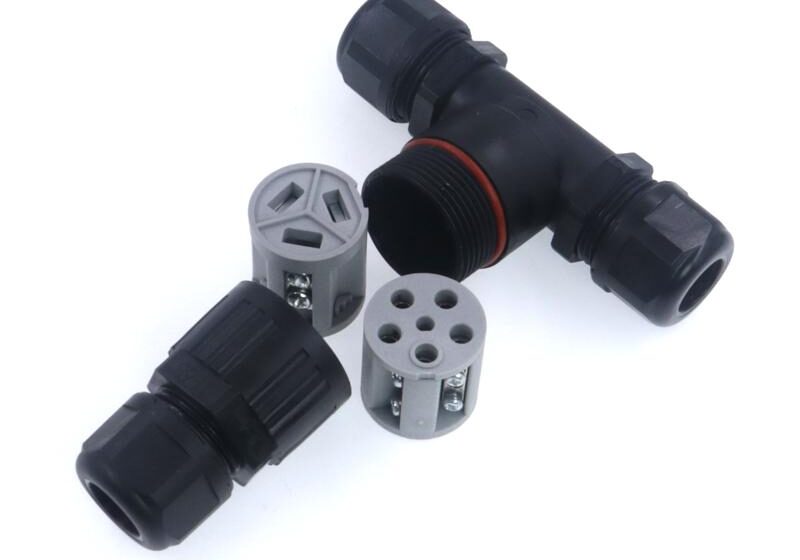
Ultra-Compact Watertight Connectors by HYSF Subsea: Space-Saving Connectivity for Underwater Systems

Modern subsea equipment is becoming smaller while carrying more sensors, electronics, and communication components than ever before. This creates a growing need for electrical connectors that can provide dependable connectivity without taking up valuable installation space. Ultra-compact watertight connectors are designed for applications where size, environmental protection, and reliable electrical connections are important considerations. Their compact form can make them suitable for underwater sensors, robotic platforms, cameras, monitoring instruments, and specialized marine electronics. HYSF Subsea offers compact subsea connectivity solutions intended to help engineers integrate electrical interfaces into demanding underwater equipment.
What Are Ultra-Compact Watertight Connectors?
Watertight connectors are specialized electrical interfaces designed to help protect connection points from water and environmental exposure. In marine and subsea equipment, electrical connections may encounter moisture, immersion, pressure, vibration, saltwater, and temperature variations. A connector used in these conditions needs to be selected according to the requirements of the complete system.
The ultra-compact design focuses on reducing the physical footprint of the connection interface. This can be particularly valuable in equipment housings where internal space is limited and every component must be positioned carefully.
Instead of using a larger connector than necessary, equipment designers can consider compact connection technologies that provide the required electrical interface while helping maintain an efficient mechanical layout.
Why Compact Size Matters in Underwater Equipment
Space limitations are common in subsea engineering. Small ROVs, AUVs, underwater cameras, sensors, and portable monitoring instruments often contain numerous components inside relatively compact housings.
Connectors can occupy a significant amount of space when multiple electrical interfaces are required. A smaller connection solution can help engineers organize cables more efficiently and leave additional room for electronics, batteries, sensors, and other components.
Compact connectors can also help manufacturers develop smaller equipment packages. This can be beneficial for applications where equipment weight, dimensions, and overall system size are important design considerations.
Balancing Size and Electrical Requirements
Reducing connector size should never mean overlooking electrical requirements. Engineers need to consider the number of contacts, current capacity, voltage, signal type, cable construction, and installation environment before choosing a connector.
The most suitable connector is therefore one that provides an appropriate balance between physical dimensions and the electrical requirements of the application.
Construction for Marine and Subsea Applications
Underwater connectors need to be designed with environmental conditions in mind. Depending on the application, equipment may be exposed to seawater, hydrostatic pressure, vibration, movement, and repeated mating cycles.
HYSF Subsea develops connector families for underwater applications using different materials, contact arrangements, cable configurations, and mounting styles. Material selection can vary according to the intended installation and environmental requirements.
For specialized subsea projects, engineers should review the manufacturer’s technical specifications and select a configuration that corresponds to the expected operating conditions.
Different Connector Configurations
Compact subsea connector families can be available in different configurations to accommodate different equipment designs. Male and female connectors, cable assemblies, receptacles, and plugs can each serve different purposes within an underwater system.
Cable assemblies may be used when a ready-made connection between equipment and a cable is required. Receptacles can be integrated into equipment housings, while plugs can provide compatible connection points for mating components.
This variety allows equipment manufacturers to select connection components according to the physical layout and electrical architecture of their system.
Applications of Ultra-Compact Connectors
Compact watertight connectors can be useful across a wide range of underwater applications. Sensors are one important example. Marine and oceanographic instruments may need electrical interfaces for power, signal transmission, and communication while maintaining a small overall footprint.
Underwater cameras can also benefit from space-saving connection solutions. Camera housings are often designed around strict dimensional requirements, so a compact connector can help simplify the integration of electrical connections.
ROVs and AUVs represent another major application area. These vehicles may contain cameras, lighting systems, sensors, navigation equipment, and control electronics, all of which require suitable electrical connections.
Other applications can include hydrophones, seabed monitoring systems, oceanographic instruments, underwater lighting, offshore equipment, and specialized marine electronics.
ROV and AUV Connectivity
Remotely operated and autonomous underwater vehicles continue to incorporate more sophisticated electronics. A single vehicle may need to operate several sensors and cameras while transmitting information to a control system.
Because internal space can be limited, compact connection components can help equipment designers organize electrical interfaces without creating unnecessary bulk.
The selected connector should match the vehicle’s electrical architecture and environmental requirements. Engineers should also consider how frequently the equipment will be assembled, serviced, or reconfigured.
Underwater Cameras and Imaging Equipment
Professional underwater imaging systems often need dependable electrical connections for cameras, lighting, controls, and communication equipment. In compact camera housings, connector dimensions can have a direct impact on the overall equipment layout.
A space-saving connector can make it easier to position other components around the camera housing while maintaining a practical cable arrangement.
For systems transmitting high-quality video or other digital information, signal requirements should also be evaluated alongside the connector’s mechanical and environmental specifications.
Advantages of a Space-Saving Connection Design
One of the main advantages of an ultra-compact connection is efficient use of available space. Smaller connection points can be easier to integrate into equipment where conventional connector sizes would be difficult to accommodate.
A compact design may also support cleaner cable routing. When several electrical interfaces are positioned close together, efficient connector placement can help reduce unnecessary cable loops and improve equipment organization.
For manufacturers developing portable underwater instruments, reducing the footprint of individual components can contribute to a more compact final product.
Installation and Mechanical Considerations
Connector selection should take place alongside mechanical equipment design rather than after the housing has already been finalized. Available mounting space, connector orientation, cable clearance, thread specifications, and access for mating should all be evaluated.
Cable routing is another important consideration. Even when the connector itself is very compact, sufficient space should be available for the cable to bend and move without creating excessive stress near the connection point.
Where equipment is regularly serviced, engineers should also make sure the connector can be accessed easily without removing unnecessary components.
Environmental Protection and Reliability
Watertight protection is particularly important when an electrical connection is exposed to underwater conditions. The effectiveness of a connection depends on the complete assembly, including the connector body, contacts, sealing components, cable interface, mating arrangement, and installation quality.
Environmental factors should be assessed according to the intended application. A connector used in shallow-water monitoring equipment may have different requirements from one installed on a deep-subsea robotic platform.
Engineers should therefore review pressure, temperature, immersion duration, chemical exposure, movement, and other operating conditions before choosing a specific model.
Compatibility With Existing Equipment
Compatibility can be a major concern when compact connectors are being introduced into an existing system. A replacement connector needs to match not only the number of contacts but also the mechanical dimensions and mating interface.
HYSF Subsea provides various underwater connector families designed for different applications and system requirements. Depending on the specific series and configuration, compatibility with established subsea connector interfaces may also be available.
Before replacing an existing component, users should verify the exact specifications rather than assuming that connectors with similar appearances will mate correctly.
Choosing the Right Compact Connector
Selecting a connector requires consideration of several factors. The first is the number of electrical circuits that need to pass through the interface. The second is the required current and voltage rating.
Physical dimensions are equally important, particularly in compact underwater equipment. Engineers should compare connector diameter, mounting requirements, cable dimensions, and available housing space.
Environmental conditions must also be considered. Pressure, temperature, saltwater exposure, vibration, and expected mating cycles can all affect the choice of connector.
A careful evaluation during the design stage can help prevent compatibility problems and reduce the need for modifications later.
Learn More About HYSF Subsea Products
For engineers designing compact underwater equipment, reviewing different connector formats before finalizing the housing can make the integration process easier.
Visit HYSF Subsea—https://hysfsubsea.com/
Readers can use this CTA to explore additional subsea connector options, technical specifications, and configurations available for different marine applications.
Compact Connectivity for Modern Marine Technology
Marine technology continues to move toward smaller, smarter, and more capable equipment. Sensors are becoming more compact, robotic vehicles are incorporating more electronics, and underwater monitoring systems are collecting increasing amounts of information.
This evolution makes efficient electrical connectivity increasingly important. A connector that occupies less space can give equipment designers greater freedom when arranging internal components.
However, compactness is only one part of connector selection. Electrical performance, environmental protection, mechanical compatibility, cable construction, and installation requirements all need to work together.
Maintenance and Long-Term Use
Proper installation and maintenance can contribute significantly to the reliability of underwater connectors. Connection surfaces should be kept clean and free from contamination, while cables should be routed without unnecessary mechanical stress.
Before mating or disconnecting a connector, users should follow the manufacturer’s recommended procedures. Regular inspection can also help identify damaged seals, contacts, cables, or other components before they affect the wider system.
For equipment operating in harsh marine environments, preventive inspection can be particularly useful when systems are regularly removed from the water for servicing.
A Practical Choice for Space-Constrained Applications
The combination of compact dimensions and watertight protection makes ultra-compact connectors particularly relevant to modern subsea equipment. They can help manufacturers work within limited housing dimensions while maintaining practical electrical interfaces.
From underwater sensors to robotic vehicles and imaging systems, compact connectivity can contribute to better equipment organization and more efficient use of available space.
For specialized applications, engineers should always match the connector to the actual electrical and environmental requirements rather than selecting a product based only on its physical size.
Final Thoughts
As underwater equipment becomes increasingly compact and technologically advanced, dependable electrical connectivity remains an essential part of system design. Ultra-Compact Watertight Connectors can provide a space-efficient option for equipment that needs protected electrical connections without using unnecessary installation space.
They can be considered for ROVs, AUVs, underwater cameras, sensors, oceanographic instruments, monitoring equipment, and other marine electronics. Their suitability depends on factors such as electrical requirements, connector configuration, mounting dimensions, cable routing, environmental conditions, and compatibility.
With its range of subsea connectivity solutions, HYSF Subsea provides options for engineers and manufacturers developing equipment for underwater environments. Careful connector selection and proper installation can help create cleaner, more practical, and dependable electrical systems for modern marine technology.
