A toilet cistern is the tank that sits behind or above your toilet bowl. It stores water and releases it every time you flush. Simple as that.
What most people don’t realise is how much this one part affects your home. Toilets use around 30% of all household water. So if your cistern isn’t working right, you’re likely wasting water and money.
A good cistern gives you control. It refills quickly, flushes cleanly, and handles dozens of uses every day.
Cisterns come in two main styles. Some are exposed and sit on top of the bowl. Others are recessed into the wall for a cleaner appearance.
This guide walks you through types, key features, and easy maintenance tips.
How Does a Toilet Cistern Work?
The whole thing runs on a simple chain reaction. Each part triggers the next.
- Water Storage: The cistern fills up between flushes, so it’s ready when you are.
- Flush Activation: Push button or pull handle. That motion sets everything inside in motion.
- Water Release: The flush valve opens. Water drops hard into the bowl–clears it out.
- Refilling: The tank drains, the fill valve opens, and fresh water starts coming in.
- Float Valve Shuts Off: A small float rides up with the rising water. At the right level, it cuts the water supply off.
When this cycle runs smoothly, you never notice it. But a cracked rubber seal or a stuck float valve changes that fast. You get weak flushes, running water, or both. Small fixes done early keep things working properly.
Main Parts of a Toilet Cistern and Their Functions
Everything inside your cistern has a job to do. All of them together make every flush work.
| Part | Function |
| Flush valve | Opens to release water into the bowl when you flush. |
| Fill valve | Lets fresh water back into the cistern after each flush. |
| Float valve | Rises with the water level and shuts off the fill valve when full. |
| Overflow pipe | This removes any excess water if the cistern overflows. |
| Flush button | Triggers the flush valve when pressed. |
| Rubber seal | Sits at the base of the flush valve and stops water from leaking through. |
Knowing these parts makes a real difference. When something goes wrong, you’ll have a better idea of what to look for. Most cistern problems come down to just one or two of these components failing.
Types of Toilet Cisterns
Picking the right cistern isn’t complicated. You just need to know what’s out there.
Concealed Toilet Cistern
The tank goes inside the wall. Nothing is visible except the flush button.
Benefits:
- Walls look clean without a big tank sticking out
- Less exposed surface area means less dust and dirt accumulation around the tank.
- Great for tight spaces where every centimetre counts.
Best for: Wall-hung pans in modern, minimal bathrooms.
Cost range: ₹4,000 – ₹15,000+
Close-Coupled Toilet Cistern
The tank and pan come as one unit. This is what you’ll find in most Indian homes.
Benefits:
- No complicated installation — plumbers know this type inside out.
- Replacement parts sit on shelves in every hardware shop.
- Fits most bathroom sizes without any special adjustments.
Best for: Standard home bathrooms on any budget.
Cost range: ₹2,000 – ₹8,000
Wall-Hung Toilet Cistern
The tank goes behind the wall. Pan floats off the floor with no base touching the ground.
Benefits:
- Mopping the floor takes half the time with nothing in the way.
- Height gets fixed at installation, so it suits whoever uses it.
- Gives bathrooms a sharp, hotel-style finish.
Best for: Premium renovations where design matters as much as function.
Cost range: ₹6,000 – ₹20,000+
Low-Level Toilet Cistern
The tank sits just above the pan on the wall. A short pipe connects the two.
Benefits:
- Easy to open up and fix without any special tools.
- Handles low-ceiling bathrooms without any issues.
- Quieter water drop means a less noisy flush.
Best for: Smaller bathrooms or older properties that need a refresh.
Cost range: ₹1,800 – ₹6,000
High-Level Toilet Cistern
The tank is mounted high up on the wall. Water falls from a height and hits the pan hard.
Benefits:
- The greater water drop creates stronger flushing power through gravity.
- Looks at home in period properties and older style bathrooms.
- Barely needs any attention once it’s up and running.
Best for: Traditional homes or anyone after a vintage bathroom look.
Cost range: ₹1,500 – ₹5,000
Concealed vs Exposed Toilet Cisterns: Which is Better?
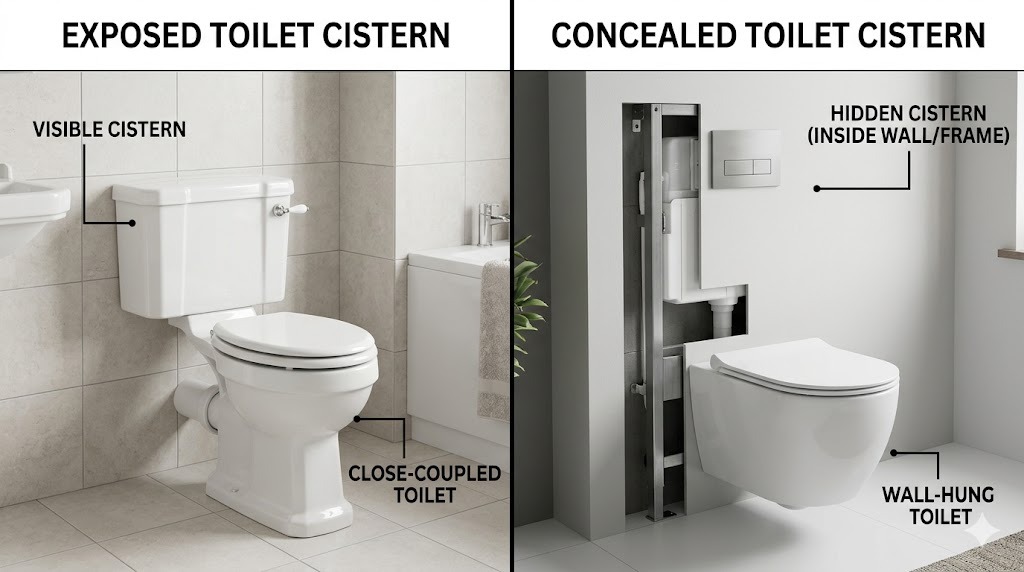
Both do the same job. But they suit very different bathrooms.
| Factor | Concealed | Exposed |
| Appearance | Hidden behind the wall — very clean look | The tank sits out in the open |
| Maintenance access | You need to open a wall panel | Right there — no panel needed |
| Cost | Costs more to buy and fit | Much easier on the budget |
| Water efficiency | Usually comes with a dual flush built in | Depends on the model you buy |
| Installation complexity | Takes longer and needs more skill | Any plumber can do it quickly |
| Durability | Lasts well if fitted properly | Parts wear out but can be replaced easily |
Got a bigger budget and a modern bathroom? Go concealed. Working with less money or an older style bathroom? Exposed makes more sense. One looks better. The other is just easier to live with.
How to Choose the Right Toilet Cistern for Your Bathroom
No single cistern suits every bathroom. Run through these six things before you buy:
1. Bathroom Size: Small bathrooms work better with a concealed or wall-hung cistern. Both save floor space and reduce visual clutter.
2. Wall Construction: Concealed cisterns need a solid, load-bearing wall behind them. Hollow or partition walls won’t hold the frame safely.
3. Water Pressure: Low water pressure areas need a fill valve rated for it. Wrong valve fit means slow refills, weak flushes.
4. Dual Flush: A dual flush cistern cuts water use significantly. Most new bathroom builds now include one as standard.
5. Budget: Expect to pay around ₹1,500 for a basic exposed cistern. A premium concealed system can go beyond Rs 15,000, including installation.
6. Design Style: Modern bathrooms suit concealed or wall-hung options. Traditional or period bathrooms look better with exposed cisterns.
Always check that your chosen cistern works with your existing pan and plumbing before purchasing anything.
Common Toilet Cistern Problems and How to Fix Them
Most cistern problems show up early. Catching them fast saves water and money.
Cistern Not Filling
The tank empties after a flush, but barely refills or takes too long. A blocked or faulty fill valve is usually the cause, though low water pressure in your area can do the same thing. Clean or replace the fill valve — if pressure is the issue, call a plumber.
Continuous Running Water
Water keeps trickling into the bowl long after flushing. A worn rubber seal or a float valve sitting too high keeps the flush valve from closing properly. Replace the rubber seal first — it’s cheap and fixes the problem most of the time.
Weak Flush
The flush clears the bowl poorly or needs two goes. A low water level or a partially blocked flush valve can cause weak flushing performance. Raise the level of water in the cistern or check the valve for obstruction.
Leaking Cistern
Water pools around the base of the toilet or drips down the outside of the tank. A cracked cistern body or a failed seal where the tank meets the pan causes this. Replace the seal — if the body is cracked, the whole cistern needs replacing.
Noisy Refill
The cistern makes a loud whining or hissing sound while refilling. A worn fill valve or water pressure running too high is almost always behind it. Fit a new fill valve — this clears the noise straight away in most cases.
Flush Button Sticking
The button goes down but doesn’t spring back up cleanly. Dirt buildup or a slightly misaligned flush mechanism inside the cistern causes this. Remove the button, clean around it, and reseat the mechanism — it rarely needs a full replacement.
Water-Saving Features to Look for in Modern Toilet Cisterns
Modern toilet cisterns do more than just flush. Many now include smart features that cut water waste significantly.
1. Dual flush systems give you two flush options — a full flush (6L) and a reduced flush (4L or less). You use the smaller flush for liquid waste, which saves water every single day.
2. Adjustable flush volume allows you to regulate the float valve inside the cistern so that less water fills the tank. This tiny change can bring water use down well below the factory default.
3. Look for water-efficient products that comply with local plumbing standards and manufacturer efficiency ratings.
4. Leak detection technology in some modern cisterns uses indicator dyes or sensors to flag a leaking cistern early. Catching leaks fast stops silent water waste before it adds up.
A water-efficient toilet cistern can save a household thousands of litres each year. Over time, that also means lower water bills.
Toilet Cistern Maintenance Tips for Long-Term Performance
Your toilet cistern works hard every day. These five simple tips keep it running well for years.
- Clean the inside every 6 months. Open the cistern lid and scrub the walls to stop limescale from building up.
- Descale regularly. Add a safe descaling tablet or a white vinegar solution to break up mineral deposits.
- Check your valves once a year. Look for signs of wear, cracks, or slow drips on the fill valve and float valve.
- Add a few drops of food colouring into the cistern. If colour shows in the pan without flushing, your rubber seal is leaking.
- Replace worn seals on time. Rubber seals last around 5–10 years, so swap them out before they fail completely.
Regular maintenance can extend the lifespan of your toilet cistern and help prevent costly repairs.
Final Thoughts
Most people don’t give their toilet cistern much thought, but it is more important than you would think.
It affects how your bathroom functions and your daily water usage. Now that you know the types, the parts, and what can go wrong, you’re in a much better position to act fast when something does.
Pick something that suits your space and your budget. Talk to a plumber if you’re unsure. And if saving water is a priority, look at dual flush options first. Small decisions here lead to big savings over time.
Frequently Asked Questions
How Long Should a Toilet Cistern Last?
A well-looked-after cistern can last 10 to 25 years. Timely replacement of smaller parts like valves and seals will keep it going longer.
Can I Change a Toilet Cistern Without Changing the Whole Toilet?
Yes, you can just replace your cistern. Make sure the replacement fits your existing pan before buying.
Is It Safe to Put a Cistern Block or Tablet Inside the Cistern?
Most are safe, but bleach-heavy tablets can slowly damage rubber seals. Check the label first and go for gentler formulas where possible.
What is the Standard Toilet Cistern Capacity in India?
Most Indian toilets hold between 6 and 10 litres. Dual flush cisterns offer a smaller flush option — usually around 3 to 4 litres — which cuts daily water use significantly.
For More Info:-