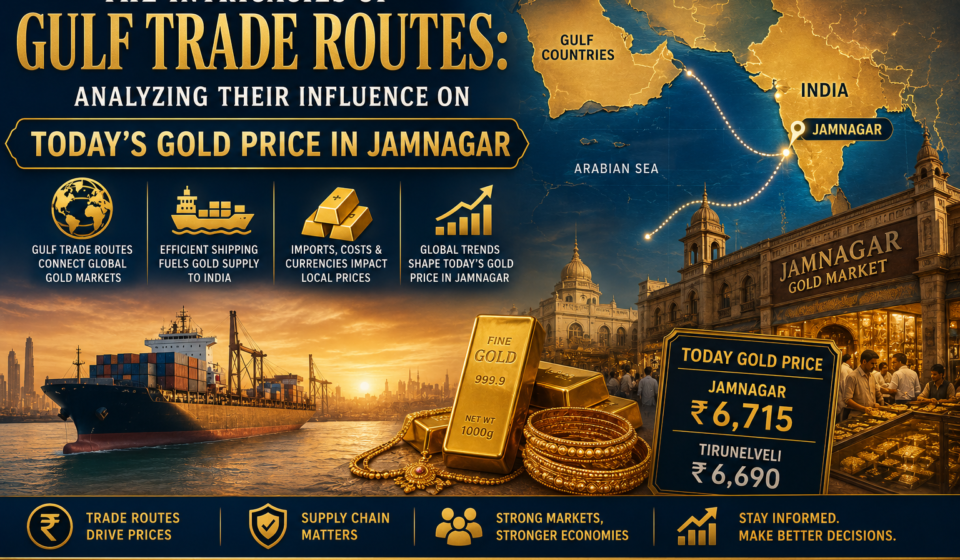
The Intricacies of Gulf Trade Routes: Analyzing Their Influence on Today’s Gold Price in Jamnagar

Gold has been a symbol of wealth and prosperity for centuries, present in cultures and markets around the globe. As we stand on the precipice of a new economic landscape marked by globalization and trade dynamics, the relationship between international trade routes and local gold prices has become increasingly significant. One area where this relationship is notably pronounced is in Jamnagar, a city in Gujarat, India, renowned for its jewelry market and refining industry. This article looks at how Gulf trade routes subtly influence the today gold price in Jamnagar while also considering the broader implications on local economies, with a comparative glimpse at the today gold price in Tirunelveli.
The Gold Market Landscape
The gold market operates on a global scale, with prices affected by various factors including demand dynamics, supply chain disruptions, and geopolitical tensions. However, regional factors, particularly trade routes through the Gulf region, play a crucial role in shaping local prices.
Jamnagar, with its strategic position and thriving business community, engages significantly with the Gulf markets. Many gold traders in Jamnagar source their commodities through these routes, making local prices sensitive to international shifts.
Gulf Trade Routes: A Historical Context
Historically, the Gulf region has served as a vital trade crossroads between East and West. With its rich resources and proximity to major economies, Gulf countries host a range of activities that impact commodities like gold.
- The Role of Importation: Countries such as the UAE, particularly Dubai, function as major hubs for gold trade. It is here that much of the world’s gold is refined and traded before being distributed. The state-of-the-art facilities in places like Dubai ensure that gold remains competitively priced before it reaches markets like Jamnagar.
- Shipping Dynamics: The shipping routes through the Arabian Sea directly affect the logistics of gold trading in Jamnagar. Disruptions—be they due to geopolitical tensions or economic sanctions—can lead to supply shortages, thereby influencing the local price.
- Cultural Significance: Cultural ties between the Gulf and India also play a role. Many Indian expatriates work in Gulf countries and save their wealth in gold, further driving demand in markets back home.
The Direct Impact on Today’s Gold Price in Jamnagar
So, how exactly do these trade routes translate to fluctuations in the today gold price in Jamnagar?
Supply Chain Fluctuations
According to recent reports, the gold price in Jamnagar today has shown significant variability over short periods. This can be attributed to several factors stemming from Gulf trade routes:
- Shipping Delays: Any delay in shipping due to geopolitical issues can lead to immediate shortages in supply for traders and jewelers in Jamnagar.
- Import Duties and Regulations: Changes in import duties or regulations implemented by the Gulf nations can lead to ripple effects on how much traders in Jamnagar are willing to pay for gold.
Currency Fluctuations
The interaction between the value of the Indian Rupee (INR) and the Gulf currencies, particularly the UAE Dirham (AED) and the US Dollar (USD), has a significant influence on gold prices:
- Pricing Decoupling: When the INR weakens against these currencies, the local price of gold tends to rise as traders need more money to purchase the same quantity of gold.
- Market Sentiment: In trading environments, sentiment plays a pivotal role. If traders anticipate that currency depreciation is likely, it can lead to a rush to invest in gold, further driving prices up.
Global Market Trends and Their Local Impact
Global trends set in motion by international trading activities invariably affect local pricing strategies in Jamnagar. Some of these include:
- Investment Patterns: As investors in the Gulf explore new investment avenues, fluctuations in gold demand can impact local prices. For example, if Gulf investors shift their focus toward diamond trading, a potential decrease in gold demand can affect the today gold price in Jamnagar.
- Speculation Rises: Speculative buying or selling based on international trends often reaches local markets. When global gold prices rise, demand often surges in Jamnagar.
A Comparative Perspective: Today Gold Price in Tirunelveli
To further understand the influence of Gulf trade routes, it is valuable to compare today’s gold price in Jamnagar with that in Tirunelveli, which also engages in gold trading but has a different set of trade dynamics:
- Market Structures: Tirunelveli’s market, while notable, is not as direct a hub for Gulf trade as Jamnagar. This results in differing price sensitivity to international trade conditions.
- Local Preferences: Cultural and local factors also develop varying demand profiles. While Jamnagar may see a dynamic shift with value additions like gold jewelry fabrication, Tirunelveli might see steady demand driven by traditional buying patterns during festivals and marriages.
- Transport Logistics: The logistical structures that dictate the inflow of gold into Tirunelveli compared to Jamnagar can create price differentials that can shift significantly based on immediate supply chain factors.
Economic Implications for Jamnagar
Understanding the nuances of gold price shifts is essential for local businesses and policymakers:
- Business Strategy: Local jewelers need to stay informed about market movements and develop adaptive strategies to safeguard profits against volatility. Similarly, buyers can consider financing options from Bajaj Finance to plan their gold purchases more effectively while managing their budget.
- Investment in Infrastructure: To mitigate the impact of global supply chain disruptions, investing in robust local supply chains and refining capacities could stabilize prices.
- Cultural Promotion: By understanding local buying behaviors tied to cultural occasions, traders can market gold strategically to boost sales and manage inventory.
Conclusion
The quiet yet profound influence of Gulf trade routes on the today gold price in Jamnagar cannot be overstated. As we move through an increasingly interconnected world, local markets must become adept at navigating these complexities. Understanding the relationship between international trade routes, price fluctuations, and cultural significance can empower traders and consumers alike.
For those monitoring today’s gold price in Tirunelveli and Jamnagar, it becomes clear that grasping these regional influences is vital in today’s dynamic economic environment. With careful observation and strategic planning, both regions can not only continue to thrive but also carve out a significant place in the global gold market landscape.
Read more:- https://enterprisingcore.com/how-to-maintain-a-healthy-cash-flow-during-business-setup/