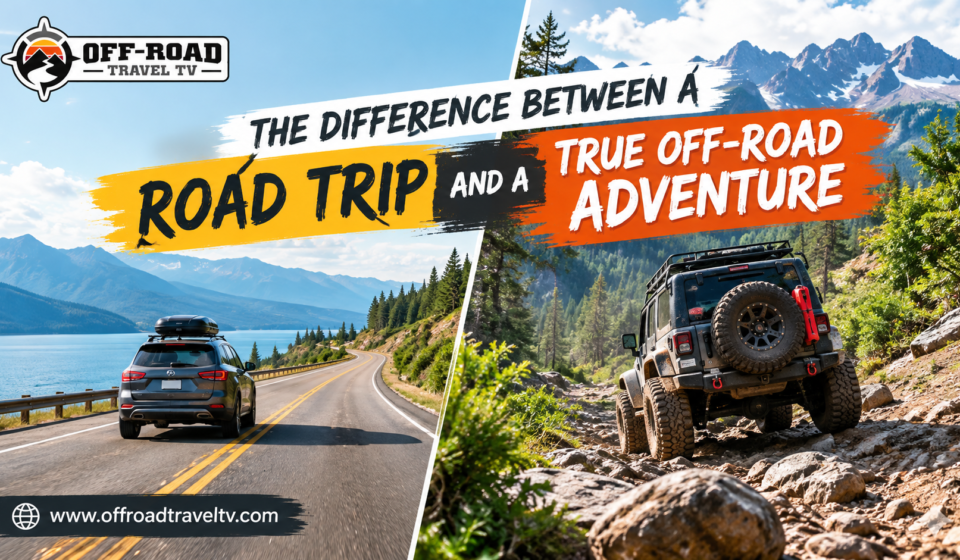

A road trip and an off-road adventure may both involve long drives, scenic destinations, and a desire to explore somewhere new. Yet the experience changes significantly once the pavement disappears. A traditional road trip usually follows established routes, while an off-road adventure takes travelers into terrain where preparation, vehicle capability, and decision-making become much more important.
For many outdoor enthusiasts, the appeal of off-road travel comes from reaching places that ordinary vehicles and conventional routes cannot access. Whether the journey involves a capable 4×4, motorcycle, UTV, camper, or a dirt bike, the experience is less about simply reaching a destination and more about navigating the journey itself.
The Route Is Only the Beginning
One of the clearest differences between a road trip and an off-road adventure is the nature of the route.
On a conventional road trip, travelers generally follow highways, paved roads, or maintained backroads. Navigation is relatively straightforward, and services such as fuel stations, restaurants, accommodations, and repair facilities are often accessible along the way.
Off-road travel introduces a different level of uncertainty. Routes may include:
- Rocky trails
- Muddy sections
- Sand and loose gravel
- Steep climbs and descents
- Water crossings
- Narrow forest paths
- Remote backcountry roads
Instead of simply asking how many miles remain, travelers may need to consider terrain conditions, weather, fuel range, recovery options, and whether their vehicle is suitable for the next section.
Vehicle Capability Matters More
A standard road vehicle is designed primarily for predictable driving surfaces. An off-road vehicle needs to deal with constantly changing terrain.
Ground clearance, suspension travel, drivetrain configuration, traction, and tire selection all become important when traveling away from paved roads. An appropriate off-road tire, for example, may provide the traction needed on loose gravel, mud, sand, or rocky surfaces where ordinary highway tires may not perform as effectively.
The vehicle also needs to match the type of adventure being planned. A short trail excursion may require a different setup than a multi-day expedition carrying camping equipment, recovery gear, food, and water.
Preparation Takes on a Bigger Role
Road trips still benefit from preparation, but off-road adventures generally demand more detailed planning because help may not be nearby.
Before heading into remote terrain, travelers should consider:
- Route conditions: Research the trail and understand its difficulty.
- Weather: Rain can dramatically change dirt roads, river crossings, and mountain trails.
- Fuel: Estimate consumption and identify reliable refueling opportunities.
- Navigation: Carry more than one navigation method when possible.
- Communication: Remote areas may have limited or no cellular coverage.
- Recovery equipment: Prepare for situations involving mud, sand, rocks, or mechanical problems.
- Food and water: Carry enough supplies for unexpected delays.
A dirt bike rider heading into remote terrain may also need to think about tools, spare tubes or repair equipment, protective gear, hydration, and how the motorcycle will be recovered if conditions become difficult.
The Gear Is Different
On a typical road trip, luggage might consist of clothing, electronics, snacks, and basic emergency supplies. Off-road adventures often require equipment designed specifically for unpredictable conditions.
Depending on the journey, useful gear may include:
- Recovery straps and related recovery equipment
- Portable air compressors
- Tire repair kits
- Navigation devices
- First-aid supplies
- Portable lighting
- Additional fuel storage
- Water containers
- Camping equipment
- Weather-resistant storage
Tire-related equipment deserves particular attention because a puncture can become a much bigger problem when you are several miles from the nearest paved road. Carrying the correct tools and knowing how to use them can make a significant difference.
The Destination Feels Different
A road trip often focuses heavily on the destination. Travelers might plan their route around a national park, coastal town, landmark, restaurant, or hotel.
An off-road adventure tends to make the journey itself part of the destination.
A remote viewpoint at the end of a difficult trail can feel more rewarding because reaching it involves navigating challenging terrain. The campsite may not have electricity or nearby facilities, but its isolation becomes part of the experience.
This is one reason off-road travel appeals to people who want more than sightseeing. It creates opportunities to explore areas that are less accessible and experience landscapes from a different perspective.
Risk and Decision-Making Change
Off-road adventures also require more active decision-making.
A road trip may involve deciding whether to stop for lunch or take a scenic detour. On a remote trail, decisions may involve determining whether a muddy section is safe to cross, whether a steep climb is within the vehicle’s capabilities, or whether deteriorating weather makes continuing unwise.
Knowing when to turn around is an important part of responsible exploration. Completing a planned route is not always the most important objective. Protecting people, vehicles, and the surrounding environment should remain priorities throughout the trip.
Camping Becomes Part of the Adventure
Many road trips involve hotels, cabins, or established campgrounds. Off-road adventures frequently provide access to more remote camping opportunities.
A capable vehicle can serve as transportation, storage, and part of the camping setup. Trailers, rooftop tents, camper systems, and purpose-built adventure rigs can extend the amount of time travelers spend away from developed areas.
However, remote camping requires greater self-sufficiency. Travelers need to think about waste management, food storage, water consumption, weather protection, and leaving the campsite responsibly.
The right off-road tire also becomes especially relevant when the campsite itself requires navigating a rough trail rather than simply pulling into a paved campground.
Different Vehicles Create Different Experiences
There is no single definition of an off-road adventure vehicle.
A 4×4 truck might be ideal for carrying substantial equipment, while an SUV could provide a balance between everyday usability and trail capability. An adventure van may offer more living space, while a trailer can provide additional camping capacity.
Motorcycles and UTVs create another type of experience. A dirt bike allows riders to travel along narrow trails and explore terrain that may be inaccessible to larger vehicles.
The important consideration is matching the vehicle to the intended terrain, trip duration, equipment requirements, and skill level.
The Mindset Matters
Perhaps the biggest difference between a road trip and a true off-road adventure is the mindset.
A road trip often emphasizes convenience, predictable routes, and reaching a destination efficiently. Off-road travel places greater emphasis on adaptability.
Plans may change because of weather. A trail may be blocked. A vehicle may need a recovery. A planned campsite may no longer be accessible. Instead of treating these situations as reasons for the trip to fail, experienced travelers approach them as circumstances requiring a new decision.
That mindset encourages patience, preparation, and respect for the environment.
Making the Transition from Road to Trail
Travelers who are new to off-road adventures do not need to begin with the most difficult terrain. Starting with accessible trails and gradually developing driving, navigation, vehicle recovery, and camping skills is a practical approach.
Before each trip, consider:
- Whether the vehicle matches the route?
- Whether the tires suit the terrain?
- How much fuel and water are available?
- What recovery equipment is required?
- Whether weather conditions are favorable?
- What communication options are available?
- Whether everyone in the group understands the plan?
With experience, travelers become better at recognizing terrain, managing equipment, and adjusting plans when conditions change.
Conclusion
A road trip can take you somewhere memorable, but an off-road adventure can change how you experience the journey. Rough terrain, remote campsites, unexpected obstacles, and changing conditions create a different kind of exploration where preparation matters just as much as curiosity.
Whether you are traveling in a 4×4, towing an adventure trailer, riding a off road tire, or exploring trails with another capable vehicle, the goal is not simply to travel farther. It is to explore responsibly, understand your equipment, respect the terrain, and enjoy the places that lie beyond the ordinary road network.