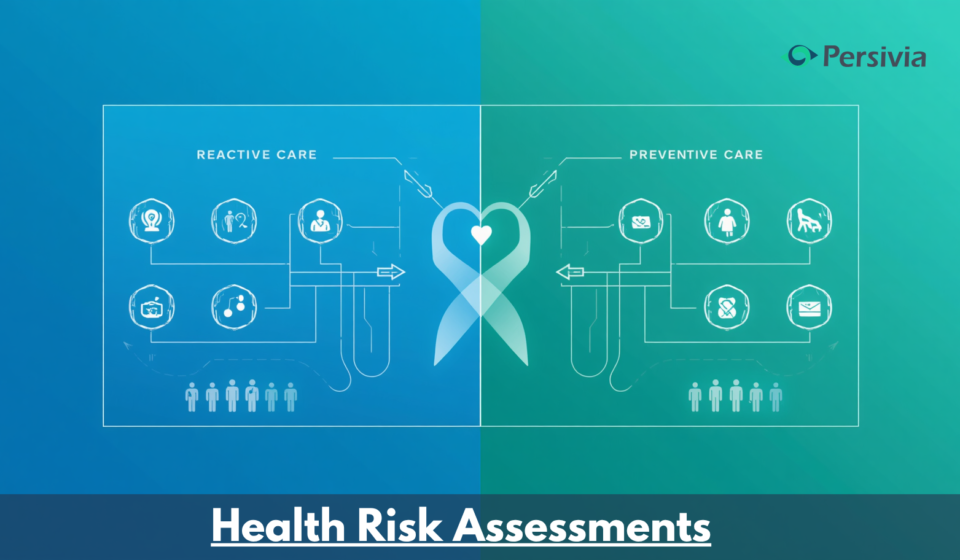

Chronic diseases drive 90% of the $4.1 trillion the U.S. spends on healthcare every year. Catching risk early and documenting it accurately is what separates reactive care from smart, preventive care. Health Risk Assessments are where that process begins.
But HRAs aren’t just clinical tools. They play a critical role in supporting HCC coding and RAF score accuracy in Medicare Advantage. If the assessment is incomplete, the resulting data and documentation lose accuracy. If conditions are not properly coded, the RAF score no longer reflects the patient’s true health status.
What Health Risk Assessments Actually Capture
Most people associate HRAs with basic health questions. In reality, a well-designed assessment goes much further than that, capturing everything that shapes a patient’s risk profile.
What an HRA Covers
Health Risk Assessments HRAs are structured questionnaires that evaluate
- Chronic condition history and current symptoms
- Lifestyle factors: diet, physical activity, smoking, alcohol use
- Mental health indicators, including depression and cognitive screening
- Social determinants like housing, food access, and social isolation
- Functional limitations affecting daily living
In Medicare Advantage, CMS expects health plans to make a best effort to complete annual HRAs for all enrolled beneficiaries. For Special Needs Plans (SNPs), HRAs are required at enrollment and annually thereafter.
Two Ways Providers Conduct HRAs
- Survey-based HRAs are completed online, over the phone, or on paper. They scale easily and serve as an initial screening tool across large populations.
- In-home HRA involve a qualified clinician visiting the patient to conduct the assessment. They enable physical observation and direct examination of the environment, particularly beneficial to high-risk or homebound patients.
The Direct Link Between HRAs and HCC Capture
HCC coding categorizes diagnoses to reflect a patient’s true clinical complexity. Only eligible and properly documented conditions map to HCC codes, which help indicate the patient’s clinical complexity and expected care needs.
The core issue is straightforward: conditions that go undocumented do not get coded. And conditions that don’t get coded don’t count.
How HRAs Strengthen HCC Documentation
A thorough HRA surfaces diagnoses that standard office visits often miss, comorbidities the patient hasn’t recently mentioned, chronic issues absent from recent claims, or new symptoms pointing to a codeable condition.
Specifically, structured HRAs help by:
- Prompting clinicians with condition-specific follow-up questions
- Flagging inconsistencies between reported symptoms and existing records
- Identifying care gaps that require further evaluation or specialist referral
- Supporting documentation with the clinical specificity CMS requires for valid HCC capture
Without this process, clinically relevant diagnoses may be missed during routine visits.
How HCC Capture Shapes RAF Scores
RAF scores are calculated directly from HCC codes. The more accurately a patient’s conditions are documented, the more precisely their RAF score reflects actual health complexity and the more appropriately a plan is reimbursed to care for them.
| Step | What Happens |
| HRA completed | Full health status captured |
| Conditions identified | Diagnoses documented with specificity |
| HCC codes assigned | True disease burden reflected |
| RAF score calculated | Aligns with actual patient complexity |
| Reimbursement determined | Plan receives appropriate funding |
A complex patient with an inaccurate RAF score means the plan and ultimately the patient receive fewer resources than needed. Accurate HRAs fix that at the source.
The HRA Workflow That Makes It Work
A strong HRA is a clinical workflow, not just a form. Here’s how the process moves from assessment to action:
- Data Collection: Health status, lifestyle, mental health, and social determinants
- Risk Stratification: Categorizing patients by low, moderate, or high risk
- Care Plan Development: Personalized prevention and treatment strategies
- Follow-Up Coordination: Referrals, specialist visits, additional screenings
- Ongoing Monitoring: Regular updates to track changes in health status
Each step builds on the previous one. Skipping any step reduces the clinical and financial value of the assessment.
Bottom Line
Health Risk Assessments are the foundation of accurate HCC capture, fair RAF scoring, and care that actually matches patient needs. When assessments are thorough, documentation improves. When documentation improves, RAF scores reflect reality, and patients get the resources they genuinely require.
Persivia offers an AI-enabled HRA digital health platformdesigned to support accurate coding, compliant documentation, and improved patient outcomes within Medicare Advantage workflows. Explore more.