
Introduction
Standing in front of your closet at 6:45 a.m., staring at clothes you technically own but somehow can’t put together — that’s a familiar moment for most teachers. You need something that survives a full day of standing, walking, and chalk dust, but still looks put-together enough for a parent meeting. That’s exactly where teacher wardrobe essentials come in.
Instead of a closet full of random pieces, a capsule wardrobe gives you a small set of clothes that mix and match easily, so mornings stop feeling like a puzzle. Teaching isn’t a sit-at-a-desk job. You’re on your feet, reaching for supplies, crouching next to a student’s desk, walking the halls. Your clothes should move with you, not against you. A well-planned closet takes that reality seriously instead of pretending you’re dressing for an office.
Why Teachers Need a Different Kind of Capsule
A generic capsule wardrobe is usually built around minimalism alone. Teachers need something more functional. Every piece has to pass a few real-world tests — can you bend down in it, sit comfortably in it, wash it easily, and still look like you’re following the dress code? If a blouse feels tight across the shoulders when you’re writing on the whiteboard, it doesn’t belong in your rotation, no matter how nice it looks on a hanger.
This doesn’t mean boring. You can still wear florals, a denim jacket, or a cheerful cardigan. The point is choosing pieces that fit your actual school day, not someone else’s Pinterest board.
Start With a Plan, Not a Shopping Cart
Before you buy anything, take stock of your actual situation. What does your school allow? What grade do you teach, and how much are you moving around? Preschool teachers who spend the day on the floor need different clothes than a high school teacher running between meetings.
Classroom temperature matters too — one hallway feels freezing while the room itself is stuffy by 10 a.m. That’s why cardigans, lightweight blazers, and denim jackets earn their spot as genuine wardrobe essentials rather than an afterthought. And don’t skip the budget conversation with yourself: build gradually, starting with what’s missing most, rather than trying to buy an entire closet in one weekend.
The Core Pieces Worth Owning
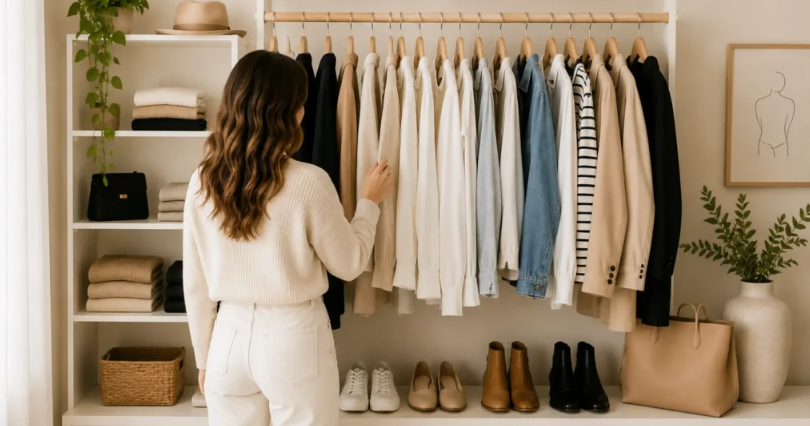
A workable closet needs a handful of categories, not an overwhelming pile of clothes.
Tops — neutral tees, blouses, button-downs, and a couple of knit sweaters that let you move your arms freely.
Bottoms — pull-on trousers, wide-leg pants, and a pair of dark jeans if your school permits them. Two or three bottoms that pair with nearly everything else save you the most time.
Dresses — a shirt dress or midi dress for mornings when you want one easy decision instead of three.
Layers — cardigans, a denim jacket, or a sweater blazer that handle unpredictable classroom temperatures.
Shoes — this is where comfort can’t be negotiable. If your feet hurt by lunch, the shoes don’t belong in the rotation, regardless of how good they look.
Accessories — a sturdy tote, simple jewelry, and maybe a scarf to refresh a repeated outfit without buying anything new.
Colors and Fabrics That Actually Work
Building around two or three neutral bases — black, navy, beige, or denim — makes outfit planning almost automatic. Add accent shades like burgundy, olive, or soft blue when you want a little personality without overcomplicating things. Prints can work too, but it’s usually smarter to start with one striped top or one floral blouse rather than mixing five prints at once.
Fabric choice matters just as much as color. Breathable materials like cotton, linen blends, and soft knits hold up through a physically demanding day. Stretch is your friend — you’ll be reaching, bending, and sitting on tiny chairs more than you’d expect. And easy-care fabrics that skip the dry cleaner save both time and money over a school year.
Outfit Formulas You Can Repeat
Once you find a few combinations that consistently work, getting dressed stops being a decision at all:
- T-shirt, cardigan, trousers, sneakers
- Blouse, wide-leg pants, flats
- Midi dress, denim jacket, sneakers
- Sweater, straight pants, loafers
Rotate colors and layers within these formulas, and you’ll have outfits for regular school days, casual Fridays, and parent conferences without reinventing anything from scratch.
How Many Pieces Do You Actually Need?
You don’t need thirty items to feel prepared. A ten-piece starter set — a couple of tops, one dress, two bottoms, a cardigan, and one solid pair of shoes — covers more ground than people expect. From there, add slowly: better shoes first, then a second pair of trousers, then a jacket for cold hallways.
A full school-year rotation can grow to twenty or thirty pieces over time, but rushing it usually leads to buying things you never actually wear.
Common Mistakes Worth Avoiding
A few habits quietly undermine an otherwise solid closet: buying trendy pieces before covering the basics, choosing shoes that look great but hurt by 2 p.m., ignoring the dress code until it’s too late, or keeping clothes that need constant adjusting throughout the day. If something feels fussy or uncomfortable within the first hour of wearing it, it’s probably not earning its place.
FAQs
What should be in a teacher capsule wardrobe?
Basic tops, comfortable pants, a couple of dresses, layers for temperature swings, supportive shoes, and simple accessories that mix easily.
How many pieces should I start with?
Ten pieces is a reasonable starting point. You can expand toward twenty or thirty as you figure out what you actually reach for.
Can teachers wear jeans?
Yes, if the school dress code allows it — dark jeans paired with a blazer or cardigan usually look polished enough for the classroom.
What shoes work best for a full teaching day?
Supportive sneakers, loafers, and low block heels with real cushioning. Comfort should outrank style every time.
How do I keep outfits from feeling repetitive?
Rotate layers, accessories, and colors within the same core formulas — small changes go a long way.
Final Thoughts
A closet that works for teaching isn’t about owning more clothes — it’s about owning the right ones. Start with what you already have, notice the gaps, and fill them slowly with pieces that hold up to a real classroom day. Comfort, movement, and a little bit of personal style can absolutely coexist, and once your basics work together, mornings stop being a daily negotiation with your closet.