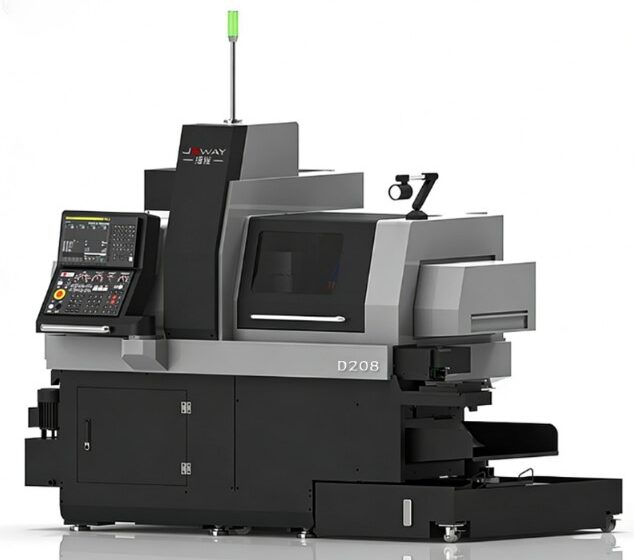

Small precision parts require more than a compact machining setup. They need accurate cutting, stable tool control, efficient chip management, and consistent performance across repeated production runs. Choosing the right machine starts with understanding the part dimensions, tolerances, materials, and production volume.
When comparing a swiss CNC lathe for sale, focus on the machine’s axis configuration, spindle performance, tooling capacity, and ability to maintain tight tolerances. These factors directly affect part quality and production efficiency.
Understand The Size And Shape Of Your Parts
Start by reviewing the dimensions of the components you plan to manufacture. Swiss-type CNC lathes work particularly well with small, slender, and detailed parts that require accurate turning and milling operations.
Consider the following characteristics:
- Overall part diameter and length
- Required dimensional tolerances
- Internal and external features
- Threading and drilling requirements
- Grooves and cross holes
- Surface finish requirements
A machine with suitable working capacity helps prevent unnecessary limitations during production. Matching the machine to your actual part range also helps avoid paying for capabilities you may rarely use.
Check The Number Of Axes
Axis configuration plays an important role when machining complex small components. More axes can allow several operations to take place without repeatedly repositioning the workpiece.
For example, an 8-axis configuration can support multiple machining operations and improve production flexibility. However, more axes do not automatically mean better results. The configuration should match the complexity of your parts and the operations you need to perform.
For relatively simple components, a lower-axis machine may provide sufficient capability. Complex parts with multiple features may benefit from simultaneous or coordinated machining capabilities.
Evaluate Spindle Performance
Spindle speed and stability matter when producing small precision parts. High spindle speeds can support efficient machining of smaller diameters and certain materials, while stable rotation helps maintain dimensional consistency.
Look at the machine’s spindle specifications and consider the materials you expect to machine. Stainless steel, aluminum, brass, titanium, and engineering plastics can require different cutting conditions.
A suitable spindle should provide enough speed and torque for your applications without sacrificing stability during extended production.
Examine Tooling Capacity
Tool capacity affects how many operations you can complete without manual intervention. A machine with appropriate tooling options can reduce setup changes and improve production flow.
Check whether the machine supports the tools needed for your parts, including:
- Turning tools
- Drills
- Taps
- Threading tools
- Grooving tools
- Milling tools
You should also consider tool access and how quickly the machine handles tool changes. Efficient tooling arrangements can make a noticeable difference during repetitive production.
Consider Accuracy And Repeatability
Precision machining depends on both accuracy and repeatability. Accuracy refers to how closely the machine produces the intended dimensions, while repeatability concerns its ability to produce the same result consistently.
Ask manufacturers about positioning accuracy, repeatability, machine construction, and quality-control procedures. These details help you determine whether a machine suits parts with demanding tolerances.
JSWAY offers Swiss-type CNC machining solutions designed for high-speed and precision applications. Its machine configurations can support manufacturers working with small components that require consistent machining performance.
Match The Machine To Your Materials
Material selection affects cutting speed, tooling requirements, coolant needs, and machine load. A machine suitable for aluminum production may require different considerations when used for harder alloys.
Before purchasing, identify your most common materials and check the machine’s recommended operating range. Pay attention to spindle torque, rigidity, tooling compatibility, and chip evacuation.
Proper material matching helps maintain tool life and reduces problems caused by unsuitable cutting conditions.
Look At Control And Programming Features
Modern CNC controls influence setup time, programming efficiency, and operator usability. A capable control system can simplify multi-axis machining and help operators manage complex production sequences.
Review the machine’s programming interface, simulation functions, data transfer options, and compatibility with your existing CAD/CAM workflow.
For businesses producing multiple small-part designs, convenient programming and setup features can reduce downtime between jobs.
Check Chip Management And Coolant Systems
Small components often generate chips that can interfere with machining if the machine does not manage them effectively. Long chips can wrap around tools or workpieces and interrupt production.
Look for effective chip evacuation and coolant delivery. These systems help maintain a cleaner cutting area and support stable machining conditions.
Good chip management also reduces the amount of manual intervention required during longer production runs.
Consider Production Volume
Your expected production volume should influence the machine you select. A machine for occasional prototype work may not need the same automation and throughput as equipment intended for continuous production.
For higher-volume manufacturing, consider cycle time, automatic bar feeding, tooling capacity, automation options, and maintenance requirements. These factors influence the machine’s overall productivity.
For lower-volume work, flexibility and quick setup may matter more than maximum production speed.
Review Machine Support And Maintenance
Purchase price represents only part of the ownership cost. Maintenance, spare parts, technical support, tooling, and operator training can influence long-term value.
Before making a decision, ask the supplier about:
- Installation and commissioning support
- Operator training
- Spare parts availability
- Routine maintenance requirements
- Technical assistance
- Warranty coverage
Reliable support can help reduce downtime and make it easier for your team to keep production running smoothly.
Compare Total Value Instead Of Price Alone
The cheapest machine may not provide the best value for precision manufacturing. A machine with better rigidity, faster cycle times, stronger tooling options, and reliable support could deliver greater value over its working life.
Create a comparison based on the capabilities that directly affect your parts. Consider productivity, precision, flexibility, maintenance, energy use, and expected service life alongside the initial purchase price.
Make The Final Selection Based On Your Parts
Choosing a Swiss CNC lathe for small precision parts requires a practical comparison between machine capabilities and production requirements. Start with part dimensions and tolerances, then evaluate axes, spindle performance, tooling, controls, chip management, materials, and production volume.
JSWAY provides Swiss-type CNC machines for precision manufacturing applications. Reviewing the machine specifications against your actual components and production goals can help you select equipment that delivers the right balance of precision, efficiency, and flexibility.