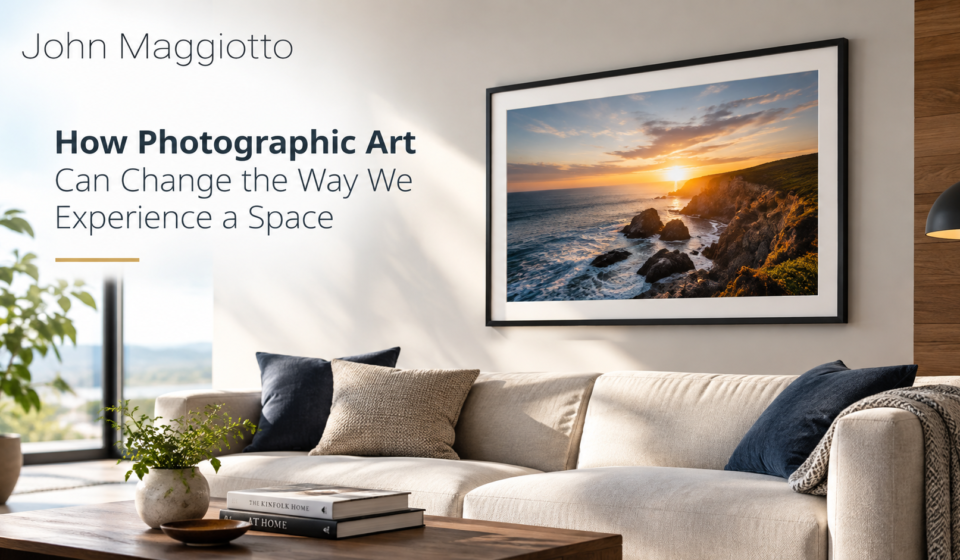

A room is shaped by more than its walls, furniture, and architecture. The artwork within it can influence how we pause, move, remember, and connect with the space around us. Photographic art has a particularly interesting role because it brings fragments of the world into an environment while leaving room for personal interpretation. The perspective of a photo studio in Westchester NY can be rooted in observation, while the work of a Hastings-on-Hudson artist can transform that observation into something that becomes part of the character of a room.
Art Changes How We Look at a Room
When we enter a room with powerful artwork, our attention naturally moves toward it. A photograph can establish a visual point of focus, but its influence does not stop there. Scale, subject, texture, and composition can change how the surrounding architecture feels.
A large photographic work may make a wall feel expansive, while a quieter image can create a sense of intimacy. This is where the work associated with a photo studio Westchester NY can move beyond conventional photography. A Hastings-on-Hudson artist working with scale and material can create photographs that interact with the architecture rather than simply decorate it.
Photography Creates a Sense of Place
Photographs have a unique relationship with place because they preserve an encounter with a particular moment. A forest, architectural detail, human gesture, or everyday object can carry the atmosphere of where it was discovered.
When that image enters another environment, it creates a fascinating relationship between two places. The original location remains present within the photograph while the surrounding room gives the image a new context. A photo studio in Westchester NY may capture the world through a particular visual perspective, while a Hastings-on-Hudson artist can bring those observations into spaces far beyond the original scene.
Scale Can Transform the Experience
Size has an enormous effect on how photographic art is experienced. A small photograph asks the viewer to move closer, encouraging an intimate relationship with the image. A large-format photograph can surround the viewer with visual information and create an almost immersive experience.
This becomes particularly compelling when an artist chooses to present photographs at a scale that encourages the viewer to feel physically connected to the subject. The approach of a photo studio Westchester NY can therefore extend beyond capturing an image to considering how that image will occupy space. For a Hastings-on-Hudson artist, scale can become another artistic tool for shaping perception.
Texture Gives Photography a Physical Presence
Photography is often thought of as a flat medium, but photographic art does not necessarily need to remain visually or physically flat. Materials such as marble, plaster, and wood can introduce texture and depth, allowing the photograph to exist as an object.
When the Surface Becomes Part of the Image
Texture can affect the way light moves across an artwork and how the viewer responds to it. A surface with subtle irregularities may encourage someone to look longer, discovering details that might disappear on a screen.
This physical quality can distinguish fine photographic art from an ordinary reproduction. The work associated with a photo studio in Westchester NY can become more than an image captured by a camera, while the practice of a Hastings-on-Hudson artist can demonstrate how photography can occupy a space between image, object, and sculpture.
Photographic Art Can Introduce Movement
A compelling photograph can create a sense of movement even when the physical artwork remains completely still. A gesture, repeated figure, winding landscape, or carefully composed line can guide the viewer’s eyes across the surface.
This movement affects how people experience the room itself. Instead of seeing the space as a collection of separate objects, viewers begin making visual connections between the artwork and its surroundings. The observational approach of a photo studio in Westchester NY can provide the foundation, while a Hastings-on-Hudson artist can use composition to direct how that observation is experienced.
Art Invites Personal Interpretation
One of the most powerful qualities of photographic art is that it does not always provide a single meaning. The same image can evoke memory, curiosity, nostalgia, or completely different associations depending on the person viewing it.
A Different Experience Every Time
The meaning of an artwork can also change according to where it is displayed. Morning light may reveal one quality, while evening shadows reveal another. A photograph placed beside furniture, architectural details, or other artworks becomes part of a larger visual conversation.
For a photo studio Westchester NY, this reinforces the idea that photography is about more than documenting reality. For a Hastings-on-Hudson artist, it creates an opportunity to make work that continues evolving through its relationship with the people and spaces that surround it.
Why Photographic Art Belongs in the Spaces We Live With?
The strongest photographic art does not simply fill an empty wall. It changes how that wall is perceived. It can create contrast, invite contemplation, introduce a sense of place, or encourage viewers to notice something they might otherwise overlook.
A photo studio Westchester NY can be a place where observation begins, but the finished artwork can travel far beyond the studio. Through the vision of a Hastings-on-Hudson artist, photography can become part of the physical and emotional character of a space.
How Light Changes the Character of Photographic Art?
Light can completely alter the way photographic art interacts with its surroundings. Natural daylight may reveal subtle textures and details, while softer evening light can make the same artwork feel quieter and more atmospheric. This changing relationship gives the work a sense of movement even when the image itself remains still. A photo studio in Westchester NY may begin with careful observation of light, but the final artwork continues to respond to light wherever it is displayed. For a Hastings-on-Hudson artist, this creates another layer of visual experience, allowing the artwork to change subtly throughout the day.
When Art Becomes Part of Everyday Life
Photographic art can also change a space simply by giving people a reason to pause. Unlike an image quickly viewed on a phone or computer, a physical artwork remains present as people move through their everyday surroundings. Over time, viewers may notice different details, remember different moments, or develop new interpretations of the same image. A photo studio Westchester NY can capture a fleeting observation, but displaying that work allows the observation to become part of daily life. The perspective of a Hastings-on-Hudson artist can therefore extend beyond the gallery or studio, creating an ongoing visual relationship between artwork, viewer, and space.
The Space Becomes Part of the Artwork
Ultimately, photographic art creates a relationship between the image and its surroundings. The artwork influences the room, while the room influences how the artwork is perceived. Neither exists completely independently.
That exchange is what makes photographic art so compelling. A photograph can preserve a moment, but when it enters a physical space, it can become something more expansive: an invitation to look, remember, question, and experience the environment differently.