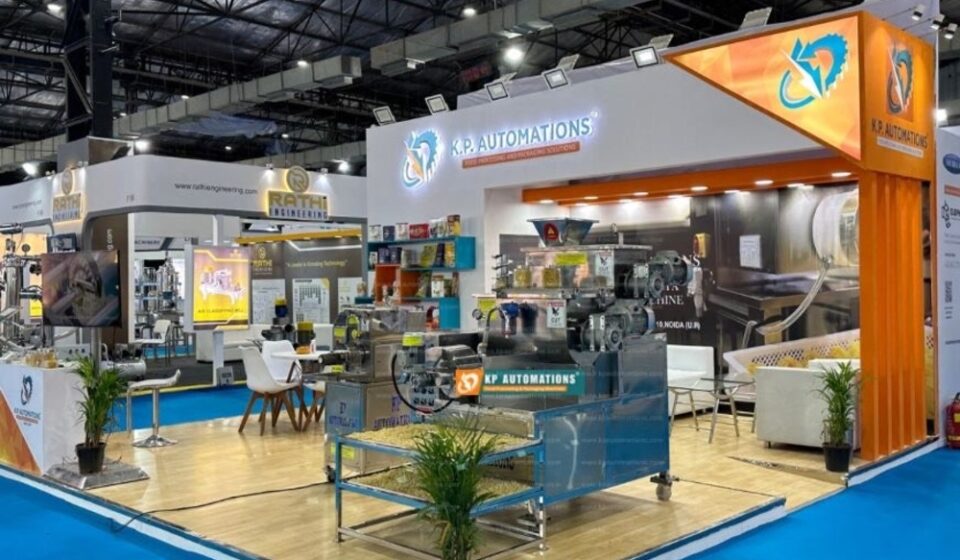

The demand for premium-quality pasta products has grown rapidly across restaurants, food processing companies, supermarkets, and export markets. As manufacturers expand production to meet this demand, investing in the right pasta machine becomes one of the most important business decisions. Whether you are planning a new production facility or upgrading an existing line, understanding the factors that influence pasta making machine price helps you choose equipment that delivers long-term value.
KP Automations has established itself as one of India’s trusted manufacturers of industrial pasta processing solutions. From compact production units to fully automated systems, the company provides equipment that combines advanced technology, production efficiency, and reliable after-sales support.
Why Investing in the Right Pasta Machine Matters
A modern pasta production facility requires more than simple processing equipment. Today’s manufacturers need automation, consistent product quality, hygienic construction, and energy-efficient performance. Selecting the right pasta machine allows businesses to reduce production costs while maintaining uniform product quality across every batch.
Modern systems are capable of handling different pasta varieties including macaroni, penne, fusilli, elbow pasta, shell pasta, spaghetti, vermicelli, and several customized shapes. As production capacity increases, automation becomes essential for maintaining quality while reducing manual intervention.
Understanding Pasta Making Machine Price
Many buyers search for the best pasta making machine price before purchasing industrial equipment. However, pricing depends on several technical and operational factors rather than a single standard cost.
Some of the major factors affecting machine pricing include production capacity, automation level, extrusion technology, drying systems, material quality, control systems, customization requirements, and installation support.
A small production unit designed for local manufacturers naturally requires a lower investment than a complete industrial production line capable of producing several thousand kilograms every hour. Instead of focusing only on the initial purchase cost, manufacturers should evaluate the long-term return on investment through higher productivity, lower maintenance costs, and improved product consistency.
Automatic Pasta Machine for Modern Food Processing
Food manufacturers today increasingly prefer an automatic pasta machine because it minimizes manual handling while maximizing production efficiency.
Automation allows continuous monitoring of every production stage including ingredient mixing, dough preparation, extrusion, cutting, drying, cooling, and packaging. Integrated PLC control systems help operators manage production with greater accuracy while reducing production errors.
An automatic solution also ensures better hygiene standards since human contact during manufacturing is significantly reduced. This makes the equipment suitable for manufacturers supplying premium domestic and export markets.
Advantages of an Automatic Pasta Making Machine
An automatic pasta making machine offers complete process control from raw material feeding to finished product output. Every stage is synchronized to maintain consistent dough quality and uniform pasta dimensions.
Manufacturers benefit from higher production speed, improved energy efficiency, lower labor requirements, and reduced wastage. Since the system operates continuously, production planning becomes easier while maintaining consistent product quality across large batches.
Automation also improves traceability and process monitoring, making quality assurance much more reliable for commercial food manufacturers.
Choosing the Right Pasta Machine for Your Production Goals
Every manufacturer has different production requirements. A growing food brand may require moderate production capacity, while an export-oriented facility may require large-scale continuous processing.
When selecting a pasta machine, manufacturers should evaluate several important aspects including production volume, available factory space, utility requirements, future expansion plans, desired pasta varieties, maintenance accessibility, and automation preferences.
Working with an experienced equipment manufacturer ensures the machine configuration matches both current production needs and future business growth.
Production Efficiency That Improves Profitability
Modern industrial equipment is designed to maximize production efficiency without compromising product quality.
Advanced extrusion systems produce consistent dough pressure, ensuring uniform pasta dimensions throughout production. Precision cutting systems maintain identical product sizes, while controlled drying technology helps preserve product texture, strength, and shelf life.
The result is higher production output, improved product appearance, reduced rejection rates, and better customer satisfaction.
Advanced Engineering Behind Every Production Line
Industrial pasta processing equipment combines mechanical engineering with food processing technology to achieve reliable performance.
High-quality stainless steel construction ensures hygiene while resisting corrosion during continuous operation. Intelligent control systems monitor production parameters including temperature, pressure, moisture, and production speed.
Energy-efficient motors, precision gearboxes, food-grade components, and automated safety systems contribute to reliable long-term operation with minimal downtime.
These engineering improvements help manufacturers maintain stable production while reducing operating costs.
Why KP Automations Is Trusted by Food Manufacturers
KP Automations develops complete pasta processing solutions designed for Indian and international food manufacturers. The company’s engineering expertise allows customers to build production lines suitable for different capacities and product requirements.
Each project is developed with attention to production efficiency, hygienic manufacturing standards, automation, and future scalability. Technical consultation, installation assistance, operator training, and long-term support ensure customers receive complete manufacturing solutions rather than simply purchasing machinery.
Located in Noida, Uttar Pradesh, KP Automations serves customers across India while supporting food manufacturers seeking reliable industrial processing technology.
Company Information:
KP AUTOMATIONS
G.B D – 372, D Block, Sector 10, Noida, Uttar Pradesh – 201301
Phone: +91 – 9310738142
Email: kpautomations372@gmail.com
Website: https://pastamachines.in/
Selecting the Best Investment for Future Growth
Purchasing industrial food processing equipment is a long-term investment rather than a short-term expense.
Businesses should evaluate machine durability, energy consumption, maintenance requirements, spare part availability, production flexibility, technical support, and future expansion possibilities before making a purchase decision.
Choosing reliable equipment allows manufacturers to improve production efficiency while supporting business growth for many years.
Conclusion
Finding the right pasta making machine price requires evaluating far more than the initial investment. Production capacity, automation, engineering quality, operational efficiency, and technical support all contribute to the overall value of the equipment.
Whether you need an automatic pasta machine for expanding production or an automatic pasta making machine for a fully integrated manufacturing facility, investing in reliable technology improves product quality, increases efficiency, and strengthens long-term profitability.
KP Automations continues to deliver advanced pasta processing solutions designed to help manufacturers achieve consistent production, sustainable growth, and greater success in today’s competitive food processing industry.
Frequently Asked Questions
What factors influence pasta making machine price?
The price depends on production capacity, automation level, machine configuration, material quality, customization, and integrated processing systems.
Why should manufacturers choose an automatic pasta machine?
An automatic pasta machine improves production efficiency, maintains consistent quality, reduces labor costs, and enhances food safety standards.
Is an automatic pasta making machine suitable for commercial production?
Yes. Automatic systems are specifically designed for commercial and industrial production where continuous operation and high output are required.
How do I choose the right pasta machine?
Consider production capacity, available space, required pasta varieties, automation level, maintenance support, and future expansion plans before selecting equipment.
Why choose KP Automations for pasta processing equipment?
KP Automations offers advanced engineering, customized manufacturing solutions, reliable technical support, quality components, and complete installation assistance for industrial pasta production facilities.
For More :