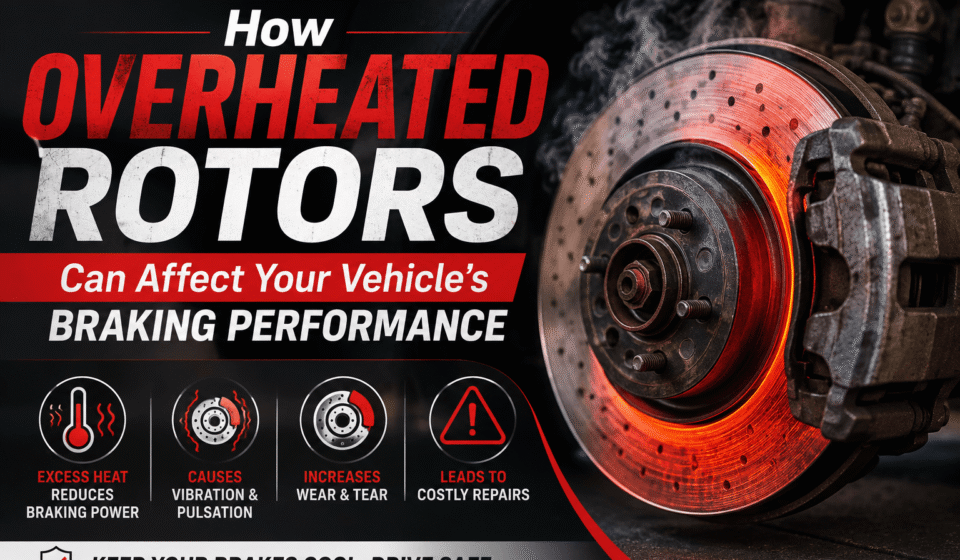

Each time your vehicle slows down, brake rotors absorb a great deal of heat. They are intended to control this heat and offer regular stopping power under normal circumstances. But, if brakes are used for too long or too often, they can increase rotor temperature beyond normal. This can decrease braking efficiency over time and cause components to wear out.
In Beaumont, CA, drivers can check for more heat-related issues on their rotors if they perform consistent brake checks. Braking system related professional Rotors & Drums Services in Beaumont, CA can help maintain the braking system’s proper functioning.
Why Do Brake Rotors Get Hot?
The brake rotors get hot due to the function they serve in slowing the vehicle, which they serve in conjunction with the brake pads. As the pads come into contact with the spinning rotor, friction generates heat, which in turn results in the vehicle movement.As the pads make contact with the spinning rotor, friction converts the vehicle’s motion to heat, generating the vehicle’s movement.
Under normal driving conditions, the heat can be dissipated from the rotor as it rotates. But too many brakes can generate more heat than can be dissipated rapidly.
What Causes Rotors to Overheat?
There are several driving conditions that can cause the rotor temperature to rise. Brakes are used more when the traffic is stopped and goes moving, the driver suddenly stops, the vehicle is driven downhill for long periods, the vehicle is towed, or the vehicle is loaded with heavy equipment.
The braking system may also have to perform more at high temperatures. If a driver sees these conditions frequently, they should be aware of variations in braking.
How Overheating Can Affect Braking
The surface and condition of a brake rotor can be impacted by excessive heat. If the rotor has been repeatedly exposed to high temperature, it can create an uneven surface or other type of wear.
This can impact the smoothness of the brake pads coming into contact with the rotor. For some cars, the driver may experience vibration, pulsation or alterations in braking characteristics.
Brake Pedal Pulsation Can Be a Warning Sign
If the brake pedal feels pulsating, it could be a problem with the rotor or some other component of the braking system. This is sometimes referred to by drivers as “pedal vibrancy” during braking.
Other symptoms can be caused by heat-related rotors, but rotor issues can also cause these sensations. It is necessary to get a professional checkup to find out what the real cause is.
Steering Wheel Vibration May Point to Brake Problems
Some drivers report vibrating steering wheel during braking. This can be easily observed when braking from a higher speed.
This vibration could also be caused by damage or uneven rotor. But it can also be symptoms of steering and suspension parts, so a thorough examination is necessary.
Repeated Braking Can Increase Rotor Wear
Each time the brakes are applied, friction and heat are generated. With repeated braking, without sufficient cooling time, the rotors are subjected to further thermal stress.
This over time can lead to accelerated wear. Surface damage, thickness issues, scoring, and other issues can be identified by regular inspections.
Beaumont Driving Conditions Can Add Stress
During everyday driving in Beaumont, you can experience traffic, warm weather, hills and frequent stops. These can make braking more difficult.
Don’t assume that warm temperatures indicate overfueling of rotors. Still, if temperatures are higher and the braking is repeated or loads are heavy, the heat load may be greater.
How Drivers Can Reduce Brake Heat
Maintain a safe following distance, and brake smoothly whenever possible.
For longer, downhill roads, an appropriate lower gear can decrease the number of braking stops. Riding practices and vehicle manufacturer’s recommendations should always be followed.
When Should Overheated Rotors Be Inspected?
When heavy braking causes vibration, pedal vibration, abnormal noises, loss of braking action, or a burning smell, have your brakes inspected.
A tech will be able to check the rotors, brake pads, calipers, etc. This can help to identify if the rotors can be serviced or replaced.
Why Professional Rotor Service Matters
It is not always possible to assess the condition of the rotor from the driver’s seat. A professional technician can measure the thickness of the rotor and check the surface for scoring, cracks, uneven wear and other problems.
They can also inspect similar brake parts to ensure that the symptoms are not caused by another issue.
Expert Insight
Well-trained brake shop techs are likely to encounter related problems with rotors when they deal with cars that are used for heavy braking or heavy loads. Sometimes, subtle variations in braking characteristics can occur before the driver experiences major issues in performance.
The only way to detect these changes is to get a regular checkup of your brakes. Quick response to rotor issues can ensure the protection of other braking elements and consistent stopping power.
Conclusion
Overheated rotors can cause excessive wear, vibration, pedal pulsation and varying brake surfaces. The thermal demands on the braking system can be increased by repeated braking, heavy loads, downhill driving, traffic and warm conditions.
Professional Rotors & Drums in Beaumont, CA inspections can aid in the detection of issues that are rotor related prior to them becoming a bigger problem. Getting your car’s brakes serviced regularly helps ensure it brakes smoothly and consistently, and keeps it prepared for everyday driving.
Frequently Asked Questions
Do rotors get hot enough to cause problems when braking?
Yes. Rotor surface issues may result from heat build-up and vibrations, pulsations or changes in the braking feel can be caused by excess heat.
What causes brake rotors to overheat?
Frequent braking, heavy loads, towing, long downhill drives and frequent stop and go traffic can raise rotor temperatures.
Is it possible to repair a hot rotor?
Rotor may be repaired or replaced depending upon its condition and manufacturer’s recommendations. An expert examination can decide which is the right solution.
What causes a steering wheel to shake when braking?
Worn suspension or steering parts can cause similar symptoms as brake vibration, as well. A complete inspection will be able to determine the cause.
What are the things that will prevent excessive heat in the brakes?
Keep a safe distance behind the vehicle, do not prevent other drivers from stopping if necessary, and engage lower gears on long downhill roads if the manufacturer recommends them for your vehicle.