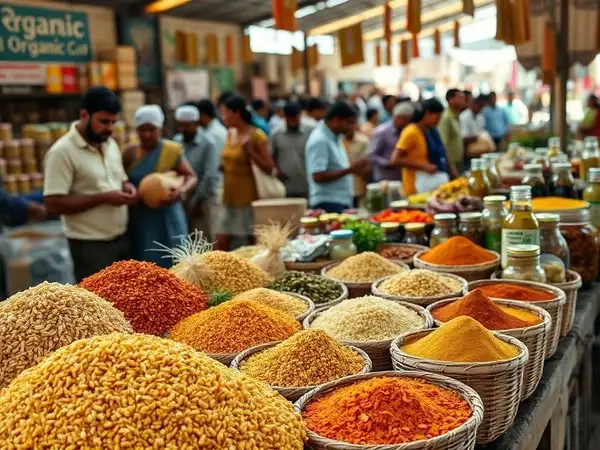

Healthy-Lifestyle and Non-Chemical Living the limelight is the Organic Food Market in India. Consumers across metro and sub-urban India is slowly but steadily developing an interest in ‘health-aware living,’ which translates into an increase in demand for pesticide free fruits, grains, dairy and processed organic products.
Understanding the Scope of the India Organic Food Market
Organic products encompass everything from staples like cereals, pulses, and dairy to fruit and vegetables, spices, and packaged snacks, all produced and packaged according to strict, eco-friendly guidelines without the use of chemicals. This shift in customer behaviour across India has led to organic food sales expanding from just the metros to tier-2 and tier-3 cities due to the internet, direct engagement, certification, and farmer cooperatives, contributing to the growth of the India Organic Food Market.
In fact, according to the market research report, in the year 2025, this sector was valued at around USD 1,842.64 Million, while its value is estimated to reach around USD 13,459.81 Million in the year 2035, at a nearly 22.00% CAGR over the forecast years. Driven by the increasing demand from health-conscious youth, coupled with a rising understanding and awareness of health initiatives and global trends – driven heavily through the influence of various social media platforms and the internet in general – India has been transformed into one of the largest organic food markets in the world.
Key Growth Drivers Fueling Demand
Several factors are pushing this category forward at an impressive pace:
• Increased health consciousness- awareness related to lifestyle diseases like obesity, diabetes, hypertension, etc, among people household is changing towards opting for chemical free, nutrient food.
• Organic certification schemes: Various Government schemes like soil health card scheme, certification subsidy scheme, organic certification promotion scheme etc have assisted farmers to adopt organic farming.
• Reach in Retail and e-commerce: Increasing availability through purpose-built organic grocery stores, supermarket aisles and online grocers has given customers better product access and accessibility.
• Growth of the urban middle class: This group has the highest potential for spending a premium price on items perceived to be more nutritious and healthier.
• Export Opportunity: The good export name India as largest exporter of Organic Spice & rice is enhancing Indian infrastructure & quality standards as well.
Challenges Facing the Sector
Despite strong momentum, a few hurdles continue to affect the pace of growth:
• Comparisons of cost with that of typically produced foods as the increased cost is not accessible to less price-sensitive buyers.
• A lack of understanding in small villages and towns of the advantages that organic foods provide.
• Supply chains which are disjointed; and, with different certifying authorities per country/region.
• A short shelf-life of many organic produce which is more burden to the cold chain facilities and logistic system.
Regional and Category Trends
Leading the charge for organic cultivation and consumption are the Western and Southern regions (Maharashtra, Karnataka, and Tamil Nadu) due to the strength of cooperative structures, established export-oriented farming clusters. Organic cultivation is growing in Northern States too, primarily for pulse and oilseed crop acreage in Madhya Pradesh and Rajasthan. The category breakdown shows organic Staples (rice, pulses, spices) command maximum volume, followed by organic dairy, packaged foods (snacks and beverages) proving to be high growth category due to increasing urban convenience-seeking lifestyles and appetite for clean-labelled foods.
Future Outlook
Going forward, tech integration such as using the blockchain for tracing, QR code verification for certifications, and setting up direct-to-consumer supply chains are also anticipated to lend a higher degree of trust to consumers. Joint ventures between agri-tech companies and Farmer Producer Organizations (FPOs) are also doing a round in curbing middlemen price margins which could slowly make their way to retail. So, organic may slowly turn into one thing the everyday eats – or not; as shoppers grow to be more conscious about organic issues, the financial system of scale could even cut prices in the upcoming decade.
Frequently Asked Questions
1. What’s the Size of the India Organic Food Market?
In 2025 the market was assessed at approximatelyUSD1,842.64 million and will continue growing steadily during the next decade. India’s demand for non-chemically food is rising, so the Indian Organic Food Market size will only continue increasing!
2. What is the estimated growth for this industry sector?
The report estimates a significant CAGR of 22.00% during 2026 and 2035, which would result in a total market size of roughly USD 13,459.81 million in the year 2035.
3. What products hold largest share within the organic category in India?
Organic rice, pulses, spices and tea have largest market share; the dairy segment is expected to boost significantly followed by packaged food segment driven by increased urban purchasing power.
4. Why Is Organic Food So Expensive?
These high expenses come from its manual labour intensive farming methods, fees to obtain organic certifications, less amount produced, and its less efficient supply chain compared to those for traditional agriculture.
5. What Role Do Policies Play?
Subsidies, certification support, and promotional schemes for organic farmers are helping expand cultivation area and improve product availability nationwide.
Conclusion
India organic food market forecast, market growth, and key trends: the future trends and opportunities for 2030 | The health of Indians are gradually growing awareness towards these products along with changing eating and lifestyle habits, the availability of retail format including modern formats are expanding the growth of the India Organic Food Market. Although pricing the of organic food products and supply chain fragmentation issues exist for this market but market share is projected to sustain the double digits. To understand detailed market sizing and the forecast available through this market research for stakeholders interested in business India organic food, let’s look at the Expert Market Research report.