
Without appropriate rules and regulations, the workplace can turn into hell.
However, imagine a work environment where employees are comfortable and enthusiastic to hang on. You know what’s behind that? It is HR that makes it a reality.
Things have, however, changed in workplaces. And now, it is time for HR to make big changes. But how to do it? Does it make its own policies and rules?
No.
Instead, they should follow the Employment Rights Act. This is perfect to protect employees’ rights.
But you can not establish policies overnight. In fact, implementing rules is not easy. They require proper action, which is taken by the HR.
In this blog, we will discover HR’s contribution to the Employment Rights Act in this guide, using real stories.
Let us jump right in.
What the Employment Rights Act Really Means
In the year 2024, the UK tightened its work rules. The lawmakers thought there were so many mistakes in the old policies that it made it harder for employees to work.
So they decided to change the rules. And since then, the rights of workers have evolved. For example, now they get:
- Flexible hours
- Fair pay
- Unfair dismissal protection.
But this is not enough. In fact, this also has some issues. For example, many companies do not allow zero-hour contracts.
Sometimes employees also have to define their contracts on the first working day. In fact, new moms are given additional support.
But isn’t it something that everyone desires?
Well, companies are forced to act on it to make sure everyone follows the rules or face fines.
Here, HR comes in. They make difficult choices to be easy. And after all the chaos is quieted down.
HR starts with Smart Training
The Employment Rights Act provides guidelines on fair work. This implies that all workers are subjected to equal treatment and policies. But how to put this change into effect?
Well, training lays the foundation for implementing a change. Workshops are conducted by HR, and in a short time, the managers are informed about the rules.
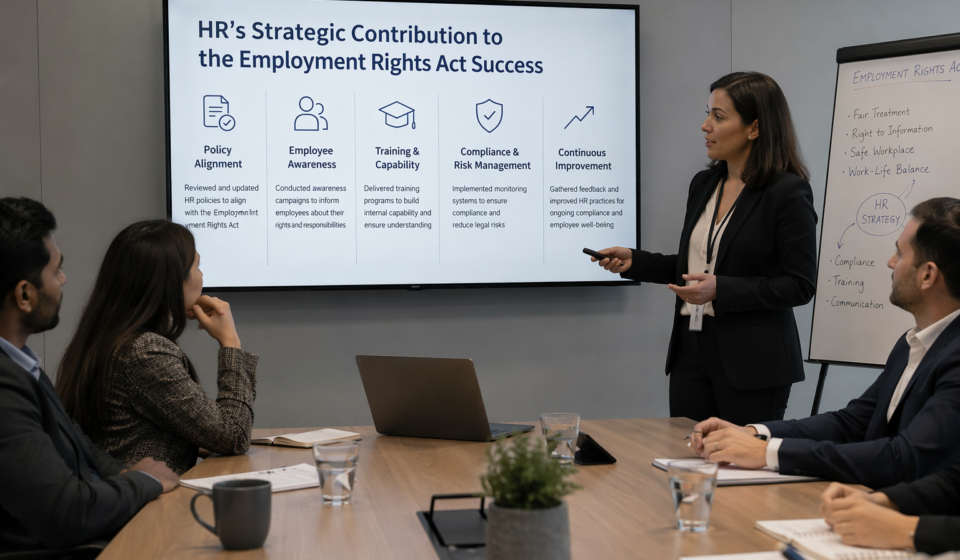
This shows HR’s strategic contribution to the Employment Rights Act success.
In addition, policies are also drafted by the HR. They recreate handbooks and make sure that all employees read and adhere to them.
Checklists are also used by them. For example:
- Have you issued a day-one contract? Check
- Was flexible work offered? Check
HR Shapes Flexible Working Policy
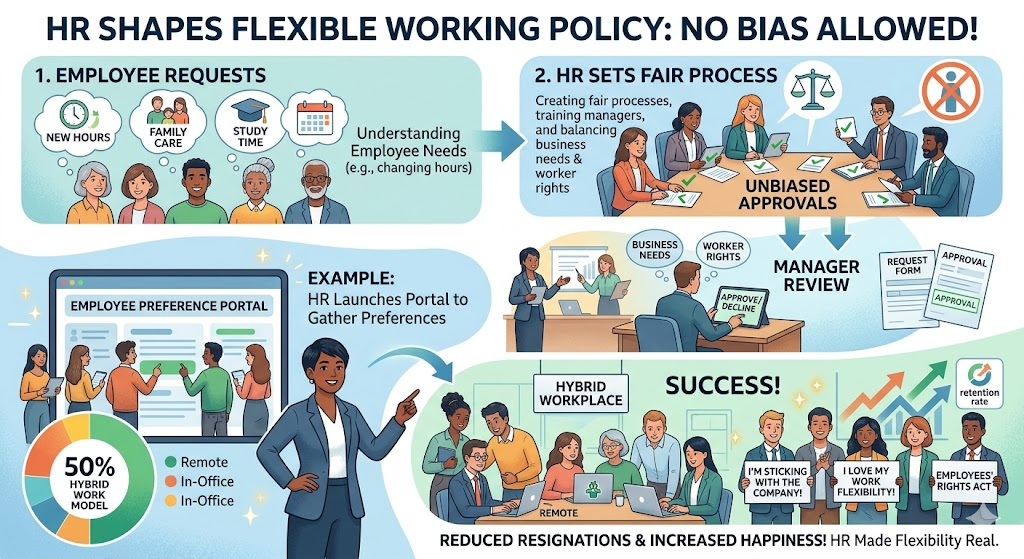
One of the significant aspects of this Act is the flexible work policy. Not surprisingly, workers usually require adjustments in their working hours according to their requirements. It could be due to different reasons.
And thus it is the HR that administers these requests and establishes fair processes. And the good news is, there is no bias permitted!
I have also observed HR in drawing various forms by asking for assistance from an HR assignment helper. It is then filled by employees. Next, they are reviewed by the managers. These forms give details of what employees require in the company or their level of feelings concerning the policies in place.
We may know this by an example. A form was developed by the HR department of a company, and the employees were questioned about what model of work would suit them.
You won’t believe that 50% of employees suggested a hybrid working model. So, HR caused that to happen in the workplace at their request.
Consequently, the employees adored it, and what more? Planning to quit, the employees chose to remain at the company.
Tackling Unfair Dismissal with HR Smarts
We all know that dismissals cause trouble in a workplace. For example, unfair dismissal can harm an employee’s public image. And no company hires that employee.
But this act has tightened the rules. It offers protection against dismissal without a fair reason and proper procedure.
To prevent this from happening, HR documents everything, such as:
- Performance charts
- Warnings
- Improvement plans
…And many other necessary documents.
Well, they keep the record clean.
It is important to mention that HR also spots red flags in the company. What if the manager pushes their employee too hard? HR steps in at that moment. They make sure to coach the managers and address the issue properly.
Tackling Compliance with Real Numbers
I think rules are just a waste if nobody tracks them. So this is when HR steps in with clear numbers. They build simple dashboards and show contract updates.
They also show flexible work requests and training completion rates. Also, managers see the facts right away.
For example, in a UK-based company, HR created a basic tracking sheet to check with the department every week.
Guess what? HR found two teams’ missing paperwork. So eventually they had to act fast and fix it. And the best part is that no one got fined, and the team felt secure.
This shows how HR turns law into daily habits. They do not just read the act; they measure it.
HR also uses these numbers in board meetings. They show leaders where money flows and prove that fair treatment cuts costs.
Guiding Managers through Daily Changes
Managers have a lot of work to do. So they often work with different strategies like using the Eisenhower Matrix, the 3-3-3 method, and others.
But at times, managers also need steady guidance. So who is responsible for that? HR.
They sit with directors to understand their difficulties and fix relevant issues. They also help them understand the rules and tell them how they can work accordingly.
For example, a manager was struggling to manage deadlines. So HR met with the board and broke down the new contract rules.
HR did not work behind closed doors, but they walked the floor. Leaders also trust HR when they deliver results and not just keep giving constant warnings.
Moreover, HR also helps with hiring. They update job ads to match new standards and rewrite interview questions. In addition, they remove bias and make sure every candidate gets a fair shot.
Catching Disputes before they Turn Big
Arguments start small in a workplace, but within the blink of an eye, they get big. And a company never wants a problem to get big.
So the fix is for HR to look for early signs. They watch for:
- Warning signs
- Missed breaks
- Sudden mood drops
- And repeated complaints.
HR tries to fix issues before lawyers get involved.
For example, a logistics company in Birmingham faced a problem. The drivers working there kept complaining about route changes. So the HR met with the respective managers and discussed this problem with them. They then decided to change their routes under the given policy.
HR proved that catching these problems early can save from bigger troubles. Employees also notice the care, and this builds trust over time.
HR also trains managers on difficult conversations. They show how to give feedback without anger and teach active listening.
They model respectful language so managers feel more confident and staff feel more respected. The whole chain breaks down before it snaps. Disputes turn into dialogues, and tension turns into solutions.
Use Simple Tech to Keep the Rules Clear
Technology plays a huge part now in workplaces. HR uses tools that simplify the process.
However, they avoid heavy software that confuses staff. Instead, they test platforms for ease of use.
Let us understand this with an example: A company was working with difficult applications. They then moved to using a lighter app. HR loaded all policy updates there, and the employees would be notified there.
Additionally, they could easily read recent changes on their phone and also sign digital documents. This practice reduces those paper piles, and the error rate also drops.
The app logged every action. And now audits took hours instead of weeks.
Guess what? HR saves dozens of work hours each month. And they put that time back into coaching and mentoring new supervisors.
Conclusion
Let us be real. Laws on paper do not change a workplace. It is the people who change it. And this is where HR shines.
They take the Employees Act Right and turn it into everyday actions. These include flexibility, tackling unfair dismissal, looking for small issues in the company, and others.
When an HR leads with empathy and fairness, employees feel seen and heard. And the company grows.
So it is not just ticking the boxes. But to create a place where people want to work. And that? That’s the real win.