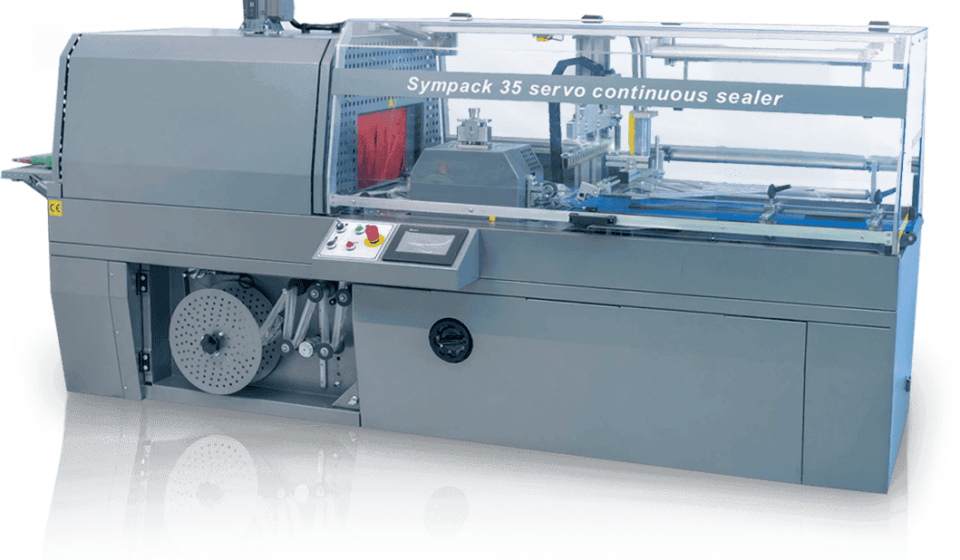

Shrink wrapping is widely used to protect products, group items, and create a consistent package suitable for handling, storage, and distribution. However, packaging requirements vary considerably between products and industries. Product dimensions, film type, production volume, available floor space, and desired automation level can all affect equipment selection. Understanding these factors is important when evaluating a shrink wrap machine for sale, because the most suitable system depends on the application rather than simply the machine’s size or operating speed.
What Is a Shrink Wrap Machine?
A shrink wrap machine uses heat-sensitive plastic film to enclose a product or group of products. The film is typically positioned around the item, sealed, and exposed to controlled heat so that it contracts around the product.
When evaluating a shrink wrap machine for sale, buyers should first understand how each machine handles the product and film. A machine designed for individual retail products may not be appropriate for large bundles or high-volume industrial applications.
What Factors Should You Consider Before Buying?
Product Size and Shape
Product dimensions directly affect machine specifications. The maximum product width, length, and height must fit within the equipment’s working area. Irregularly shaped products may also require specialized handling or sealing configurations.
Production Volume
Production requirements help determine the appropriate level of automation. Lower-volume operations may have different needs from facilities running continuous packaging lines.
Machine speed should also be considered alongside feeding, sealing, shrinking, changeover, and operator handling. A machine’s advertised speed does not necessarily represent the actual output of an entire packaging line.
Film Type
Shrink films differ in their characteristics and operating requirements. Common industrial applications may use materials such as polyolefin or polyethylene, depending on the product and packaging objective.
When Do You Need a Shrink Tunnel?
A heat tunnel is used after sealing to apply controlled heat to the shrink film. As the film passes through the heated chamber, it contracts around the product to create a tighter package.
Some systems also combine sealing and tunnel operations into a single machine. This can reduce the number of separate handling stages and make the equipment suitable for applications where space or workflow integration is important.
How Does Automation Affect Equipment Selection?
Automation can reduce repetitive manual handling and provide more consistent product movement. However, automation should be selected according to actual production needs.
A fully automated packaging line may incorporate product feeding, sealing, shrinking, conveying, and discharge. Semi-automatic systems can require operators to perform some positioning or feeding tasks while the machine handles the primary packaging process.
When comparing a shrink wrap machine for sale, consider how much manual intervention is required between each stage. A machine that fits current production needs may also need sufficient flexibility to accommodate future volume increases.
What Features Can Improve Packaging Consistency?
Temperature control is particularly important because insufficient or excessive heat can affect shrink quality. Conveyor speed also influences how long products remain exposed to heat.
Modern tunnel systems may provide adjustable temperature and conveyor settings, allowing operators to establish appropriate conditions for different packaging applications.
How Should You Compare Available Machines?
It is important to consider whether the machine can integrate with existing conveyors, sealers, feeders, or other packaging equipment. For high-volume applications, the complete line should be evaluated rather than focusing on one machine in isolation.
The best shrink wrap machine for sale is not necessarily the one with the highest stated speed or the largest capacity. Instead, compare equipment based on product dimensions, film compatibility, required throughput, automation level, electrical requirements, available space, and expected operating conditions.
Conclusion
Selecting packaging equipment becomes easier when purchasing decisions are based on actual production requirements rather than specifications alone. The shrink tunnel is another important consideration when the process requires controlled heat application and consistent film contraction. By evaluating the complete packaging workflow, businesses can select equipment that supports reliable packaging quality and efficient day-to-day operation.