Fashion design is one of the most popular creative career options among students after Class 12. The industry combines creativity, styling, textiles, technology, branding, and business. Fashion designers create clothing, accessories, footwear, and fashion collections that match trends and customer preferences.
Many students want to know how to become a fashion designer after 12th because the field offers exciting career opportunities in apparel brands, luxury fashion, retail companies, media, styling, and entrepreneurship.
A professional fashion design course helps students build technical skills, creative understanding, portfolio quality, and industry exposure. Students learn fashion illustration, garment construction, textiles, styling, CAD software, pattern making, and fashion communication through practical training.
Wisdom College for Creativity & Design offers industry-oriented fashion design programs that focus on practical learning, workshops, internships, portfolio development, and career preparation for students interested in the fashion industry.
What Does a Fashion Designer Do?
Fashion designers create clothing and fashion products for different markets and audiences. Their work includes designing garments, selecting fabrics, researching trends, sketching concepts, and developing collections.
Fashion designers may work in:
- Apparel brands
- Fashion houses
- Textile companies
- Retail businesses
- Film and media industry
- Fashion magazines
- Styling agencies
Some designers specialize in bridal wear, luxury fashion, streetwear, sportswear, sustainable fashion, or fashion communication.
The profession requires creativity, observation skills, technical understanding, and awareness of changing market trends. Designers also work closely with production teams, stylists, photographers, and marketing professionals.
Modern fashion design combines art and technology. Designers now use digital tools and software for illustration, pattern making, and virtual fashion presentations.
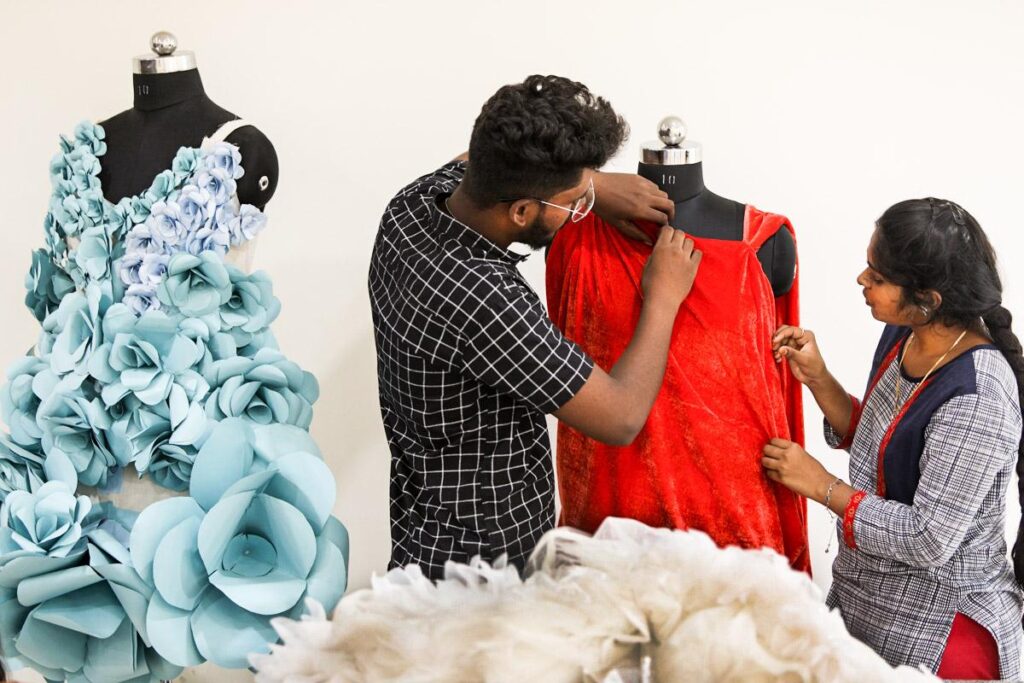
How to Become a Fashion Designer After 12th
Students from any stream can pursue fashion design after completing Class 12. Arts, Commerce, and Science students are all eligible for most fashion design courses.
The process usually includes:
- Complete Class 12
- Choose a fashion design course
- Build creative skills
- Learn design software and technical subjects
- Create a professional portfolio
- Complete internships and practical projects
- Apply for jobs or start freelance work
Students should focus on both creativity and practical skills because the fashion industry values technical understanding along with design ideas.
A strong portfolio and internship experience can improve placement opportunities significantly.
Choose the Right Fashion Designing Course
Selecting the right course is important for career development. Different programs offer different levels of specialization and practical exposure.
Popular fashion design courses include:
- Diploma in Fashion Designing
- Bachelor in Fashion Design
- B.Des Fashion Design
- Fashion Styling Courses
- Textile Design Programs
- Masters in Fashion Design
Students should compare:
- Course curriculum
- Faculty
- Industry exposure
- Internship opportunities
- Portfolio training
- Placement support
Industry-oriented programs help students understand real-world fashion environments more effectively.
Develop Creative and Technical Skills
Fashion design requires more than sketching ability. Students must understand garments, fabrics, colors, styling, and construction techniques.
Important skills include:
- Fashion illustration
- Pattern making
- Garment construction
- Textile understanding
- Fashion communication
- Trend forecasting
- Styling
- Creativity
- Time management
- Presentation skills
Technical skills improve through consistent practice and practical assignments.
Students should also stay updated with current fashion trends, designer collections, and global fashion markets.
Best Fashion Designing Courses After 12th
Students can choose diploma, degree, or certification programs depending on career goals and educational plans.
Degree programs generally provide deeper technical and theoretical understanding, while diploma programs focus more on practical learning and faster industry entry.
Fashion education helps students learn:
- Design development
- Textile science
- Fashion marketing
- CAD for fashion design
- Portfolio presentation
- Fashion styling
- Apparel production
Professional training also improves communication and teamwork skills through collaborative projects and workshops.
Diploma in Fashion Designing
A diploma course is suitable for students who want practical training within a shorter duration.
The course usually covers:
- Fashion sketching
- Garment construction
- Fabric studies
- Pattern making
- Styling concepts
- Fashion software
Diploma programs help students enter the industry quickly and build practical experience.

Bachelor Degree in Fashion Design
Bachelor degree programs provide comprehensive training in fashion design and related subjects.
Students learn:
- Advanced design concepts
- Textile innovation
- Fashion branding
- Fashion communication
- Merchandising
- Fashion technology
Degree programs also include internships, fashion shows, workshops, and portfolio development activities.
Skills Required to Become a Fashion Designer
Fashion designers need a combination of creative, technical, and professional skills.
Creativity is important, but technical execution and communication abilities are equally valuable.
Important skills for fashion designers include:
- Creativity and imagination
- Drawing and illustration
- Fabric knowledge
- Trend analysis
- Styling sense
- Communication skills
- Attention to detail
- Problem-solving
- Team collaboration
- Time management
Fashion designers must also understand customer preferences and changing industry trends.
Strong presentation skills help designers explain concepts professionally during meetings and portfolio reviews.
Fashion Design Subjects Students Learn
Fashion merchandising programs include both practical and theoretical subjects that help students understand the complete fashion industry.
Common subjects include:
- Fashion illustration
- Textile science
- Pattern making
- Draping
- Apparel construction
- Fashion styling
- CAD for fashion design
- Fashion communication
- Fashion merchandising
- Fashion forecasting
Practical assignments help students apply concepts through projects and workshops.
Students also develop portfolios that showcase creativity and technical understanding.
Does Fashion Designing Require Maths?
Many students ask whether maths is compulsory for fashion design.
The answer is no.
Most fashion designing courses do not require advanced mathematics. Students from Arts, Commerce, and Science streams can pursue fashion design.
However, basic mathematical understanding can help in areas like:
- Measurements
- Pattern making
- Budgeting
- Production calculations
Creativity, design interest, observation skills, and practical learning are more important for success in fashion design careers.
How Many Years Does It Take to Become a Fashion Designer?
The duration depends on the course selected.
Typical course durations include:
- Diploma programs: 1–2 years
- Bachelor degree programs: 3–4 years
- Masters programs: 2 years
- Certification programs: 6 months–1 year
Students may start internships and freelance projects while studying to gain industry experience early.
Portfolio quality and practical exposure often matter more than course duration alone.
Career Opportunities in Fashion Designing
Fashion design offers opportunities across multiple sectors within the apparel and lifestyle industries.
Graduates can work in:
- Fashion houses
- Apparel brands
- Textile companies
- Fashion media
- Retail companies
- Luxury fashion brands
- E-commerce businesses
- Film and entertainment industry
The industry also supports entrepreneurship and freelancing.
Top Job Roles for Fashion Designers
Popular career options include:
- Fashion Designer
- Fashion Stylist
- Textile Designer
- Fashion Illustrator
- Fashion Consultant
- Apparel Merchandiser
- Fashion Buyer
- Costume Designer
- Fashion Blogger
- Trend Forecaster
Students can choose creative, technical, or management-oriented career paths depending on interests and specialization.
Fashion Designer Salary in India
Fashion designer salaries depend on:
- Skills
- Portfolio quality
- Experience
- Specialization
- Brand reputation
- City and location
Entry-level professionals may start with moderate salary packages, while experienced designers working with luxury brands or independent labels can earn significantly higher incomes.
Freelancers and entrepreneurs can also scale earnings through personal branding and client networks.
The Indian fashion industry continues growing due to e-commerce, social media marketing, retail expansion, and increasing demand for designer wear.
Is Fashion Designing a Good Career?
Yes.
Fashion designing can be a rewarding career for students interested in creativity, styling, garments, and trends.
The industry offers opportunities in:
- Design
- Styling
- Retail
- Fashion media
- Luxury branding
- Costume design
- Entrepreneurship
Creative professionals with strong portfolios and technical skills often build successful long-term careers.
Fashion design also offers international exposure and freelance opportunities.
Students who enjoy creativity, experimentation, and visual storytelling may find the field highly engaging.
Why Choose Wisdom College for Creativity & Design?
Wisdom College for Creativity & Design offers practical fashion education focused on creativity, technical training, and industry exposure.
The institution provides programs designed to help students develop professional skills through workshops, projects, internships, and portfolio-building activities.
Students receive opportunities to improve technical understanding and creative execution through studio-based learning and industry interaction.
The learning approach emphasizes:
- Practical training
- Portfolio development
- Industry exposure
- Fashion workshops
- Technical learning
- Career preparation
Fashion students also gain exposure to real-world assignments that improve confidence and professional readiness.
How to Apply for Fashion Designing Courses
Students interested in fashion design should review admission guidelines carefully before applying.
The admission process generally includes:
- Submit application form
- Upload academic documents
- Attend interview or entrance process if required
- Present portfolio work if applicable
- Confirm admission
Some institutions may conduct aptitude tests or creative assessments.
Students should prepare portfolios professionally and maintain organized presentation quality.
Frequently Asked Questions
Can I become a fashion designer after 12th?
Yes.
Students from any stream can pursue fashion designing courses after completing Class 12.
Which stream is best for fashion designing?
Arts is commonly preferred, but students from Commerce and Science can also enter fashion design programs.
Is fashion designing a good career in India?
Yes.
The fashion industry in India continues growing across retail, e-commerce, luxury fashion, and media sectors.
Does fashion designing require drawing skills?
Basic sketching helps, but professional training improves illustration and design abilities over time.
Can I do fashion designing after 10th?
Yes.
Many institutions offer diploma and certification programs after Class 10.
What is the salary of a fashion designer in India?
Salary depends on skills, experience, portfolio quality, and specialization. Experienced designers can earn significantly higher incomes.