
Open a tin of cookies a week after baking, and you can usually tell what went wrong without tasting one. Soft when they should snap, hard when they should bend, greasy at the edges, or smelling faintly of cardboard. Each of these symptoms points to a specific cause, and each cause points to a packaging fix.
This guide works backward from the problem. Find the symptom you’ve seen, understand the science behind it, and adjust your packaging so it doesn’t happen again.
Symptom 1: My crisp cookies went soft
What’s happening: A cookie is constantly exchanging water with the surrounding air. Dry cookies like shortbread, biscotti, and gingerbread have a low moisture content, so humid air or a damp neighbor can push water into them. Sugar is also hygroscopic, meaning it attracts water, so sugary cookies soften quickly.
Common triggers:
- Boxing cookies before they are fully cool, which traps steam
- Packing them beside soft cookies, fruit-filled cookies, or iced cookies
- Storing the box in a humid kitchen or bathroom-adjacent room
Packaging fix: Choose a tight-fitting closure, add a food-safe inner wrap or bag for extended storage, and keep crisp cookies in their own compartment. Cooling on a wire rack for longer than you think necessary costs nothing and solves half of this problem.
Symptom 2: My chewy cookies turned hard
What’s happening: This is the reverse. A soft cookie holds more water than the air around it, so it slowly releases that water. Dry air, loose lids, and large empty spaces inside the box speed this up.
Packaging fix: Reduce the open air inside the box. A box that fits the cookie count leaves less space for moisture to escape into. Wrapping soft cookies in pairs, back-to-back, or in individual parchment sleeves also slows drying. A tight seal matters more here than for any other cookie type.
Symptom 3: They taste stale or slightly off
What’s happening: Fats react with oxygen over time, a process called oxidation. Butter, nuts, seeds, and whole grains are the most sensitive. The result is a flat or faintly paint-like taste, even when the cookie still looks fine.
Packaging fix: Limit oxygen exposure with an inner liner or a sealed bag, and don’t leave a box half-open for days. For nut-heavy or butter-rich cookies, plan for a shorter shelf life rather than hoping packaging alone will extend it. Store boxes away from sunlight, since light speeds up fat breakdown.
Symptom 4: The cookies smell like each other
What’s happening: Aromas travel through the shared air in a box and get absorbed by fats. A peppermint cookie can leave a minty trace on a plain butter cookie within a day or two.
Packaging fix: Separate strong flavors using dividers, paper cups, or individual wraps. In mixed gift boxes, put delicate flavors like vanilla or almond in their own sealed section away from spiced, citrus, or mint varieties.
Symptom 5: The chocolate looks dull, or the icing is smeared
What’s happening: Heat softens cocoa butter and the fats in buttercream and glaze. When they cool again, the fat rises to the surface, leaving a pale, dusty film. Icing may also run or stick to the lid.
Packaging fix: Let icing set completely, which can take many hours depending on the type, before boxing. Keep the box away from heaters, ovens, and sunny windowsills. For shipping in warm weather, ask whether insulated mailers or cool packs are worth the cost for chocolate-coated items.
Symptom 6: There’s moisture on the box or the cookies
What’s happening: This is condensation. When a cold box is moved into a warm room, water vapor in the warm air condenses on its surface. It can soften the board, dampen the cookies, and spoil printed finishes.
Packaging fix: Let chilled or cold-stored boxes sit closed at room temperature for a while before opening. During winter shipping, protect parcels from sitting outside on cold doorsteps, and tell customers to bring them indoors promptly.
Symptom 7: Broken pieces at the bottom
What’s happening: This one isn’t environmental, but it often gets blamed on temperature. Fragile cookies break because of movement, not weather. A box with too much room lets cookies slide and hit one another.
Packaging fix: Use trays, dividers, or crinkle paper to hold cookies in place, and add an outer shipping carton with cushioning for parcels.
Quick Reference: Symptom, Cause, Response
| What you notice | Main cause | Best packaging response |
| Crisp cookies go soft | Moisture absorbed | Tight closure, separate compartments, full cooling |
| Chewy cookies harden | Moisture lost | Snug fit, less empty space, individual wraps |
| Stale or off flavor | Oxidation from air | Inner liner, sealed bag, shorter shelf life |
| Flavors mix | Shared air, aroma transfer | Dividers and separate wraps |
| Dull chocolate, smeared icing | Heat | Cool storage, set icing, insulation when shipping |
| Damp board or cookies | Condensation | Acclimatize boxes before opening |
| Broken cookies | Movement | Trays, cushioning, outer carton |
Picking the Right Box for the Job
Once you know which problem you’re most likely to face, matching the box becomes easier.
Board type. Coated or lined paperboard resists grease and humidity better than plain uncoated board. Rigid boxes keep their shape under stacking, which protects fragile cookies.
Food contact. Anything touching the cookie should be rated food-safe. Ask suppliers for written confirmation, and check your local regulations on food packaging materials.
Windows. They sell well, but the clear film should be food-grade and ideally recyclable. Keep windows small if the cookies are sensitive to light.
Closure. Lids that sit tightly, tuck flaps with a seal, or a ribbon with a sticker all help limit airflow and show that the box hasn’t been opened.
The Holiday Factor: Christmas Cookie Boxes
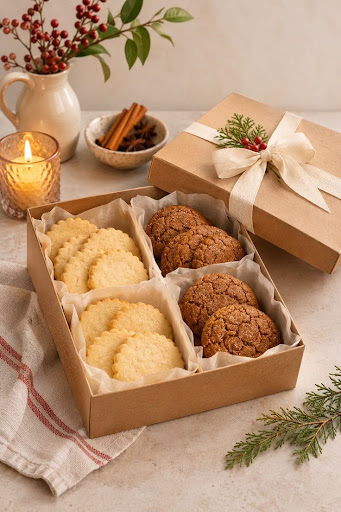
December adds pressure on every point above. Shipping takes longer, weather swings from freezing outdoors to warm indoors, and gift boxes often hold several flavors at once. Well-built Christmas cookie packaging boxes should handle these conditions first and look festive second. A sturdy outer carton, internal dividers, and a snug closure matter more than any decoration, though printed designs, ribbons, and message cards are worth adding once the protection is sorted. Order custom boxes early, since printing and delivery slow down during peak season.
Run a Seven-Day Test
Before a holiday launch, pack three sample boxes exactly as you’d sell them. Open one on day one, one on day four, and one on day seven. Note texture, smell, and appearance each time. Send one test parcel to a friend in a different town if you plan to ship. A week of simple notes will teach you more than any supplier brochure.
Final Thoughts
Cookies don’t spoil dramatically; they fade gradually, and moisture, air, and temperature are behind almost every change. Read the symptoms, find the cause, and adjust the box, the liner, or the storage conditions. A package that manages these three forces is the difference between a cookie that tastes as baked and one that merely resembles it.