
Construction businesses rarely operate under identical conditions throughout the year. Project sizes, client expectations, site layouts, access limitations, environmental considerations, and workforce requirements can change from one job to another. Equipment that offers flexibility across different applications may help contractors respond to these changes while maintaining organized operations.
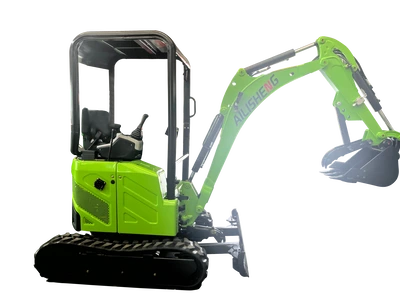
An electric mini excavator can be considered as part of a business’s response to changing construction requirements because it combines compact excavation capability with electric operation. Depending on the model, it may support groundwork, utility preparation, landscaping, renovation, and other localized tasks. Its value depends on how effectively the equipment matches the company’s actual projects and operating conditions.
Responding to Different Project Sizes
Construction work ranges from large developments to small property improvements. Contractors may undertake extensive earthmoving on one project and then move to localized excavation on another.
Mini excavators can support smaller tasks where larger machinery may be unnecessary or difficult to position. Their compact dimensions may help contractors work within limited areas while undertaking excavation activities suited to the machine’s capabilities.
Businesses should evaluate their project history and anticipated workload. If smaller excavation tasks occur regularly, compact equipment may provide an option for addressing them without relying exclusively on larger machines.
Adapting to Restricted Access
Access conditions can change significantly between projects. Residential sites may have narrow entrances, while commercial properties may include restricted service areas, existing structures, or limited space for machinery.
Compact equipment may offer greater flexibility where access is constrained. Contractors should compare machine width, height, length, operating weight, and turning characteristics with the working environments they commonly encounter.
Access planning should include delivery, unloading, movement into the work area, and operating clearance. A machine must be capable of safely reaching and performing the planned task rather than simply fitting through an entrance.
Supporting a Wider Range of Applications
Changing construction needs may involve different excavation tasks. Landscaping work could require ground preparation and planting-area excavation, while utility projects may involve trenches for drainage or underground services. Renovation activities may require localized digging around existing structures.
An excavator’s versatility can depend on digging range, bucket capacity, attachment compatibility, hydraulic performance, and operating weight. Contractors should identify the applications they expect to perform and compare specifications accordingly.
Attachments may help support different tasks, but compatibility and manufacturer limits must be verified. Businesses should avoid assuming that a compact machine can undertake every type of excavation or material-handling activity.
Electric Power and Changing Environmental Expectations
Construction clients may have different environmental or operational requirements. Some projects may place greater emphasis on exhaust emissions, noise management, or equipment operating characteristics.
Electric excavators produce no exhaust emissions directly from the machine during operation. They may also reduce engine-related noise compared with conventional equipment. These characteristics can be relevant in selected residential, urban, indoor, or noise-sensitive environments.
However, the machine’s suitability depends on the complete site assessment. Ventilation, dust, digging noise, charging, electrical infrastructure, and other safety requirements remain important.
Charging and Flexible Work Scheduling
Electric equipment requires charging arrangements that support the business’s operating schedule. Battery capacity, charging time, expected operating duration, and available electrical supply influence machine availability.
Contractors should consider whether charging can take place at their depot or project location. Work patterns may allow charging during breaks or planned downtime, but actual energy consumption can vary with workload, attachments, soil conditions, and temperature.
A realistic charging plan is necessary when equipment is expected to move between projects or undertake longer operating periods.
Maintenance and Fleet Flexibility
Equipment flexibility also depends on maintenance and service availability. Businesses should review maintenance schedules, warranty coverage, parts supply, technical support, and battery service arrangements.
Routine inspections and servicing help maintain equipment condition and support safe operation. Contractors should ensure that operators understand the machine’s maintenance requirements and operating limitations.
If electric equipment is added to an existing fleet, managers should also consider training, storage, charging infrastructure, transport, and fleet utilization.
Planning for Future Requirements
Construction businesses can evaluate changing needs by reviewing upcoming projects, expected equipment utilization, and potential new service areas. A machine that supports several compatible applications may provide greater flexibility than one selected for a single occasional task.
However, investment should be based on realistic demand. Contractors should compare ownership costs with rental alternatives and consider how the equipment will contribute to future work.
Conclusion
Electric mini excavators may help construction businesses adapt to changing requirements through compact dimensions, suitable excavation capabilities, and electric operating characteristics. Their usefulness depends on access, workload, attachments, charging arrangements, maintenance, and the projects the company expects to undertake. By reviewing current operations and future demands, contractors can determine whether electric compact excavation equipment offers a practical addition to their capabilities.