
Fastener performance depends on more than the strength of the metal used to manufacture it. Dimensional accuracy, thread consistency, surface finish, and resistance to corrosion all influence how reliably a fastener performs in demanding environments. For a Silicon Bronze Fasteners manufacturer, precision machining helps transform suitable bronze material into components that meet defined engineering requirements.
By controlling cutting operations, tool movement, tolerances, and inspection procedures, manufacturers can improve product consistency and assembly reliability. Understanding these processes helps engineers and procurement teams evaluate fastener quality, select appropriate specifications, and make informed decisions for electrical, marine, industrial, and infrastructure applications.
Understanding Silicon Bronze Fasteners
Silicon bronze is a copper-based alloy containing silicon, often with additional alloying elements such as manganese or zinc depending on the grade. It is valued for its corrosion resistance, useful mechanical properties, and suitability for various demanding environments. Its properties make it relevant for applications involving moisture, atmospheric exposure, and certain marine conditions.
Fasteners manufactured from silicon bronze include bolts, nuts, screws, washers, and other threaded components. Their performance depends on the alloy grade, manufacturing route, component design, and operating conditions. Although the material offers valuable characteristics, those benefits cannot compensate for inaccurate dimensions, damaged threads, or inadequate quality control.
Precision machining addresses these manufacturing challenges by removing material in a controlled manner. It helps produce components that correspond to engineering drawings, fit mating parts correctly, and maintain consistent characteristics across production batches.
1. Improving Dimensional Accuracy
A fastener must match its specified diameter, length, head size, shank geometry, and thread dimensions. Variations can complicate assembly, distribute loads unevenly, or prevent proper seating.
Computer numerical control (CNC) machining guides cutting tools along programmed paths. With controlled setups and tooling, it repeats critical dimensions. Turning forms shanks, while milling creates flats, and specialised head features.
Accuracy matters when fasteners fit housings, connectors, brackets, or equipment assemblies. Drawing-based inspection confirms tolerances. Precision means meeting design requirements, not pursuing unnecessarily tight tolerances.
2. Producing Consistent Threads
Threads connect bolts, screws, and studs to nuts or tapped holes. Poor threads may bind, cross-thread, loosen, or distribute loads incorrectly.
Precision cutting and tapping control thread diameter, pitch, profile, depth, and alignment. Suitable tools and stable workholding reduce vibration and burrs. Cutting parameters must suit the alloy because copper alloys behave differently from steel.
Thread gauges verify conformity to specified standards. Batch consistency improves installation and reduces rework. Where suitable, thread rolling may be evaluated as an alternative process.
3. Enhancing Surface Finish
Surface finish affects mating contact and installation. Rough marks, burrs, sharp edges, or debris can interfere with seating and assembly.
Sharp tools, suitable feeds, and finishing operations produce cleaner surfaces. Deburring removes raised edges, while careful handling prevents scratches. Required finish depends on the drawing and application.
Clean surfaces make defects easier to spot, but appearance alone does not prove quality. Surface checks must complement dimensional and material verification.
4. Protecting Material Integrity
Silicon bronze offers useful corrosion resistance, but material selection and manufacturing still matter. Incorrect alloy identification, worn tools, overheating, and poor handling can compromise quality.
Machining plans should consider alloy grade, stock condition, tool geometry, and heat. Sharp tools and controlled parameters limit friction and damage. Safe chip removal protects the workpiece and process.
Machining does not make a fastener corrosion-proof. Service life also depends on exposure, loading, assembly, and dissimilar-metal contact. Material certificates help verify alloy identity.
5. Supporting Reliable Assembly
Fasteners function as parts of a joint. Head dimensions, shank fit, thread engagement, and bearing surfaces affect assembly. Accurate machining can reduce alignment problems and adjustments.
In electrical assemblies, reliable fit supports contact between components. Marine and outdoor joints also depend on correct assembly and alloy selection. Designers must specify torque, compatible materials, and suitable grades.
A Marin Silicon Bronze Fasteners manufacturer serving specialised applications should understand that product quality involves both component accuracy and its intended operating conditions. Clear drawings, agreed inspection criteria, and communication between design, production, and procurement teams help reduce avoidable variation.
6. Reducing Waste and Rework
Machining accuracy can reduce rejected parts, adjustments, and assembly delays. Stable processes help teams identify variation before it affects more components.
Teams can monitor tool wear, settings, first-piece measurements, and inspection results. Maintenance and documented procedures support consistency. Saved programs help repeat orders when material batches and setups are verified.
Efficiency must not replace inspection. Sampling should reflect product risk, order requirements, and standards. Critical dimensions may need frequent checks before final release.
7. The Role of Quality Inspection
Machining creates the shape; inspection confirms conformity. Checks may include dimensions, thread gauges, visual examination, composition analysis, and specified mechanical tests.
Coordinate measuring and vision systems assess complex geometry, while calibrated calipers, micrometers, and gauges support routine checks. Records should link results to batches and material information.
Quality begins with clear specifications and continues through material checks, machining, finishing, and release. Buyers and manufacturers should agree on standards, acceptance criteria, documentation, and special testing beforehand.
8. Choosing the Right Manufacturing Approach
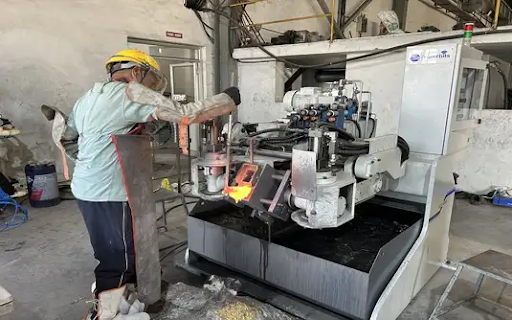
Not every feature needs the same operation. A component may be forged or cast close to its final shape, then machined where close tolerances or accurate threads are essential. This combination can balance material use, production speed, and dimensional control. The appropriate route depends on order volume, geometry, alloy condition, required finish, and the inspection plan. Buyers should provide complete drawings and identify critical-to-function dimensions before quoting begins.
Conclusion
Precision machining improves silicon bronze fastener quality by controlling dimensions, producing consistent threads, refining surface finishes, and supporting reliable assembly. Combining suitable material selection with controlled manufacturing and documented inspection helps maintain product consistency. Buyers should evaluate alloy specifications, dimensional tolerances, thread accuracy, and quality records before purchasing. Choosing a capable Silicon Bronze Fasteners manufacturer helps ensure components meet defined engineering requirements and application needs.
Precision engineering and reliable quality control help manufacturers meet demanding industrial component specifications. Indian Metal Solution Private Limited (IMS) supports precision metal manufacturing through copper alloy forging, gravity die casting, machining, non-ferrous casting, and aluminium pressure die casting. Their capabilities serve electrical, railway, plumbing, automotive, and industrial applications. With manufacturing infrastructure, metrology, material testing, dimensional verification, and quality-focused inspection, IMS works to meet defined component requirements and support consistent production for OEMs and industrial customers worldwide.