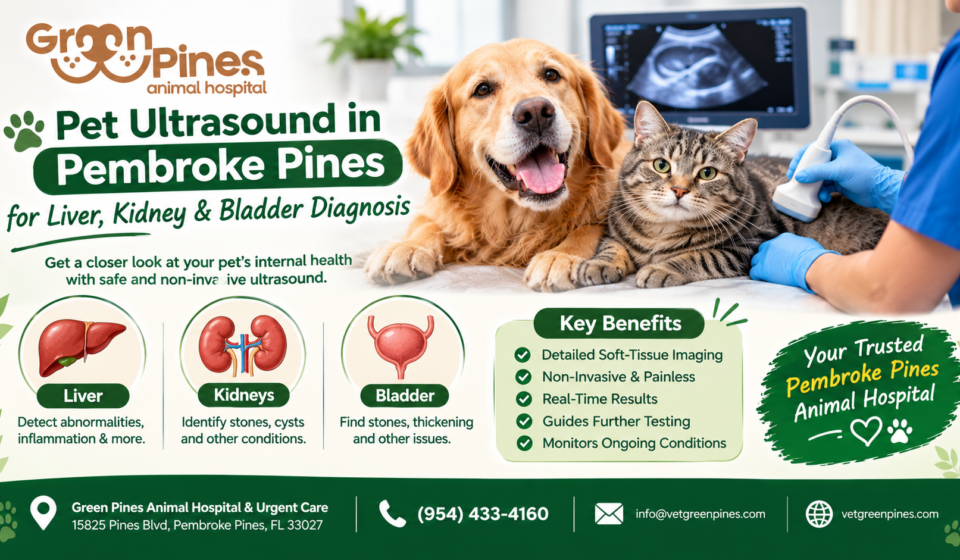

A pet may continue eating, playing, and following its usual routine even when an internal organ is beginning to develop a health problem. Sometimes, the first warning signs are subtle changes in appetite, increased thirst, frequent urination, or unexplained weight loss. These symptoms can point toward several different conditions, making an accurate diagnosis essential.
This is where veterinary ultrasound becomes an important diagnostic tool. It allows veterinarians to look beyond visible symptoms and examine internal organs in detail. For pet owners seeking reliable diagnostic care, pet ultrasound in Pembroke Pines can help identify abnormalities affecting the liver, kidneys, and bladder before they develop into more complicated health concerns.
What Is a Veterinary Ultrasound?
A veterinary ultrasound is a non-invasive diagnostic imaging procedure that uses high-frequency sound waves to create real-time images of internal organs. A veterinarian moves a small handheld device called a transducer over the pet’s abdomen. The sound waves travel through body tissues and return as echoes, which are converted into images on a monitor.
Unlike X-rays, which primarily show the size and outline of internal structures, ultrasound provides detailed information about soft tissues, organ texture, and certain structural abnormalities. It does not use ionizing radiation and is generally painless.
At a Pembroke Pines animal hospital, veterinarians may recommend an abdominal ultrasound when physical examinations, blood tests, or other diagnostic procedures indicate a possible internal health concern. This imaging technique helps narrow down potential causes and determine the next appropriate steps.
Identifying Liver Problems Through Ultrasound
The liver performs several essential functions, including processing nutrients, filtering substances from the bloodstream, supporting digestion, and producing proteins necessary for normal body functions. Changes in liver health can affect multiple systems in a pet’s body.
An ultrasound allows veterinarians to examine the liver’s size, shape, texture, and internal structure. It can help identify abnormalities such as:
- Liver enlargement: An enlarged liver may be associated with inflammation, certain metabolic conditions, or other underlying diseases.
- Cysts and masses: Ultrasound can reveal fluid-filled structures, nodules, and abnormal tissue growth that require further evaluation.
- Diffuse tissue changes: Alterations in liver texture may suggest conditions such as fatty infiltration or inflammatory disease.
- Gallbladder abnormalities: The examination can also assess the gallbladder and identify certain structural changes, including stones or abnormal bile accumulation.
When a pet experiences persistent vomiting, appetite changes, jaundice, or unexplained lethargy, veterinarians may recommend pet ultrasound in Pembroke Pines to investigate possible liver-related causes.
Importantly, ultrasound findings help guide further testing but do not independently confirm every liver disease. Bloodwork or tissue sampling may be necessary to establish a definitive diagnosis.
Detecting Kidney Conditions and Structural Abnormalities
The kidneys play a critical role in maintaining fluid balance, filtering waste products, and regulating essential minerals. When kidney function declines, waste can accumulate in the bloodstream and affect a pet’s overall health.
Kidney problems may develop gradually, making early investigation particularly valuable. Ultrasound helps veterinarians evaluate the size, shape, internal architecture, and surrounding structures of both kidneys.
It may help identify:
- Kidney stones: Mineral formations can sometimes be visualized within the kidneys or urinary collecting system.
- Cysts: Fluid-filled structures may indicate developmental or acquired abnormalities.
- Changes in kidney size: Enlarged or unusually small kidneys may suggest underlying disease.
- Obstructions: Certain blockages affecting urine drainage may cause visible changes in the urinary tract.
- Abnormal tissue patterns: Changes in kidney architecture can provide clues about chronic or inflammatory conditions.
If a pet displays increased thirst, frequent urination, reduced appetite, or vomiting, a Pembroke Pines animal hospital may recommend ultrasound alongside blood and urine tests.
This combination is important because ultrasound evaluates physical structure, while laboratory testing helps assess how effectively the kidneys are functioning.
Examining the Bladder for Urinary Problems
Frequent trips to the litter box, difficulty urinating, accidents indoors, or blood in the urine should never be dismissed as minor behavioral changes. These symptoms may indicate an underlying urinary tract condition.
Ultrasound provides a detailed view of the urinary bladder, allowing veterinarians to examine its walls, contents, and surrounding tissues.
It can help detect:
- Bladder stones: Mineral deposits that may irritate the bladder lining or interfere with urine flow.
- Bladder wall thickening: Changes that may be associated with inflammation or other urinary conditions.
- Masses and growths: Abnormal tissue formations that require additional investigation.
- Blood clots and debris: Material within the bladder that may be associated with bleeding or inflammation.
- Structural abnormalities: Changes in the bladder’s shape or surrounding tissues that may affect normal urinary function.
Through pet ultrasound in Pembroke Pines, veterinarians can investigate these abnormalities and determine whether additional diagnostic procedures or treatment are necessary.
One important consideration is urinary obstruction, particularly in male cats. Repeated straining with little or no urine production requires immediate veterinary attention.
Why Is Ultrasound Valuable for Early Diagnosis?
Many internal conditions share similar symptoms. For example, vomiting may be associated with digestive problems, liver disease, or kidney dysfunction. Likewise, increased thirst can occur with several metabolic and urinary conditions.
Ultrasound helps reduce diagnostic uncertainty by allowing veterinarians to examine multiple abdominal organs during one imaging session.
Its major advantages include:
- Detailed soft-tissue imaging: It provides information about internal structures that may not be visible through a physical examination.
- Non-invasive assessment: The procedure generally requires no surgical intervention and does not expose pets to ionizing radiation.
- Real-time visualization: Veterinarians can observe internal structures as the examination progresses.
- Guidance for additional testing: Ultrasound can help veterinarians identify suitable areas for needle sampling or biopsy when necessary.
- Monitoring existing conditions: Follow-up examinations can help track changes in organ structure and evaluate disease progression.
These benefits make ultrasound a valuable part of diagnostic care at a Pembroke Pines animal hospital, particularly when symptoms are persistent or initial test results require further investigation.
What Should Pet Owners Expect During an Ultrasound?
Most abdominal ultrasound examinations are straightforward. Depending on the area being examined and the pet’s condition, the veterinary team may recommend withholding food for a specific period before the appointment.
A small area of fur on the abdomen may be clipped to improve image quality. The veterinarian then applies ultrasound gel and gently moves the transducer across the skin to capture images of the internal organs.
Most pets tolerate the procedure well, and general anesthesia is usually unnecessary. However, sedation may occasionally be considered if a pet is anxious, uncomfortable, or unable to remain still.
After examining the images, the veterinarian discusses the findings and recommends any additional tests or treatment required. In some cases, ultrasound results may be normal even when a disease is present, so findings must be interpreted alongside the pet’s symptoms, examination, and laboratory results.
Conclusion: Better Visibility Supports Better Veterinary Care
Liver, kidney, and bladder conditions can affect a pet’s health in different ways, but their early symptoms are not always easy to distinguish. Veterinary ultrasound provides a closer look at these essential organs, helping identify structural abnormalities and guide appropriate diagnostic decisions.
If your pet experiences persistent digestive problems, changes in urination, increased thirst, or unexplained weight loss, discussing diagnostic imaging with your veterinarian is a sensible next step. At a trusted Pembroke Pines animal hospital, timely evaluation and appropriate testing can help create a clearer picture of your pet’s health and support informed treatment decisions.
