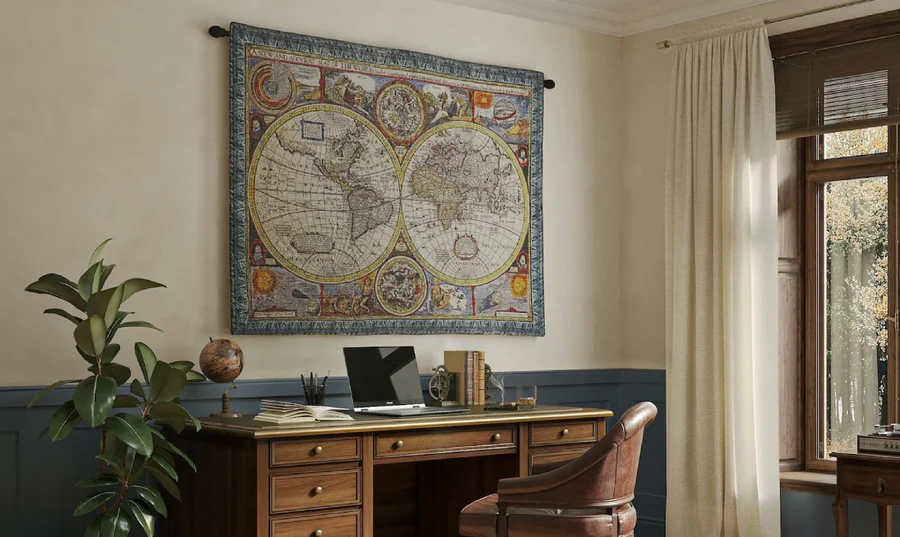

Wall décor can have a significant influence on the character of an interior. While framed artwork, photographs, and painted walls are common choices, textile artwork offers another way to introduce colour, texture, and visual interest. Tapestries can cover substantial wall areas while adding a softer, more layered appearance to a room.
Custom tapestries provide additional flexibility because their design can be selected according to the intended space, theme, colour palette, and dimensions. This makes them suitable for homes, offices, hospitality environments, event spaces, and other interiors where standard wall décor may not provide the desired result.
What is a Tapestry?
A tapestry is a decorative textile that can be displayed on a wall as artwork. Traditional tapestries were woven by hand, often depicting detailed scenes, patterns, or historical imagery. Modern versions can use different textile production and printing techniques to reproduce artwork, photographs, illustrations, patterns, or original designs.
Unlike a conventional framed print, a tapestry introduces a fabric element into the room. This can contribute both visual texture and a softer decorative quality.
Why Choose a Custom Design?
Standard artwork may not always fit a particular wall or interior concept. A custom design can be created around specific requirements, making it possible to consider the available wall dimensions and existing décor.
For example, a large open wall may benefit from a wide panoramic design, while a narrower space could require a more vertical composition. Colour selection can also be coordinated with furniture, flooring, curtains, or other decorative elements.
Custom tapestries can therefore be useful when the objective is to create a more cohesive visual relationship between artwork and the surrounding interior.
Choosing the Right Artwork
The artwork itself is one of the most important decisions. A tapestry can feature landscapes, abstract designs, historical imagery, botanical themes, geometric patterns, illustrations, or personal photographs.
The choice should reflect both the room and the intended atmosphere. A detailed image may work well as the focal point of a relatively simple room, whereas a subtle pattern may complement an interior that already contains several decorative elements.
Image quality is particularly important when using photographs or detailed artwork. Higher-resolution source material generally provides better results when an image is reproduced at a larger size.
Considering Size and Proportion
Scale can determine how effectively wall art fits within a room. A tapestry that is too small may appear disconnected from a large wall, while one that is excessively large can overwhelm the surrounding furnishings.
Before ordering, measuring the available wall space can help establish an appropriate size. It is also useful to consider the furniture positioned below or around the artwork.
For example, a tapestry displayed above a sofa, bed, dining table, or reception desk should generally relate proportionally to the furniture beneath it.
Colour and Interior Coordination
Colour can influence whether a tapestry blends into an existing room or becomes a strong focal point. Some designs use a restrained palette that complements neutral interiors, while others introduce bold colours intended to attract attention.
A useful approach is to identify a few dominant colours already present in the room and consider whether the artwork should repeat, contrast with, or balance those tones.
Lighting should also be considered. Natural daylight and artificial lighting can change how colours and details appear throughout the day.
Maintenance and Care
Fabric wall décor requires appropriate care to maintain its condition. Dust can accumulate over time, so gentle cleaning methods may be recommended depending on the material.
Strong cleaning chemicals should generally be avoided unless specifically approved for the fabric. Care instructions provided for the particular tapestry should take precedence over general cleaning advice.
In rooms exposed to high humidity, additional consideration may be necessary because prolonged moisture can affect textiles.
Conclusion
Custom tapestries offer a flexible approach to wall décor by combining artwork, colour, texture, and personal design choices in a single textile piece. When exploring custom textile artwork, Quality Tapestries can be considered alongside other options while comparing design possibilities, materials, sizing, and care requirements to find an approach suited to the intended interior. Selecting suitable artwork, dimensions, materials, colours, and hanging methods can help ensure the finished piece works effectively within its intended space.