
Introduction
Starting a faith journal can feel surprisingly overwhelming. You’d think it would be simple — pick a blank book, open it up, and start writing. But anyone who’s ever stared at an empty page while trying to connect with God knows it’s not always that straightforward.
The right journal does more than hold your words. It holds space for your questions, your grief, your growth, and your silence before Him. So choosing well actually matters.
What Makes a Faith Journal Different From a Regular Journal
There’s nothing wrong with a plain notebook. But a Christian journal is designed with a very specific intention — to move you toward God, not just toward self-awareness. That’s a meaningful difference. A regular journal might ask you to track your mood or your goals. A faith-based journal asks you what God is saying to you in this season, what scripture is anchoring you right now, and where you’re struggling to trust Him.
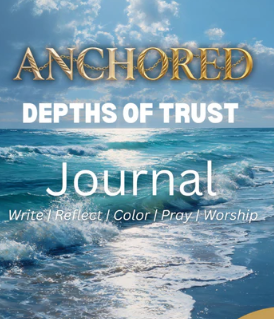
Amanda Perry’s Anchored Journal Series is a solid example of this done well. Each journal in the series is intentionally structured to help you engage with God in a real, personal way — not as a performance, not as a checklist, but as an honest conversation. The difference between journaling about your faith and journaling with your faith is real, and the right format helps you do the latter.
Understand What Season You’re Currently In
This is probably the most important question to ask before you buy anything. Not “what’s popular” or “what looks beautiful on a shelf” — but where are you right now? Are you exhausted and barely holding on? Are you in a quiet season that feels oddly empty? Are you walking through something you can’t quite name yet?
Amanda Perry’s journal series is built entirely around this idea. She designed each journal to meet you in a different season of life — and all of them lead you to the same destination: being anchored in Christ. Not in your circumstances or your emotions or what you can control, but in Him. The Anchored series includes journals for seasons of wilderness, stillness, deep trust, and rootedness — because spiritual journeys don’t move in straight lines, and your journaling tool shouldn’t pretend they do.
If you’re in a season of burnout and exhaustion, a journal that’s light on structure and heavy on pressure to perform will make things worse. You need something with gentler prompts, more breathing room, and scripture woven in as an anchor rather than a task.
Look for Prompts That Start Honest Conversations With God
One of the things that sets a quality guided faith journal apart is the nature of its prompts. Shallow prompts produce shallow entries. You know the kind — “Write three things you’re grateful for today.” Fine. Useful, even. But not the same as a prompt that asks you to sit with God in the middle of your confusion and listen.
The Anchored journals include reflective prompts designed to help you start honest conversations with God, and spacious journal pages to hear and record what He’s speaking back. That word spacious is worth paying attention to. There needs to be room — both literally on the page and metaphorically in the structure — for God to say something you weren’t expecting.
When you’re evaluating a journal, flip through it. Are the prompts open-ended enough to carry a real conversation? Do they point you toward scripture, or just toward yourself? Does the structure feel like a guide, or a grading rubric?
Scripture Integration Matters More Than You Think
A scripture-based journal does something a secular gratitude journal simply can’t — it roots your reflections in something unchanging. When you’re disoriented, when your feelings are loud, when the season feels long, having scripture woven throughout your journaling practice gives your thoughts somewhere solid to land.
Amanda Perry’s approach to this is woven into every layer of the Anchored series. Scripture isn’t a decoration sprinkled at the top of the page. It’s the thread running through the whole thing — anchoring every prompt, every reflection, every prayer. The 5 Scriptures for Burnout Recovery she shares on her blog give a clear picture of how deeply she believes biblical truth is the actual mechanism of healing, not just a nice addition to it.
When you’re choosing a journal, ask: does scripture feel like furniture in this book, or does it feel load-bearing? The best faith journals make it load-bearing.
Consider Whether You Need a Worship and Prayer Component
Some people journal best in silence. Others need music. Others need to pray out loud before they can write anything meaningful. If you know yourself to be someone who connects with God through worship, look for a journal that incorporates that element intentionally.
The Anchored series includes worship songs linked to each section — not as a playlist for ambiance, but to create space for God to minister to you before you pick up your pen. That’s a thoughtful, research-backed approach to spiritual renewal. Worship shifts your internal atmosphere. It quiets the noise of the day and tunes your heart toward something higher. A journal that acknowledges this and builds it in is giving you more than a writing exercise — it’s giving you a full practice.
Closing prayers are another feature worth looking for. Being able to settle what you’ve written, to hand it over to God at the end of a session, is something that makes the difference between journaling as processing and journaling as communion.
Don’t Overlook the Physical Design
This might sound superficial, but it isn’t. You’re more likely to return to something that feels good to hold, that has enough writing space, and that doesn’t feel cramped or clinical. Hardback journals tend to hold up better if you write daily. Cover imagery that reflects the season you’re in — a winter forest for stillness, a tropical river for rootedness — can subtly reinforce the intention you’re bringing to each session.
When a journal’s design is aligned with its content, the whole experience feels more cohesive. It signals that someone thought carefully about every detail — which usually means they thought carefully about the prompts and scripture too. Presentation isn’t vanity when it serves the purpose.
Going Deeper: Pairing Your Journal With Other Resources
A journal works best as part of a broader practice. If you’re recovering from burnout, for instance, journaling alone won’t be enough. Pairing it with a devotional, a structured book, or even a workshop can make the difference between surface-level reflection and genuine breakthrough.
Amanda Perry’s From Burnout to Breakthrough is designed to work alongside her Anchored journal series. The book provides the framework — the theology of rest, the brain science behind chronic stress, the step-by-step path from exhaustion to renewal — while the journals give you the daily, personal space to walk it out. She also offers a free 7-day burnout devotional that includes the first two chapters of the book, so you can start before you’ve committed to anything.
This kind of ecosystem matters. Choosing a journal that’s part of a thoughtful, integrated resource system means you’re not piecing things together alone.
FAQs
Do I need to have a consistent quiet time to use a faith journal?
Not at all. In fact, many people start journaling because they can’t sustain a consistent quiet time. A guided journal gives you enough structure to start even on scattered days. Begin small. Five minutes with a prompt is better than thirty minutes of pressure and blank pages.
What’s the difference between a devotional and a faith journal?
A devotional speaks to you — it provides scripture, reflection, and teaching. A journal invites you to respond. Both are valuable, and the most effective spiritual practices usually include both. The Anchored series actually weaves both together, which is part of what makes it work.
Can I use a faith journal if I’m not in a great place spiritually?
Especially then. The whole point is honest conversation, not polished performance. The journals in Amanda Perry’s Anchored series were built for people in hard seasons — wilderness seasons, burnout, confusion. You don’t have to arrive cleaned up. You come as you are.
How do I know which journal in the Anchored series is right for me?
Ask yourself: what season am I in? Wilderness? Stillness? A season where trust feels impossible? Each journal is named for the season it addresses. Start there, and trust that the right one will meet you where you actually are.
Choosing Well Is an Act of Intentionality
Picking a faith journal is a small decision with long reach. The right one won’t just sit on your nightstand looking beautiful — it’ll pull you back to the page, help you hear God more clearly, and carry you through seasons you couldn’t have navigated alone. That’s worth being thoughtful about. Start with your season. Let that narrow the field. Then look for scripture, honest prompts, and a structure that feels like a guide, not a grader. The rest tends to follow.
If you’re not sure where to start, Amanda Perry’s Anchored Journal Series is worth a proper look — built by someone who didn’t discover rest through theory, but through walking out of complete collapse with Jesus leading the way.