
Introduction
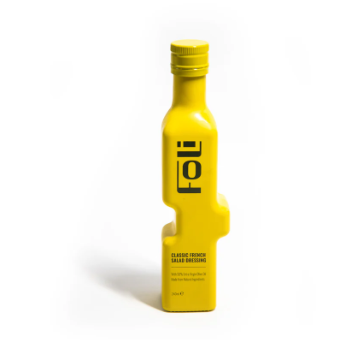
There’s something honest about a dressing that doesn’t try to hide what’s in it. The FOLI Premium French Salad Dressing is one of those rare shop-bought bottles that actually tastes like someone made it in their own kitchen, with real oil, real vinegar, and none of the watery, gum-thickened stuff you usually find on supermarket shelves.
It’s built around Spanish extra virgin olive oil and Italian balsamic, brought together with a French sensibility that’s less about flash and more about balance. If you’ve ever whisked your own vinaigrette and wondered why the bottled versions never quite match up, this one’s worth a proper look.
What Makes This Dressing Different
Most bottled dressings lean on stabilisers, added sugar, or cheap seed oil to keep costs down and shelf life up. This one takes the opposite approach. Half of the bottle is high-polyphenol extra virgin olive oil sourced from Spain, which gives it that rounded, slightly peppery backbone you’d expect from good Mediterranean oil rather than a flat, oily taste.
Alongside the olive oil sits Aceto Balsamico di Modena PGI at 22 percent, a protected Italian vinegar known for its gentle sweetness and depth. Cold-pressed extra virgin rapeseed oil rounds out the base, while Dijon mustard, honey, minced garlic, and cracked black pepper finish the recipe. Nothing here is filler. Every ingredient is doing a job, and you can genuinely taste the difference between this and the mass-produced bottles sitting next to it on a shelf.
The Flavour, Aroma and Texture Breakdown
Describing a dressing in words is tricky, but this one has a fairly distinct character once you’ve tried it a few times. The aroma hits first with a soft balsamic sweetness, followed by subtle whiffs of garlic and mustard that don’t overpower each other. It smells like something that took time, not something that came off an assembly line.
On the palate, it’s smooth and well balanced rather than sharp or acidic. There’s a gentle tang from the vinegar, a touch of honeyed sweetness, and a light peppery finish that lingers just long enough to notice. Texture-wise, it’s silky and rich, though because it’s made with fresh garlic and no added emulsifiers, the consistency can vary a little from bottle to bottle.
Some batches pour thicker than others. That’s not a flaw; it’s just what happens when you use real ingredients instead of synthetic stabilisers. A quick shake before use sorts it out, and if you want a lighter pour, a splash of water loosens it right up.
Ingredients and What They Bring to the Table
Transparency matters when you’re putting something on your food every day, so it’s worth walking through what’s actually inside. The dressing contains Spanish extra virgin olive oil (50%), Aceto Balsamico di Modena PGI (22%) which itself is made from wine vinegar and cooked grape must, cold-pressed extra virgin rapeseed oil, Dijon mustard (water, mustard seeds, spirit vinegar, salt), honey, minced garlic, salt, and black pepper.
If you’re checking for allergens, sulphites appear via the balsamic vinegar, and mustard is present as an obvious allergen too, so it’s worth a glance if you’re cooking for guests with sensitivities. What stands out is the absence of anything you wouldn’t recognise. No gums, no preservatives, no artificial flavouring propping up the taste. It’s a short list, and every item on it earns its place.
Nutritional Value Worth Knowing About
People often assume dressings are just an afterthought nutritionally, but the composition here actually holds up reasonably well. Per 100g, you’re looking at 655 kcal, 67.8g of fat, of which 48.2g is monounsaturated, the kind associated with heart health when eaten in moderation. Carbohydrates sit at 9.2g, sugars at 7.2g, protein at 0.8g, and salt at 1.1g.
Because the base is largely olive oil and balsamic vinegar rather than water and additives, it also carries natural antioxidants and is a source of vitamin E and polyphenols. It won’t replace a balanced diet, obviously, but as dressings go, it leans toward the healthier end of the spectrum. No additives, no GMOs, no gluten, no preservatives — which is refreshing in a category that’s often stuffed with things you can’t pronounce.
How to Use It in Everyday Cooking
This isn’t a dressing that only works on lettuce. Give it a good shake first, since natural separation is expected without emulsifiers, then drizzle it over fresh salads or grain bowls for an instant upgrade. It also doubles nicely as a marinade for chicken, fish, tofu, or vegetables, letting the mustard and garlic notes seep into whatever you’re cooking.
Beyond salads, people spoon it over roasted vegetables, stir it into pasta salads or lentil dishes, or use it to perk up tomato and mozzarella, halloumi, grilled chicken, or quinoa bowls. It’s flexible enough that once you’ve got a bottle open, you’ll probably find yourself reaching for it more often than you expected, not just at salad time but whenever a dish needs a bit of brightness.
Storage and Shelf Life Tips
Keeping it in good condition isn’t complicated, but it does need a bit of care since there’s no artificial preservation propping up its shelf life. Store the unopened bottle somewhere cool and dry, away from direct sunlight, which helps protect the olive oil from oxidising too quickly.
Once opened, refrigerate it and aim to use it within six weeks. Shake it before each use, since natural separation is completely normal here rather than a sign anything’s gone wrong. If it thickens more than you’d like straight from the fridge, letting it sit at room temperature for a few minutes or adding a splash of water usually brings it back to a pourable consistency.
Why People Keep Coming Back to It
Reviews from people who’ve tried it tend to circle around the same point: it tastes homemade, not manufactured. Home cooks who are usually sceptical of bottled dressings, the kind who’d normally whisk up their own vinaigrette rather than buy one, have described being surprised by how close this comes to something made from scratch.
That punchy mustard kick, the real vinegar sharpness, the sense that you’re getting mostly oil rather than water and thickeners — these are the details people notice once they’ve tried enough dressings to know the difference.
It’s not trying to reinvent the vinaigrette. It’s just doing the classic version properly, with ingredients sourced for quality rather than cost-cutting, and that’s exactly why it’s earned a loyal following among people who care about what’s actually in their food.
Where This Dressing Comes From
The story behind it traces back to FOLI, a UK-based brand built around the idea that everyday pantry staples shouldn’t be an afterthought. Their approach leans on Mediterranean sourcing, particularly Andalusian olive groves, paired with traditional Italian and French flavour profiles, then bottled and finished in the UK.
It’s a small detail, but it explains why the dressing feels more considered than most of what you’d find on a typical supermarket shelf.
FAQs
Is this dressing suitable for people avoiding artificial additives?
Yes. It’s made without artificial additives, preservatives, GMOs, or gluten, relying instead on real oil, vinegar, mustard, and garlic for flavour.
Why does the dressing sometimes look thicker or separated?
That’s normal. Without emulsifiers, natural separation happens, especially with fresh garlic in the mix. A good shake before use, or a small splash of water, brings it back to your preferred consistency.
Can it be used for anything besides salad?
Definitely. It works well as a marinade for chicken, fish, tofu, or vegetables, and can be stirred into pasta salads, legume dishes, or spooned over roasted vegetables.
How long does it last once opened?
It should be refrigerated after opening and used within six weeks for the best flavour and quality.
Does it contain common allergens?
Yes, it contains mustard and sulphites, the latter coming from the balsamic vinegar. Worth checking if you’re serving guests with sensitivities.
What gives it that distinct flavour compared to other dressings?
The combination of high-polyphenol Spanish olive oil, Aceto Balsamico di Modena PGI, Dijon mustard, honey, and fresh garlic creates a layered taste that’s hard to replicate with mass-produced alternatives.
Final Thoughts
A good vinaigrette shouldn’t need a chemistry degree to understand, and that’s really the appeal here. It’s built from ingredients people recognise, balanced in a way that feels genuinely French in spirit rather than just in name, and flexible enough to earn a permanent spot in the fridge rather than a single use before it’s forgotten.
Whether you’re dressing a simple side salad or looking for a shortcut marinade on a busy weeknight, it holds its own without needing much explanation. Sometimes the simplest products are the ones that actually deliver, and this is a fairly clear example of that.