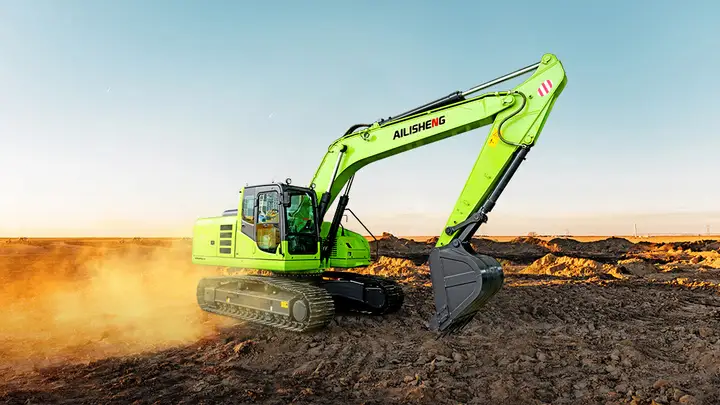

Construction and renovation work inside buildings presents challenges that are not always encountered on open sites. Access may be restricted by doors, ramps, corridors, and low ceilings. Existing floors may have limited load-bearing capacity, while ventilation and emergency access must remain available. When excavation is required below ground level or inside a large building, equipment selection becomes a critical part of the planning process.
An electric powered mini excavator may be considered for selected indoor applications because it produces no exhaust emissions at the point of operation during normal use. That characteristic can be valuable in enclosed environments, but it does not replace the need for detailed engineering checks, ventilation assessment, electrical safety procedures, and confirmation that the machine can physically and safely perform the task.
Why Indoor Excavation Needs Special Planning
Basement and indoor projects often take place within an existing structure. The contractor may need to remove material for a new floor level, prepare drainage routes, expose buried services, or carry out localised excavation as part of a renovation.
Unlike an open construction site, the work area may have fixed boundaries and limited escape routes. The equipment must be transported through the building without damaging structural elements or finished surfaces. Its operating weight and ground pressure must also be compatible with the floor or temporary working platform.
Before selecting machinery, the project team should review structural drawings and consult the responsible engineer where necessary. A floor that appears solid may not be designed to support the concentrated loads created by tracked machinery.
The Value of Eliminating Direct Machine Exhaust
Diesel engines release exhaust emissions during operation. In an enclosed area, these emissions can create significant air-quality concerns and may require carefully designed ventilation and monitoring arrangements.
A battery-powered excavator does not produce combustion exhaust at the point of use. This can make it a candidate for certain basement and indoor tasks, provided the machine is approved for the environment and all relevant safety requirements are satisfied.
Other sources of airborne contaminants remain possible. Excavation can generate dust, while cutting, breaking, material handling, and nearby equipment may introduce additional hazards. Ventilation should therefore be designed around the complete work process rather than the excavator alone.
Confirm Access Before Arranging Delivery
A machine’s compact classification does not guarantee that it can enter a basement. Contractors should measure the full delivery route, including gates, doorways, corridors, ramps, turning points, and overhead restrictions.
Check the machine’s overall width, height, transport length, operating weight, and any removable components that affect delivery. The route must also accommodate the equipment used to move the excavator into position, such as a suitable ramp or lifting arrangement.
Slopes require particular attention. The manufacturer should specify permitted gradients and procedures for travelling on inclines. Improvised ramps or unsupported transitions can create serious risks.
Floor Capacity and Ground Conditions
Floor loading is one of the most important considerations for indoor excavation. The total machine weight is only part of the assessment. Track contact area, turning movements, dynamic loads, and the condition of the floor can all influence the pressure applied to the surface.
The project engineer should confirm whether the floor can safely support the machine and whether protective mats or a designed working platform are required. Contractors should not assume that spreading the load with temporary boards automatically makes an unsuitable floor safe.
Basement excavation can also involve unknown ground conditions, water ingress, existing foundations, and buried services. These factors should be investigated before digging begins. The excavation sequence must account for the building’s structural stability and any temporary support requirements.
Selecting the Right Machine Capacity
An indoor excavator must be small enough to access the work area but powerful enough to complete the task. Contractors should compare digging depth, reach, bucket capacity, breakout force, hydraulic flow, and operating weight.
A machine with insufficient reach may require repeated repositioning, while one that is too large could exceed access or floor-loading limits. Attachment selection should also reflect the nature of the work. Narrow buckets may suit service trenches, whereas other tasks may require a different approved configuration.
The contractor should ask the supplier to confirm whether the proposed machine can perform the intended work under the relevant site conditions.
Charging and Electrical Safety
Charging arrangements must be planned before the machine enters the building. Confirm the required electrical supply, charging equipment, connector type, and charging duration. The selected location should comply with the manufacturer’s instructions and the project’s electrical safety procedures.
Cables must not obstruct escape routes or create trip hazards. Charging equipment should be protected from damage, water, and unauthorised access. If the machine is removed from the basement for charging, transport arrangements and the additional time required should be included in the schedule.
Managing Spoil and Material Removal
Indoor excavation creates a separate challenge: removing the excavated material. The project team should decide whether spoil will be moved in small loads, transferred to a designated collection point, or removed using other suitable equipment.
The route should be planned to avoid overloading floors, blocking access, or spreading material into occupied areas. Dust control and housekeeping are particularly important where other trades are working nearby.
Operator Competence and Site Controls
Operators must understand the machine’s controls, warning indicators, battery procedures, and operating limitations. Indoor work may require additional briefing because visibility, clearance, communication, and emergency access can be more restricted than on an open site.
A site-specific risk assessment should address people entering the work area, overhead hazards, structural concerns, emergency procedures, and interaction with other contractors.
A Suitable Choice Only After Verification
Electric mini excavators may offer useful characteristics for selected basement and indoor construction projects, particularly where direct exhaust emissions are a concern. Their suitability depends on much more than the power source.
Access, floor capacity, machine dimensions, ventilation, charging, spoil removal, and operator safety must all be addressed. When these requirements are verified before work begins, contractors can determine whether compact electric excavation equipment is an appropriate solution for the building and the task.