
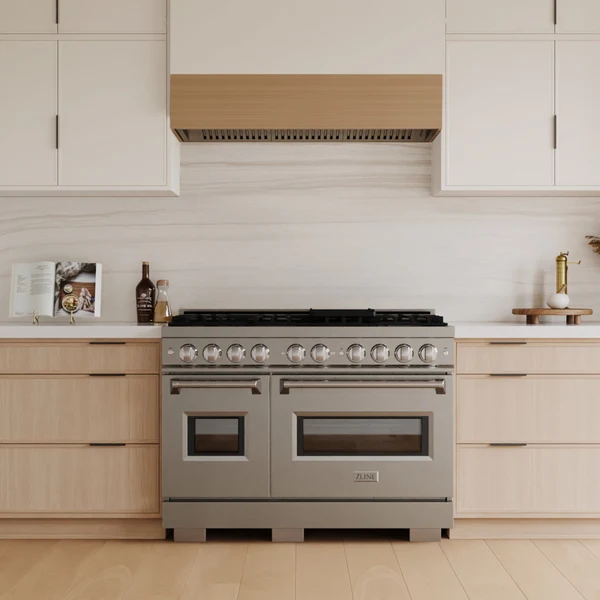
Choosing a cooking range involves more than deciding between gas and electric power. Different cooking methods can provide distinct advantages, particularly when the cooktop and oven are used for different types of food preparation. Duel fuel ranges are designed around this idea by combining a gas cooktop with an electric oven in one appliance.
This configuration gives cooks the direct flame and responsive heat adjustment associated with gas burners while using electric heating elements inside the oven. The combination can be particularly useful for households that frequently cook on the stovetop and bake or roast in the oven. However, installation is more involved than with some single-fuel appliances because the range requires both gas and electrical connections.
What Are Duel Fuel Ranges?
Duel fuel ranges combine two different energy sources in one cooking appliance. The cooktop uses gas burners, while the oven relies on electricity for heating.
The gas burners allow the user to adjust the flame directly, making it possible to move quickly between higher and lower heat levels. The electric oven uses heating elements that cycle to maintain the selected temperature, providing a different heating environment from a traditional gas oven.
It is important to distinguish dual-fuel technology from a range that simply offers multiple cooking modes. A dual-fuel appliance physically uses gas for one cooking area and electricity for another.
How Does the Gas Cooktop Work?
The gas portion of the appliance operates similarly to a conventional gas cooktop. Gas is supplied through a dedicated connection to burners positioned beneath the cookware.
One advantage is the immediate visual feedback provided by the flame. Increasing or decreasing the flame changes the amount of heat being delivered to the cookware.
Gas cooking can also support techniques that depend on direct flame exposure, such as charring certain foods. The level of burner output varies by model, so buyers should compare burner configuration and power rather than assuming every gas cooktop performs identically.
What Makes the Electric Oven Different?
The electric oven is one of the main reasons cooks consider this configuration. Electric heating elements can provide controlled heat within the oven cavity, and many models combine these elements with convection fans to circulate heated air.
Electric ovens are often valued for their relatively dry cooking environment and consistent temperature management, which can be useful for baking, roasting, and browning. However, actual performance depends on the oven’s design, insulation, heating elements, airflow, and controls rather than simply its fuel source.
Benefits for Baking and Roasting
An electric oven can be particularly suitable for recipes where consistent temperature and controlled heat distribution are important.
Baking often requires maintaining a relatively stable environment over an extended period. Cakes, breads, pastries, and other baked foods can be sensitive to temperature changes.
Convection functionality can further influence results by circulating hot air throughout the cavity. When evaluating a range, therefore, buyers should look at whether the oven includes convection, the number of heating elements, rack positions, and available cooking modes.
Gas Versus Electric Cooking in One Appliance
The primary appeal of duel fuel ranges is that the two cooking areas can be selected according to the task.
Gas can be useful when a cook wants fast flame adjustment on the stovetop, while the electric oven can provide the characteristics preferred for baking or roasting. This can make the configuration appealing to households with varied cooking routines.
However, these advantages do not mean that a dual-fuel range is automatically better than a gas, electric, or induction range. The best option depends on cooking habits, available utilities, budget, installation requirements, and personal preferences.
Installation Requirements
Installation is an important consideration because these appliances need both gas and electrical connections.
Manufacturer installation information commonly specifies the required gas supply, electrical voltage, circuit capacity, clearances, and connection locations. Some models require a dedicated 240-volt electrical supply for the oven, while gas requirements can vary according to the appliance and fuel type.
The existing kitchen infrastructure should therefore be checked before purchasing. If a suitable gas line or electrical circuit is not already available, additional installation work may be necessary.
Gas connections and electrical work should be performed according to applicable regulations and by appropriately qualified professionals.
Ventilation Is Still Essential
Gas cooking produces combustion byproducts in addition to heat, moisture, grease, and cooking odors. Proper kitchen ventilation is therefore important when installing a gas cooktop.
The ventilation system should be selected according to the cooking appliance, kitchen configuration, and applicable requirements. An outdoor-vented exhaust system can help remove cooking emissions from the indoor environment.
The range’s installation instructions should also be reviewed for required clearances around combustible surfaces and ventilation equipment.
What Features Should You Compare?
When evaluating duel fuel ranges, consider the complete appliance rather than focusing only on burner output.
Important specifications include:
- Number and arrangement of gas burners
- Burner output levels
- Oven capacity
- Convection functionality
- Number of oven racks
- Temperature controls
- Cooking modes
- Self-cleaning options
- Control placement
- Electrical requirements
- Gas connection requirements
- Required clearances
- Ventilation specifications
The ideal combination depends on how the appliance will actually be used. Someone who regularly bakes may prioritize oven performance, while a household focused on stovetop cooking may place greater emphasis on burner configuration.
Are Duel Fuel Ranges Worth Considering?
A dual-fuel configuration can make sense for people who genuinely want different heating characteristics for stovetop and oven cooking. It can be particularly attractive to households that frequently combine techniques such as sautéing, searing, baking, and roasting.
On the other hand, the additional installation requirements can make the appliance less practical when a kitchen lacks an appropriate gas line or electrical capacity. Purchase and installation costs should therefore be evaluated together rather than considering the appliance price alone.
Conclusion
Duel fuel ranges combine a gas cooktop with an electric oven, allowing homeowners to use different heating technologies for different cooking tasks. The gas surface provides direct flame control, while the electric oven can offer controlled and relatively dry heat that suits many baking and roasting applications. Before choosing duel fuel stoves, homeowners should confirm gas and electrical availability, oven capacity, burner configuration, ventilation, clearances, and installation requirements. A careful comparison can help determine whether the combination provides meaningful advantages for the household’s cooking style and kitchen layout.
