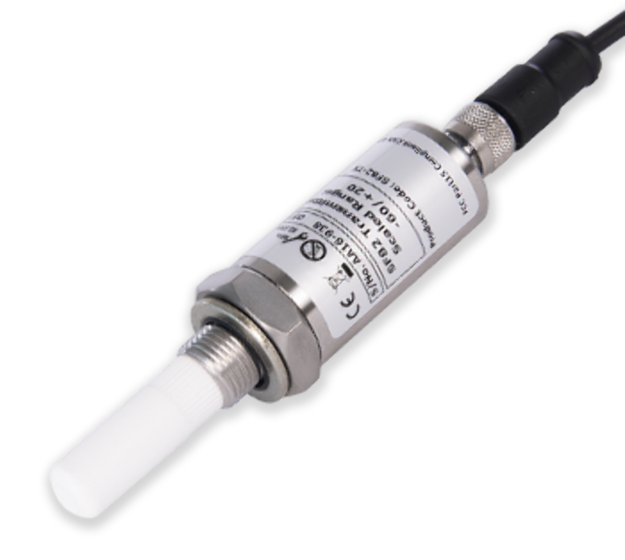

Accurate moisture measurement is essential in many industrial environments where excessive water vapour can affect equipment, production processes, and product quality. A reliable transmitter allows professionals to monitor moisture conditions continuously and respond quickly when readings change. Dewpoint transmitter technology is particularly useful for compressed-air systems, industrial gases, manufacturing processes, and other applications where controlling moisture is important.
Dew-Point provides moisture measurement solutions designed for professional and industrial applications. By selecting suitable equipment and following appropriate installation and maintenance practices, businesses can improve their understanding of moisture conditions and support more consistent process performance.
What Is a Dew Point Transmitter?
A dewpoint transmitter is a measurement device designed to detect the moisture condition of air or gas and communicate the resulting measurement to another system.
Dew point refers to the temperature at which water vapour reaches saturation and condensation can begin. Monitoring this value provides useful information about how dry or humid a gas is under specific operating conditions.
Unlike portable instruments intended for occasional testing, transmitters are commonly installed at fixed locations for continuous monitoring.
Why Dew Point Monitoring Matters
Moisture can create challenges in a wide range of industrial systems. In compressed-air networks, for example, excessive moisture may contribute to corrosion, contamination, freezing, or problems with pneumatic equipment.
In manufacturing environments, moisture can also influence materials and production processes. Continuous monitoring gives operators greater visibility into changing conditions and can help them investigate unusual readings.
This makes dew point measurement a useful part of preventive maintenance and process management.
How Does a Dew Point Transmitter Work?
A transmitter uses a moisture-sensitive sensing element to detect water vapour within the measured gas. The sensor generates a response based on the moisture condition, and the instrument processes this information into a dew point reading.
Depending on the model, the measurement can then be transmitted through an electrical or digital output to a monitoring, automation, or control system.
Different sensing technologies are available, so users should select equipment according to the gas type, expected measurement range, pressure, temperature, and required accuracy.
Industrial Applications
Dew point transmitters can be used in many sectors where moisture control is important. Common applications include compressed-air systems, industrial gas production, drying processes, manufacturing facilities, laboratories, energy systems, and process monitoring.
Each application has different requirements. A device suitable for one environment may not provide the same performance in another, making application-specific selection important.
Compressed-Air Monitoring
Compressed air is widely used for automation, tools, machinery, and production processes. Moisture entering these systems can potentially affect downstream components and equipment.
A permanently installed transmitter can provide ongoing information about air dryness and help operators monitor dryer performance.
If measurements begin to change unexpectedly, maintenance teams can investigate possible causes such as dryer performance, system leaks, or changes in operating conditions.
Continuous Moisture Measurement
One of the major advantages of transmitter-based monitoring is continuous measurement. Instead of relying entirely on periodic manual checks, operators can observe moisture conditions over an extended period.
Continuous data can reveal gradual increases, sudden changes, or recurring fluctuations that might otherwise be missed.
This information can support maintenance planning and help organisations respond to developing problems more efficiently.
Choosing the Correct Measurement Range
The measurement range should correspond to the expected dew point conditions of the application. Users should consider both normal operating conditions and possible variations.
Other factors, including pressure and temperature, can also influence the measurement environment.
Selecting a suitable range ensures that the instrument can provide useful information throughout the intended operating conditions.
Accuracy and Stability
Accuracy is particularly important when dew point readings are used for quality control or process decisions. Buyers should review the manufacturer’s specifications and understand the conditions under which the stated accuracy applies.
Stability and repeatability are also valuable. Consistent measurements make it easier to identify genuine changes in moisture conditions rather than temporary measurement variations.
Installation Considerations
Correct installation plays an important role in measurement reliability. The transmitter should be positioned where it can accurately represent the conditions being monitored.
Leaks, contamination, temperature differences, and unsuitable installation materials can influence readings.
Following the manufacturer’s installation recommendations can help reduce these issues and support consistent measurements.
Sampling and Measurement Conditions
Some applications require a sampling arrangement rather than direct installation in the process line. In these cases, the sampling system needs careful consideration.
Tubing material, flow rate, pressure, temperature, fittings, and sample handling can all influence the final measurement.
Properly designed sampling arrangements can help minimise moisture contamination and improve response consistency.
Response Time
Response time indicates how quickly the measurement system reacts to changing moisture conditions. This can be particularly important in processes where moisture levels change rapidly.
However, the response of the complete system may also depend on sample tubing, flow, pressure, temperature, and the difference between current and previous moisture levels.
For this reason, users should evaluate the entire measurement setup rather than considering sensor response alone.
Calibration and Maintenance
Regular calibration can help maintain confidence in measurement results. Sensor performance may change over time because of normal ageing, contamination, or exposure to demanding environments.
Following the manufacturer’s recommended calibration schedule can help maintain measurement reliability.
Routine inspection of connections, sampling components, and installation points can also help identify issues that may affect performance.
Dew-Point Moisture Measurement Solutions
Dew-Point provides measurement solutions for professionals who need reliable information about moisture conditions. Its equipment can support applications where monitoring low or controlled moisture levels is an important part of industrial operation.
When selecting equipment, professionals should consider measurement range, accuracy, sensor technology, response time, installation requirements, calibration, and system compatibility.
Choosing equipment based on the specific application can help organisations achieve more dependable moisture monitoring.
Supporting Preventive Maintenance
Moisture monitoring can play an important role in preventive maintenance. A gradual change in dew point may provide an early indication that drying equipment or another component requires attention.
Instead of waiting for visible problems to appear, maintenance teams can use measurement trends to investigate changes and plan appropriate action.
This approach can support equipment reliability and help reduce the risk of moisture-related operational problems.
Integration With Control Systems
Modern industrial transmitters can often be connected to monitoring and automation systems. Depending on the instrument, measurements may be available through analogue outputs, digital communication, or other supported interfaces.
Integrating moisture information with other process data can give operators a broader view of system performance.
For example, dew point information can be evaluated alongside temperature, pressure, flow, or equipment-status data.
Fixed and Portable Measurement
Fixed transmitters and portable moisture meters serve different purposes. A fixed transmitter can continuously monitor an important process point, while portable equipment can help technicians inspect multiple locations.
Using both approaches can be useful in larger facilities. Continuous monitoring can identify changes at critical locations, while portable testing can support troubleshooting and verification.
Understanding Moisture Trends
A single measurement provides information about conditions at one point in time. Monitoring readings over days, weeks, or months can provide a more useful picture of system behaviour.
A gradual increase in dew point may indicate changing dryer performance, while a sudden change could suggest a process disturbance or another issue.
Keeping measurement records can help engineers compare current conditions with historical performance.
Final Thoughts
A Dewpoint transmitter provides a practical way to monitor moisture conditions continuously across industrial and technical environments. Reliable dew point information can support compressed-air management, preventive maintenance, process control, and quality assurance.
Dew-Point offers moisture measurement solutions for professional applications where dependable data is important. When selecting equipment, factors such as measurement range, accuracy, response time, installation, sampling, calibration, and system integration should be considered carefully.
With suitable equipment and proper measurement practices, continuous moisture monitoring can help organisations identify changes earlier and maintain better control over important industrial processes.