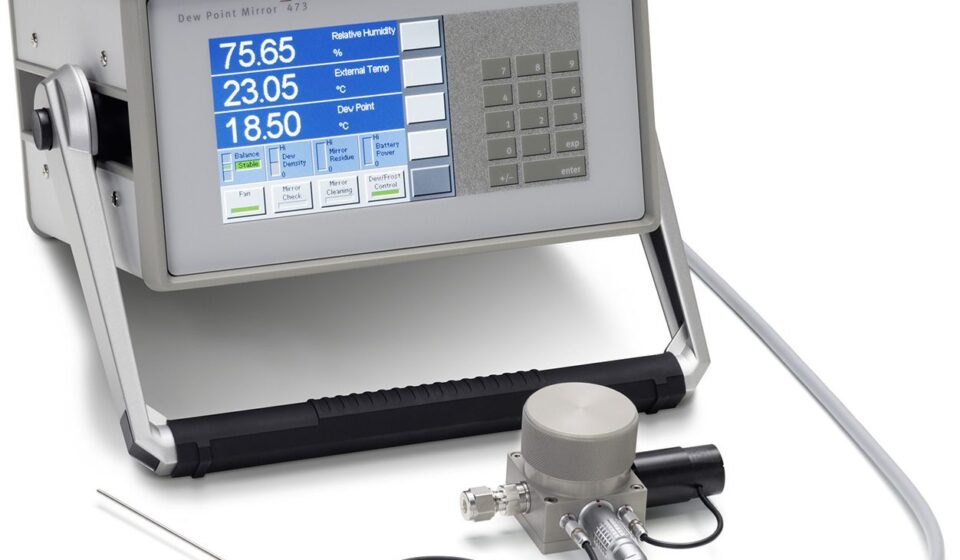

Accurate moisture measurement is essential for industries where water vapour can affect equipment, production processes, and product quality. A dewpoint hygrometer provides valuable information about the moisture content of gases by measuring the temperature at which condensation begins. ShawMeter offers professional moisture measurement solutions for applications that require dependable dew point monitoring and consistent performance.
What Is a Dewpoint Hygrometer?
A dewpoint hygrometer is an instrument designed to measure the dew point temperature of a gas. The dew point is the temperature at which water vapour reaches saturation and begins to condense.
Unlike basic humidity measurement, dew point measurement can provide a useful indication of how much moisture is present in compressed air or industrial gases. This makes it particularly valuable in applications where maintaining dry conditions is important.
Why Is Dew Point Measurement Important?
Excessive moisture can lead to condensation, corrosion, contamination, and equipment problems. In compressed-air and industrial gas systems, controlling moisture can therefore be an important part of maintaining reliable operation.
Regular dew point measurements allow operators to monitor gas dryness and identify changes that may require further investigation.
For industries with strict moisture specifications, accurate measurement can also support quality control and process consistency.
How Does a Dewpoint Hygrometer Work?
The operating principle depends on the sensing technology used in the instrument. A specialized sensor detects moisture-related characteristics within the gas and the instrument converts this information into a dew point reading.
Modern instruments may provide digital displays and additional measurement parameters depending on their design.
When choosing a hygrometer, factors such as measurement range, accuracy, response time, pressure, temperature, and gas composition should be considered.
Where Are Dew Point Hygrometers Used?
Dew point hygrometers can be used across a wide range of industries. Common applications include compressed-air systems, industrial gas production, manufacturing facilities, laboratories, power generation, and process monitoring.
They can be used for routine inspections, quality checks, troubleshooting, maintenance, and continuous moisture monitoring.
The correct instrument depends on the conditions and requirements of the specific application.
Compressed-Air Moisture Monitoring
Compressed air often contains water vapour, which can condense when operating conditions change. If drying systems are not performing properly, moisture levels can rise.
A hygrometer can help technicians measure the dryness of compressed air and identify changes in system performance.
Regular monitoring may help detect potential dryer problems and support preventive maintenance before excessive moisture causes equipment issues.
Industrial Gas Applications
Many industrial gases need controlled moisture levels to maintain process quality. Excess water vapour can affect sensitive equipment or interfere with certain manufacturing processes.
A suitable hygrometer can help engineers verify gas dryness and monitor whether moisture conditions remain within specified limits.
Gas composition, pressure, temperature, and expected dew point should all be considered when selecting an instrument.
Important Features to Consider
Choosing the right dew point hygrometer requires careful evaluation of several factors.
Measurement Range
The instrument should cover the expected dew point range of the application. A suitable range helps ensure reliable readings throughout normal operating conditions.
Accuracy
Accuracy is important when processes have strict moisture limits. Always review the manufacturer’s specifications and the conditions under which the stated accuracy applies.
Response Time
A suitable response time allows the instrument to react efficiently when moisture conditions change. This can be particularly useful for troubleshooting and field measurements.
Portability
Portable instruments are useful when technicians need to check several locations, while fixed hygrometers may be preferable for continuous monitoring.
Sampling and Installation
Correct sampling is essential for accurate dew point measurement. Leaks, contamination, inappropriate tubing, and poor sampling practices can introduce measurement errors.
Sampling components should be suitable for the application and installed carefully. Fixed systems should also be positioned according to manufacturer recommendations.
Allowing the measurement to stabilize before recording a result can further improve consistency.
Calibration and Maintenance
Regular calibration helps ensure that measurement results remain reliable. Calibration intervals depend on the instrument, application, operating environment, and manufacturer’s recommendations.
Routine maintenance may include checking connections, sampling lines, sensor condition, and general instrument performance.
Keeping calibration records can also help businesses maintain measurement quality and identify potential changes in instrument performance.
Dewpoint Hygrometer vs Other Moisture Instruments
Different moisture instruments measure different parameters. Relative humidity instruments measure the amount of moisture relative to the maximum amount the air can hold at a given temperature.
A dew point hygrometer, on the other hand, focuses on the temperature associated with moisture saturation.
For compressed-air and dry-gas applications, dew point can be especially useful because it directly relates to the potential for condensation.
How ShawMeter Supports Moisture Measurement
ShawMeter provides professional dew point and moisture measurement solutions for industrial applications. Its equipment is designed for users who need reliable information about moisture conditions in gases and compressed-air systems.
When choosing a ShawMeter solution, businesses should consider measurement range, sensor technology, accuracy, response time, pressure, temperature, portability, and application requirements.
Matching the instrument to the actual operating conditions can help produce more meaningful and dependable measurements.
Using Dew Point Data for Preventive Maintenance
Recording dew point readings over time can help engineers identify trends and unusual changes. A gradual increase in moisture levels may indicate issues with drying equipment, filters, pipelines, or operating conditions.
Historical measurements can therefore support preventive maintenance and help teams investigate problems before they lead to significant process disruption.
Final Thoughts
A dewpoint hygrometer is a valuable tool for measuring moisture conditions in compressed air, industrial gases, and other technical environments. Reliable dew point information can support equipment protection, process control, quality assurance, and preventive maintenance.
ShawMeter offers professional moisture measurement solutions for demanding industrial applications. By considering measurement range, accuracy, response time, sampling requirements, operating conditions, and calibration needs, businesses can select a suitable hygrometer and maintain better control over moisture levels.