
Industrial mixing plays a key role in many manufacturing processes where consistent blending, material uniformity, and product quality are essential. However, different industries require different types of mixing equipment depending on the characteristics of the materials and the desired production results.
When comparing Conical Mixers with other industrial mixing systems, manufacturers should consider factors such as mixing efficiency, material handling, maintenance needs, and application requirements. Understanding these differences helps businesses select the most suitable equipment for their processes.
Understanding Conical Mixers
Conical mixers are designed with a cone-shaped vessel that promotes effective movement of powders and granules during mixing. The internal mixing mechanism creates controlled circulation, allowing materials to blend evenly throughout the chamber.
These mixers are commonly used for applications that require:
- Uniform powder distribution
- Gentle material handling
- Reduced segregation
- Consistent batch quality
Their design makes them suitable for industries where product quality and process reliability are important.
Conical Mixers vs. Ribbon Mixers
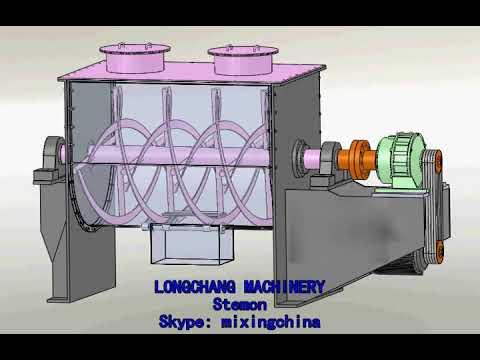
Ribbon mixers are widely used for blending dry powders and granules. They operate using a horizontal vessel with ribbon-shaped blades that move materials through the mixing chamber.
Compared with ribbon mixers, conical mixers offer several differences:
Conical mixers:
- Provide gentle vertical mixing action
- Are suitable for sensitive materials
- Reduce the risk of particle damage
- Support efficient handling of smaller and larger batches
Ribbon mixers:
- Are effective for high-volume blending
- Work well with free-flowing materials
- May require more mechanical force during operation
The best choice depends on the material properties and production requirements.
Conical Mixers vs. Paddle Mixers
Paddle mixers use flat blades to move materials within a mixing chamber. They are commonly used for applications involving powders, granules, and some heavier materials.
Conical mixers may be preferred when manufacturers need:
- More controlled material movement
- Better handling of fragile powders
- Improved blending consistency
- Lower risk of segregation
Paddle mixers can still be effective for applications where stronger mixing action is required.
Conical Mixers vs. Tumble Mixers
Tumble mixers rely on rotating containers to move materials through a tumbling motion. They are often used for simple blending operations.
Conical mixers provide advantages in applications requiring:
- Faster and more controlled mixing
- Better handling of complex formulations
- Improved consistency between batches
- More precise process management
Tumble mixers remain useful for basic blending tasks, but conical designs often provide greater control for demanding applications.
Conical Mixers vs. High-Shear Mixers
High-shear mixers use intense mechanical force to rapidly combine materials and are often used when strong dispersion or particle size reduction is needed.
Compared with high-shear equipment, conical mixers are better suited for:
- Gentle blending processes
- Maintaining particle structure
- Dry powder combinations
- Applications where excessive force is undesirable
High-shear systems are valuable for specialized processes, while conical mixers focus on efficient and controlled blending.
Key Factors for Choosing the Right Mixer
Selecting the right industrial mixer requires evaluating several important factors.
Manufacturers should consider:
- Material characteristics
- Required mixing accuracy
- Production volume
- Processing time
- Cleaning requirements
- Equipment maintenance needs
A mixer that matches the specific application will provide better efficiency and long-term performance.
Industries That Use Conical Mixers
Conical mixers are used across a wide range of industries because of their flexibility and reliable performance.
Common applications include:
Pharmaceutical Production
Used for blending active ingredients, excipients, and dry formulations where consistency is critical.
Food Processing
Used for combining nutritional powders, additives, and dry ingredients while maintaining product quality.
Chemical Manufacturing
Used for preparing specialty chemicals, additives, and industrial powder mixtures.
Advanced Materials
Used for processing technical powders and specialized compounds that require precise blending.
Advantages of Selecting the Right Mixing Equipment
Choosing suitable mixing technology can help manufacturers achieve:
- Improved product consistency
- Reduced processing problems
- Lower material waste
- Better production efficiency
- Reliable quality control
The right equipment selection supports smoother operations and better manufacturing outcomes.
Conclusion
Conical mixers offer unique advantages compared with many traditional industrial mixing systems, especially when gentle handling, uniform blending, and process consistency are important. While ribbon, paddle, tumble, and high-shear mixers each have their own applications, conical mixers provide a balanced solution for industries that require reliable powder and granule processing. By evaluating material requirements and production goals, manufacturers can select the mixing equipment that best fits their operations.