
Large stone projects are won or lost long before the first slab reaches the job site. Most people focus on fabrication, installation, or finishing details, but experienced project managers know the real foundation of quality starts at the quarry. When a project involves hundreds or even thousands of square feet of stone, selecting the right granite rough blocks becomes one of the most important decisions in the entire supply chain.
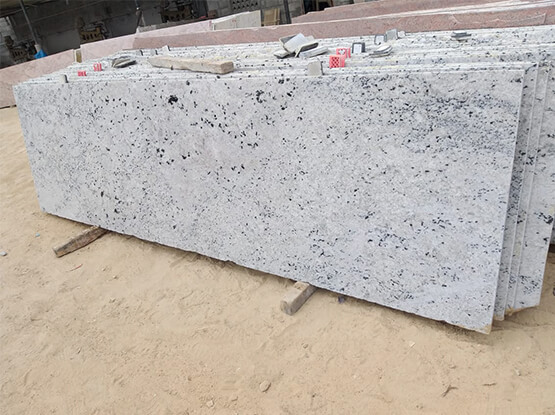
This is especially true for Colonial White Granite. Known for its elegant white background, soft gray mineral movement, and occasional burgundy mineral specks, this granite has become a popular choice for residential developments, hotels, commercial interiors, luxury apartments, and public buildings. Its clean appearance works well in both traditional and contemporary spaces, making it one of the most versatile natural stones available.
However, consistency becomes a challenge when large quantities are required. The difference between a successful project and a costly problem often comes down to how carefully the original blocks were selected.
This article explains the most important criteria professionals use when evaluating granite rough blocks for major Colonial White Granite projects.
Why Block Selection Matters More Than Most Buyers Realize
Every slab begins as part of a quarry block. Whatever characteristics exist inside that block will eventually appear in the finished slabs.
If the block contains excessive color variation, mineral concentration changes, hidden fractures, or inconsistent grain patterns, those issues cannot be completely corrected during processing.
For small projects, slight variation may not create significant concerns. For large projects, however, inconsistencies become obvious across flooring layouts, wall panels, countertops, and facade systems.
That is why experienced developers work closely with a trusted granite slab supplier and exporter to evaluate blocks before cutting begins.
Understanding the Visual Identity of Colonial White Granite
Before selecting blocks, buyers must clearly understand what defines quality Colonial White Granite.
Most buyers expect
A bright white to light gray background
Balanced gray mineral movement
Controlled burgundy garnet distribution
Even overall appearance
Good pattern continuity
The goal is not complete uniformity because natural stone will always vary. Instead, the objective is maintaining a predictable visual range throughout the project.
When colonial white granite slabs are installed across large areas, visual harmony matters far more than perfect matching.
Color Consistency Across the Block
Color consistency is usually the first thing inspectors evaluate.
Colonial White Granite naturally contains variations in white, gray, and occasional cream tones. Some quarry sections produce brighter material while others appear slightly darker.
For large projects, buyers should avoid mixing blocks that show dramatic shifts in background color.
During block inspection, professionals typically examine
Overall base color
Color uniformity from one face to another
Presence of unusual discoloration
Mineral concentration changes
A reliable granite slab supplier and exporter often organizes blocks into matching groups before production begins. This significantly improves consistency throughout the finished shipment.
Grain Structure Evaluation
Granite grain size influences both appearance and processing behavior.
Colonial White Granite generally features medium grain patterns that contribute to its balanced visual character.
Inspectors check whether the grain structure remains consistent throughout the block.
Irregular grain transitions can create noticeable differences once slabs are installed side by side.
Uniform grain distribution helps achieve
Better visual continuity
More predictable polishing results
Improved slab matching
Reduced installation concerns
Large commercial projects especially benefit from consistent grain structure because extensive surfaces amplify small differences.
Garnet Distribution Assessment
One of the defining features of Colonial White Granite is the presence of burgundy mineral garnets.
These garnets add personality and depth to the stone. However, excessive concentrations can alter the overall appearance.
Block inspectors evaluate
Size of garnets
Frequency of occurrence
Distribution patterns
Color consistency
The best granite rough blocks show balanced garnet distribution rather than heavy clustering in isolated areas.
For projects requiring a clean and sophisticated appearance, controlling garnet variation becomes particularly important.
Structural Integrity of the Block
Visual appearance is important, but structural quality is equally critical.
Inspectors carefully examine blocks for
Natural fractures
Open fissures
Stress cracks
Weak mineral zones
Hidden structural defects can lead to slab breakage during cutting, polishing, transportation, or installation.
A professional granite slab supplier and exporter typically performs detailed inspections before approving blocks for production.
Strong structural integrity improves yield and reduces costly material loss.
Block Size and Production Efficiency
Large projects require substantial quantities of stone.
Bigger blocks generally offer several advantages
Higher slab yield
Better consistency
Fewer production interruptions
Improved pattern continuity
When evaluating granite rough blocks, buyers often prefer larger dimensions because they provide more flexibility during fabrication.
Smaller blocks can still be useful but may increase the number of quarry sources needed to complete the order.
That can introduce unwanted variation.
Vein Direction and Pattern Flow
Although Colonial White Granite is not considered a heavily veined stone, mineral movement still plays an important role.
Inspectors study pattern flow throughout the block to understand how slabs will appear after cutting.
Consistent movement creates
Better slab matching
Improved flooring layouts
More attractive wall installations
Reduced visual disruption
For large projects involving book matching or sequential slab layouts, understanding pattern direction is essential.
Water Absorption Characteristics
Density and water absorption influence long term performance.
Blocks with lower absorption rates generally perform better in demanding environments.
Testing may include evaluation of
Porosity
Density
Moisture resistance
Weathering behavior
These factors become especially important when colonial white granite slabs will be used in exterior applications.
A dense block usually provides better durability and easier maintenance over time.
Quarry Layer Consistency
Experienced buyers understand that quarry location matters.
Even within the same quarry, different extraction levels can produce different appearances.
When sourcing granite rough blocks for large projects, maintaining the same quarry layer often helps achieve better consistency.
Mixing material from different extraction zones increases the likelihood of visible variation.
This is why many major buyers reserve specific block inventories before production begins.
Slab Yield Expectations
Yield refers to the amount of usable material obtained from each block.
Inspectors estimate
Potential slab quantity
Expected waste percentage
Structural losses
Production efficiency
Higher yield blocks reduce overall project costs while maintaining quality standards.
For developers managing large budgets, yield calculations play a major role during procurement decisions.
Surface Defect Analysis
Block surfaces reveal important clues about internal quality.
Inspectors look for
Mineral pockets
Weathered areas
Surface cracks
Color anomalies
Uneven crystal concentrations
Although surface observations cannot reveal everything inside the block, they provide valuable indicators regarding overall quality.
Experienced quarry professionals often identify potential issues before cutting begins.
Importance of Block Numbering and Traceability
Traceability is often overlooked but extremely important.
Every approved block should be properly documented and numbered.
This allows buyers to
Track production
Verify slab origin
Maintain consistency
Manage future repeat orders
A reputable granite slab supplier and exporter typically maintains detailed records for each production batch.
This becomes valuable when future project phases require matching material.
Why Visual Approval Should Include Full Block Inspection
Many buyers make decisions based on small samples.
This approach can create problems during large projects.
A small sample may not represent the complete characteristics of a block.
Whenever possible, buyers should review
Full block photographs
Multiple block faces
Video inspections
Production reports
This provides a much clearer understanding of what the finished colonial white granite slabs will look like.
Long Term Supply Stability
Large developments often continue for months or years.
Selecting blocks from a quarry with stable production capacity helps ensure future availability.
Consistency between current and future shipments becomes much easier when sourcing remains stable.
A dependable granite slab supplier and exporter can help secure inventory and coordinate future requirements before shortages occur.
Final Thoughts
Successful Colonial White Granite projects begin at the quarry, not in the fabrication shop. Careful evaluation of granite rough blocks allows buyers to control color consistency, structural integrity, grain uniformity, garnet distribution, and overall visual quality before production starts.
For large developments, these details are not minor considerations. They directly influence project appearance, installation efficiency, maintenance requirements, and long term satisfaction.
Whether the material is destined for luxury residences, commercial towers, hospitality projects, or public spaces, selecting the right blocks creates the foundation for exceptional results.
When working with an experienced granite slab supplier and exporter, buyers gain access to the expertise needed to identify premium granite rough blocks and transform them into high quality colonial white granite slabs that perform beautifully across large scale installations for years to come.