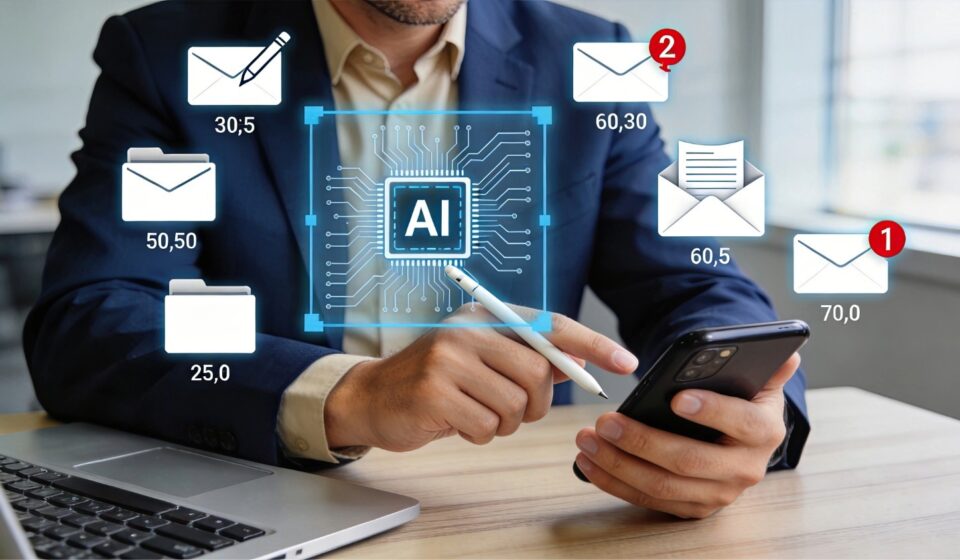

Email is still the backbone of business communication. Whether you are responding to customers, coordinating with team members, following up with leads, or managing projects, your inbox plays a major role in daily operations.
However, there is one problem. Email can easily consume hours of your workday.
Many professionals start their mornings by opening an inbox filled with unread messages. Before they realize it, several hours have passed answering questions, organizing conversations, scheduling meetings, and sending follow-ups.
This constant cycle can reduce productivity and distract employees from higher-value work.
That is why businesses are increasingly adopting AI email assistants. These intelligent tools help automate repetitive email tasks, improve response quality, and save valuable time every week.
In this article, we will explore how AI email assistants work, why they are becoming essential in modern workplaces, and how organizations can benefit from implementing them.
What Is an AI Email Assistant?
An AI email assistant is a software solution powered by artificial intelligence that helps users manage, organize, write, and respond to emails more efficiently.
Instead of manually handling every email-related task, the assistant uses technologies such as machine learning, natural language processing, and generative AI to streamline communication.
An AI-powered email assistant can:
- Draft professional emails
- Generate quick replies
- Organize inboxes automatically
- Prioritize important messages
- Schedule meetings
- Create follow-up reminders
- Summarize email conversations
- Personalize customer communication
- Reduce repetitive email work
As a result, users can focus on meaningful tasks rather than spending hours managing their inboxes.
Why Email Management Has Become a Challenge
Email remains one of the most widely used business tools, yet it is also one of the biggest productivity drains.
Employees often deal with:
- Hundreds of emails every week
- Repetitive customer inquiries
- Internal communication overload
- Missed follow-ups
- Lengthy email chains
- Meeting scheduling conflicts
- Time-consuming administrative work
Furthermore, frequent interruptions from incoming emails can make it difficult to maintain focus.
Research consistently shows that constant email checking reduces efficiency and increases workplace stress.
Therefore, organizations are looking for smarter ways to manage communication without sacrificing customer service or collaboration.
How an AI Email Assistant Works
An AI email assistant analyzes incoming messages and takes action based on their content, urgency, and context.
Natural Language Processing
Natural language processing allows AI to understand written communication much like a human would.
The system can identify:
- Customer requests
- Sales inquiries
- Meeting invitations
- Support issues
- Action items
This understanding helps the AI determine the appropriate response or action.
Machine Learning
Machine learning enables the assistant to learn from user behavior over time.
For example, it can recognize:
- Frequently used phrases
- Preferred writing styles
- Common email responses
- Priority contacts
- Scheduling preferences
The more it learns, the more accurate and helpful it becomes.
Generative AI Technology
Generative AI can create complete email drafts based on the context of a conversation.
Instead of writing from scratch, users receive well-structured suggestions that require minimal editing.
Consequently, email creation becomes significantly faster.
Top Benefits of Using an AI Email Assistant
Save Valuable Time
Time savings remain the biggest reason companies adopt email automation.
Employees often spend several hours each day reading, organizing, and responding to messages.
An AI email assistant automates these routine activities, allowing teams to focus on revenue-generating and strategic work.
Improve Response Speed
Fast communication is critical in today’s business environment.
Customers expect timely responses, and delayed emails can result in lost opportunities.
AI helps businesses respond faster by generating replies instantly and prioritizing urgent messages.
Reduce Administrative Work
Administrative tasks may seem small individually, but they quickly add up.
AI can automate:
- Follow-up emails
- Appointment confirmations
- Meeting scheduling
- Reminder notifications
- Internal communication updates
As a result, employees spend less time on repetitive tasks.
Increase Productivity
When inbox management becomes more efficient, productivity naturally improves.
Employees can dedicate more attention to:
- Customer relationships
- Business development
- Strategic planning
- Project execution
This creates a more focused and effective workforce.
Maintain Consistent Communication
Businesses must deliver consistent messaging across all customer interactions.
AI email automation helps ensure responses remain professional, accurate, and aligned with company standards.
Enhance Customer Experience
Customers appreciate fast and personalized communication.
An AI email assistant can deliver both while reducing the workload on customer support and sales teams.
This often leads to higher customer satisfaction and stronger relationships.
Key Features to Look for in an AI Email Assistant
Not all AI email tools offer the same capabilities.
The most effective solutions include the following features.
Smart Email Writing
AI-generated drafts help users compose emails quickly without sacrificing quality.
The assistant can adjust tone, structure, and language based on the recipient and context.
Inbox Prioritization
Important messages should never get lost in a crowded inbox.
AI automatically identifies urgent emails and places them at the top of the queue.
Email Summaries
Long email threads can be difficult to follow.
AI can summarize conversations and highlight key decisions, action items, and deadlines.
Automated Follow-Ups
Following up is essential for sales, customer support, and project management.
AI can automatically remind users or send follow-up messages when appropriate.
Calendar Integration
Many AI email assistants connect with scheduling tools and calendars.
This makes it easier to:
- Coordinate meetings
- Check availability
- Send invitations
- Reduce scheduling conflicts
Email Categorization
AI can automatically sort emails into categories such as:
- Customer support
- Sales inquiries
- Internal communication
- Marketing
- Finance
Consequently, inboxes become easier to manage.
Industries Benefiting from AI Email Assistants
Real Estate
Real estate professionals often receive numerous inquiries from buyers and sellers.
AI can help manage:
- Property requests
- Appointment scheduling
- Follow-up communication
- Lead nurturing
Healthcare
Healthcare organizations use email for patient communication and administrative tasks.
AI assists with:
- Appointment reminders
- Patient inquiries
- Scheduling coordination
- Administrative follow-ups
Accounting and Financial Services
Accounting firms can automate client communication, document requests, and tax-related reminders.
This reduces administrative workload during busy seasons.
Customer Support Teams
Support departments benefit from faster ticket responses and improved workflow management.
AI helps ensure customers receive timely assistance.
Small Businesses
Small business owners often wear multiple hats.
An AI email assistant acts like a virtual administrative assistant, helping them stay organized without hiring additional staff.
AI Email Assistant vs Traditional Email Management
Traditional email management relies heavily on manual effort.
Users must read every email, determine its importance, draft responses, and remember follow-ups.
An AI-powered approach changes this process completely.
The assistant handles routine tasks automatically while helping users focus on critical communications.
As a result, businesses can operate more efficiently without increasing headcount.
Best Practices for Implementing AI Email Automation
To achieve the best results, businesses should follow several important guidelines.
Start With Repetitive Tasks
Begin by automating recurring activities such as:
- Appointment confirmations
- Customer inquiries
- Meeting scheduling
- Follow-up reminders
These areas typically deliver the fastest return on investment.
Monitor Performance
Review automated responses regularly to ensure accuracy and maintain quality standards.
Maintain Human Oversight
Although AI agents are highly effective, human review remains important for sensitive or complex communications.
Train Employees
Employees should understand how the tool works and how to use it effectively.
Proper training increases adoption and maximizes value.
The Future of AI Email Assistants
Artificial intelligence continues to evolve rapidly.
Future email assistants will likely offer:
- Advanced predictive communication
- Voice-driven email management
- Real-time language translation
- Sentiment analysis
- Deeper CRM integration
- Personalized customer engagement at scale
As these technologies improve, email management will become increasingly automated and intelligent.
Businesses that adopt AI early will be better positioned to improve efficiency and stay competitive.
Is an AI Email Assistant Worth It?
For most businesses, the answer is yes.
The ability to automate routine communication, reduce manual work, and improve productivity creates measurable benefits across departments.
Whether you manage a startup, a growing company, or a large enterprise, an AI email assistant can help streamline operations while improving the quality of communication.
The time saved each week often translates into better customer service, higher employee satisfaction, and stronger business performance.
Conclusion
Email remains essential for business communication, but managing it manually is becoming increasingly inefficient. An AI email assistant offers a practical solution by automating repetitive tasks, improving response quality, and helping teams stay organized.
From smart email drafting and automated follow-ups to inbox prioritization and scheduling assistance, these tools are transforming the way businesses communicate.
As organizations continue investing in AI-powered productivity tools, email automation will play a central role in improving efficiency and supporting long-term growth. Businesses that embrace this technology today can save countless hours while delivering a better experience for employees and customers alike.