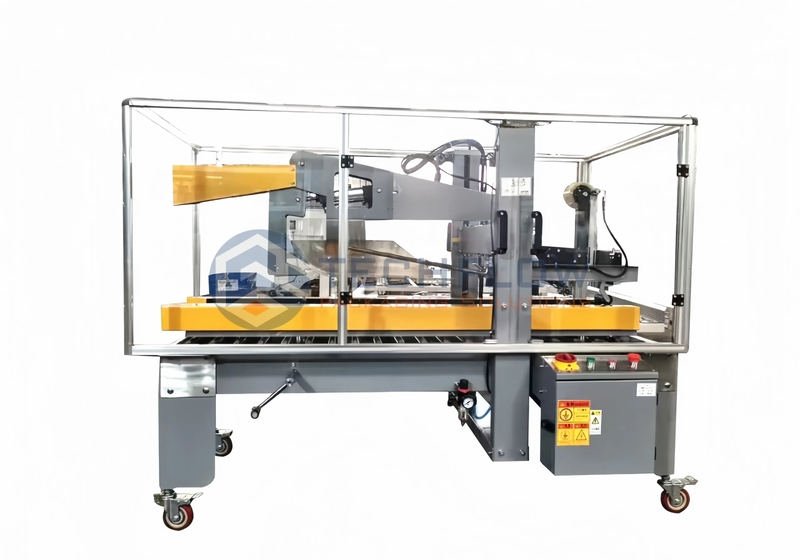

Carton preparation is a fundamental part of many industrial packaging operations. Before products can be loaded into shipping boxes, flat corrugated blanks must be opened, shaped, folded, and sealed correctly. When these tasks are performed manually, they can require considerable labor and may lead to inconsistent carton dimensions or preparation delays. Modern packaging facilities increasingly use automated equipment to make this process more controlled and efficient.
A Case Erector Machine automates the transformation of flat corrugated blanks into fully formed cartons ready for product loading. It combines mechanical movements, feeding mechanisms, sensors, and sealing components to complete several operations in a coordinated sequence. Understanding how these systems work helps manufacturers evaluate their capabilities and determine how they fit into an automated packaging line.
What Is a Modern Case Erector?
A case erector is an industrial packaging machine designed to open flat carton blanks and prepare them for filling. The blanks are usually supplied in a folded, flat condition to reduce storage and transportation requirements.
The machine takes an individual blank from a magazine, opens it into a rectangular box shape, folds the bottom flaps, and secures the base using tape or adhesive.
Modern equipment may include programmable controls, automatic feeding systems, carton detection sensors, and adjustable forming mechanisms. These features help coordinate the different stages and maintain consistent carton preparation.
Main Components of a Case Erector Machine
Understanding the machine’s main components makes its working principles easier to follow.
1. Carton Magazine
The carton magazine stores flat corrugated blanks before they enter the forming section. It is designed to hold a supply of cartons and present them to the feeding mechanism.
Magazine capacity and loading convenience are important because frequent material replenishment can interrupt production.
2. Carton Feeding Mechanism
The feeding mechanism picks up individual blanks and transfers them into the opening section. Depending on the machine design, this may involve vacuum suction cups, mechanical pickup devices, or a combination of feeding components.
Accurate feeding helps prevent missed picks, double feeding, and incorrect carton positioning.
3. Carton Opening and Forming System
This section converts the flat blank into its intended box shape. Mechanical guides, forming arms, or other mechanisms help open and position the carton.
Correct forming is essential because the carton must maintain suitable dimensions before the bottom flaps can be folded.
4. Flap Folding Mechanism
Once the carton is opened, the bottom flaps are folded into position. This creates the base that will support the products during filling and transportation.
The folding sequence must be coordinated to prevent misalignment and ensure that the flaps are ready for sealing.
5. Sealing Unit
The sealing unit secures the carton bottom using pressure-sensitive tape or hot-melt adhesive, depending on the machine configuration.
Proper sealing creates a stable base and prepares the carton for movement to the next packaging stage.
6. Control System and Sensors
Modern machines may use programmable logic controllers (PLCs), sensors, and operator interfaces to coordinate the operating cycle.
These components help monitor carton positioning, manage machine movements, display operating conditions, and identify certain faults.
How a Modern Case Erector Works: Step by Step
Although individual designs differ, most automatic case erectors follow a similar sequence of operations.
Step 1: Loading Flat Carton Blanks
The process begins when operators load flat corrugated blanks into the carton magazine.
The blanks should meet the machine’s specified dimensions and material requirements. Consistent board quality helps ensure reliable feeding and forming.
Step 2: Automatic Blank Pickup
The feeding mechanism selects an individual carton blank from the magazine.
In vacuum-based systems, suction cups grip the cardboard surface and pull the blank toward the forming section. Other machine designs may use mechanical feeding arrangements.
The objective is to separate and transfer one blank at a time without damaging the material.
Step 3: Opening the Carton
The selected blank enters the forming section, where mechanical movements open it into a rectangular shape.
The machine positions the carton panels and establishes the required geometry. Accurate opening is important because an incorrectly formed box may create difficulties during flap folding or product loading.
Step 4: Folding the Bottom Flaps
After the carton reaches the correct shape, the machine folds its bottom flaps.
Depending on the carton design, the flaps are moved into position through a coordinated sequence of mechanical guides and folding components.
This operation creates a closed base that can support the products placed inside the carton.
Step 5: Sealing the Carton Base
The sealing mechanism applies tape or hot-melt adhesive to secure the folded bottom flaps.
The sealing method depends on the packaging application, corrugated material, and required closure performance.
Consistent application is important because the bottom must remain secure as the carton moves through filling, handling, and transportation.
Step 6: Discharging the Formed Carton
Once the bottom is sealed, the completed carton moves out of the machine toward the next packaging station.
It may be transferred through a conveyor to a manual loading area, automatic case packer, or another product filling system.
The machine then begins preparing the next carton.
The Role of Automation and Sensors
Automation helps coordinate the different mechanical operations within a modern case erector. Rather than requiring an operator to control each folding and sealing movement individually, the control system manages the operating sequence.
Sensors may monitor conditions such as:
- Carton presence and positioning.
- Availability of carton blanks.
- Movement through selected machine sections.
- Operating status and fault conditions.
- Downstream equipment readiness, where integrated controls support it.
When a problem is detected, the machine may display an alarm or stop the operating cycle to prevent further errors.
These functions help operators monitor the process and respond to interruptions. However, sensor performance depends on correct installation, alignment, and regular inspection.
Different Sealing Methods Used in Case Erectors
The bottom sealing system is an important part of carton preparation. Two common methods are used in industrial case erection.
Pressure-Sensitive Tape: This method applies adhesive tape across the folded carton base. It is often valued for its straightforward operation and relatively simple maintenance.
Hot-Melt Adhesive: This method applies heated adhesive to selected carton flaps before they are pressed together. It can provide a strong bonded closure when the adhesive and board are compatible.
The appropriate choice depends on carton construction, production requirements, operating conditions, and shipping expectations.
How a Case Erector Fits into an Automated Packaging Line
A modern case erector usually works as part of a larger packaging system. Its purpose is to ensure that empty cartons are available when products reach the loading stage.
A typical automated arrangement may include:
- Carton storage: Flat blanks are held in the magazine.
- Case erection: Cartons are opened, folded, and bottom-sealed.
- Product loading: Products are placed inside the prepared cartons.
- Top sealing: The upper flaps are closed and secured.
- Inspection and coding: Cases are checked and marked as required.
- Palletizing: Completed cartons are arranged for storage and shipment.
Proper synchronization between these stages helps reduce waiting time and prevents carton accumulation or shortages.
Factors That Influence Machine Performance
Even a well-designed case erector requires suitable operating conditions. Several factors influence the accuracy and consistency of its working cycle.
Carton Material Quality
Corrugated blanks should have consistent dimensions, scoring, and surface condition. Damaged or poorly manufactured blanks can interfere with feeding and forming.
Correct Machine Settings
Guides, folding mechanisms, and sealing components must be adjusted according to the carton specifications. Incorrect settings may cause uneven folds or incomplete closures.
Production Speed
The machine’s operating speed should match the requirements of downstream equipment. Excessive speed without proper synchronization may increase the risk of interruptions.
Regular Maintenance
Feeding components, sensors, belts, folding mechanisms, and sealing units should be inspected regularly. Removing cardboard dust and replacing worn parts can help maintain dependable operation.
Operator Training
Operators should understand the loading process, control interface, alarm indicators, and approved procedures for clearing carton jams.
Advantages of Understanding the Working Process
Knowing how a case erector operates helps manufacturers make better equipment and production decisions.
It allows production managers to identify which machine components are most important for their carton formats and operating conditions. Maintenance teams can also understand how feeding, forming, and sealing problems affect the complete cycle.
This knowledge supports:
- More informed equipment selection.
- Better carton material preparation.
- Faster identification of operating problems.
- Improved maintenance planning.
- More effective packaging line integration.
- Consistent carton preparation.
Understanding the process also helps businesses communicate their technical requirements more clearly when evaluating equipment suppliers.
Conclusion
A modern case erector works through a coordinated sequence of carton feeding, opening, flap folding, and bottom sealing. Its mechanical components and control systems work together to transform flat corrugated blanks into ready-to-fill shipping boxes.
Each stage contributes to the accuracy and reliability of the finished carton. Proper material quality, suitable machine settings, effective sealing, and routine maintenance are therefore essential for consistent performance.
By understanding these working principles, manufacturers can better evaluate equipment capabilities, plan packaging line integration, and maintain an efficient carton preparation process.