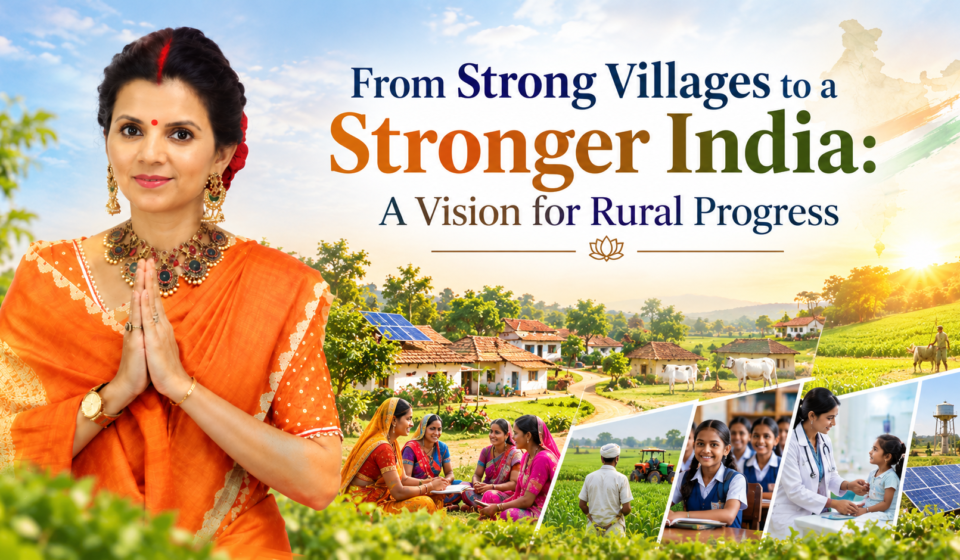

India’s villages represent a significant part of the country’s social, cultural, and economic fabric. They are home to communities that preserve traditions, support agriculture, contribute to local economies, and carry generations of knowledge. Yet rural progress cannot be measured only by roads, buildings, electricity, or other physical infrastructure. A truly strong village is one where people have access to education, healthcare, skills, livelihood opportunities, cultural awareness, and meaningful participation in community life.
The journey from strong villages to a stronger India begins when rural development focuses on people as much as infrastructure. When communities become more capable, self-reliant, healthy, educated, and connected, their progress can create wider social and economic benefits. A holistic vision of rural development can therefore become an important foundation for long-term national progress.
Why Strong Villages Matter to India’s Future
A village is more than a geographical location. It is a network of families, workers, farmers, students, entrepreneurs, elders, young people, and community institutions. Each of these groups contributes to the character and potential of the community.
When rural communities have access to quality education, healthcare, employment opportunities, digital resources, and social support, individuals gain greater opportunities to improve their lives. Stronger households can contribute to stronger local economies, while active communities can respond more effectively to local challenges.
Rural development therefore needs to move beyond isolated projects. It should create an environment where different areas of development support one another.
A strong rural development framework can include:
- Education and knowledge development
- Healthcare awareness and access
- Skill development and livelihoods
- Women empowerment
- Youth participation
- Environmental responsibility
- Cultural awareness
- Community participation
- Digital inclusion
- Economic self-reliance
When these elements work together, development becomes more sustainable.
Education as the Foundation of Rural Progress
Education remains one of the most powerful tools for creating long-term community development. It can improve individual confidence, expand career opportunities, encourage critical thinking, and help communities understand new technologies and changing economic conditions.
Rural education should not focus only on academic qualifications. Children and young people can also benefit from digital literacy, communication skills, practical knowledge, career awareness, vocational training, and leadership development.
Healthcare Creates Stronger and More Productive Communities
A community cannot achieve sustainable progress when basic health needs remain unaddressed. Healthcare awareness, preventive practices, medical support, nutrition, sanitation, and access to appropriate services all influence the quality of life in rural areas.
Healthcare initiatives can help communities understand the importance of regular health check-ups, hygiene, nutrition, maternal care, child health, and preventive measures. Awareness programmes and medical camps can also help people identify health concerns earlier and seek appropriate support.
Healthy individuals are better positioned to participate in education, employment, agriculture, entrepreneurship, social service, and community activities. In this way, healthcare does not operate separately from development. It supports the human capacity required for sustainable progress.
Empowering Women Strengthens Families and Communities
Women play important roles in household management, agriculture, education, caregiving, local economic activities, and community relationships. Their participation can influence not only individual households but also the wider direction of a community.
Women empowerment can take several forms, including:
- Skill development
- Entrepreneurship opportunities
- Financial awareness
- Digital literacy
- Education
- Healthcare awareness
- Leadership development
- Participation in community initiatives
The objective should be to create meaningful pathways rather than temporary assistance. When women gain knowledge, skills, confidence, and economic opportunities, they can participate more actively in decisions that affect their families and communities.
A stronger village therefore needs an environment where women can contribute their abilities, ideas, and leadership.
Youth Can Turn Rural Potential Into New Opportunities
Young people represent an important source of energy and innovation. Rural youth can contribute to community development through education, entrepreneurship, technology, social service, environmental initiatives, cultural programmes, and local leadership.
However, potential needs opportunity. Without access to relevant skills, mentorship, digital resources, career guidance, and employment pathways, many young people may struggle to translate their abilities into meaningful outcomes.
Rural development initiatives can give youth opportunities to become contributors rather than simply beneficiaries. A young person trained in digital skills may support local businesses. Another may explore entrepreneurship. Others may participate in environmental activities, education initiatives, social service, or community awareness programmes.
When young people see a future within their communities, they can become an important force for sustainable rural progress.
Building Local Economic Self-Reliance
Economic strength is another essential component of a strong village. Rural communities need opportunities that allow people to use local skills, resources, knowledge, and entrepreneurship to generate sustainable livelihoods.
Skill development can help individuals explore new occupations, improve existing work, or develop small enterprises. Agriculture, handicrafts, local services, technology-enabled businesses, food processing, and other activities can create opportunities when supported by appropriate knowledge and market access.
A simple development model can be understood as:
Skills + Local Resources + Entrepreneurship + Market Access = Greater Economic Opportunity
Digital Inclusion Can Connect Villages With a Wider World
Technology has changed the way people learn, work, communicate, access services, and conduct business. Rural communities can benefit significantly when digital access is combined with digital literacy.
Digital education initiatives can help students access learning resources, entrepreneurs understand markets, families access information, and young people explore career opportunities. Digital tools can also support communication between communities and wider networks.
Protecting the Environment While Supporting Development
Rural communities depend closely on natural resources. Land, water, agriculture, animals, forests, rivers, and other ecosystems influence livelihoods and quality of life.
Development should therefore respect environmental responsibility. Community-led initiatives can focus on:
- Water conservation
- Tree plantation
- Village cleanliness
- Waste management
- Natural farming practices
- Protection of local ecosystems
- Responsible use of natural resources
- Awareness about sustainable living
- River and Ganga awareness
Traditional Indian perspectives also recognise the relationship between human beings and nature. Bringing together cultural understanding and contemporary environmental practices can encourage communities to treat environmental protection as a shared responsibility.
Preserving Culture While Embracing Progress
Rural development should not require communities to abandon their cultural identity. Villages often preserve traditions, festivals, local knowledge, spiritual practices, values, and forms of community cooperation that contribute to social identity.
Culture can also encourage values such as compassion, responsibility, discipline, service, cooperation, and respect for others.
A Holistic Vision for Rural Progress
A strong village is not created through one programme or one intervention. It develops through the gradual strengthening of several interconnected areas.
Education creates knowledge. Healthcare supports well-being. Skills create economic possibilities. Women’s participation strengthens families. Youth engagement brings energy and innovation. Environmental responsibility protects natural resources. Cultural awareness strengthens identity. Community participation creates ownership.
This interconnected approach reflects the broader idea behind a Total Village Development Program (TVDP), where rural progress is considered through multiple dimensions rather than a single development indicator.
From Village Development to Nation Building
The connection between village development and national progress becomes clearer when development is viewed through human capability.
The development equation can therefore be viewed as:
Strong Individuals + Capable Families + Active Communities + Self-Reliant Villages = Stronger National Foundations
This does not mean every village needs to follow an identical development model. Each community has different resources, challenges, traditions, and priorities. A sustainable approach should respect local conditions while building common capabilities.
Community Participation Makes Development Sustainable
External support can help initiate development, but long-term transformation depends heavily on local participation.
People who understand their community’s needs should have opportunities to participate in identifying priorities, planning initiatives, volunteering, monitoring progress, and supporting local programmes.
Community participation may include:
- Identifying local needs
- Supporting education
- Participating in health awareness
- Encouraging women’s involvement
- Mentoring youth
- Supporting environmental activities
- Preserving cultural practices
- Volunteering for social initiatives
- Participating in local decision-making
When people participate in shaping development, they can develop a stronger sense of ownership. That ownership can help turn individual projects into sustained community efforts.
Conclusion
Strong villages can provide strong foundations for a stronger India. Rural progress becomes more meaningful when it focuses not only on physical infrastructure but also on education, healthcare, skills, economic opportunity, women empowerment, youth participation, environmental responsibility, cultural values, and community ownership. When people gain the ability to participate actively in their own development, communities can move from receiving support to creating sustainable opportunities.
The vision of holistic rural development connects grassroots progress with a wider national purpose. Through initiatives centred on social service, education, healthcare, self-reliance, cultural awareness, environmental responsibility, and community participation, organisations such as Sanatan Sanskrutik Sangh can contribute to a broader understanding of sustainable community development. From strong villages to stronger communities, the journey ultimately depends on empowering people to shape a more capable, responsible, and sustainable future.
Frequently Asked Questions
Why are strong villages important for India?
Strong villages can contribute to social well-being, economic activity, cultural continuity, human development, and local self-reliance. Their progress can support broader national development.
What areas should rural development focus on?
A holistic approach can include education, healthcare, skills, livelihoods, women empowerment, youth participation, environmental responsibility, culture, digital inclusion, and community participation.
How can youth contribute to rural development?
Youth can participate through education, entrepreneurship, digital initiatives, environmental activities, volunteering, cultural programmes, social service, and local leadership.
Why is women empowerment important in rural communities?
Women contribute significantly to households and community life. Greater access to education, skills, financial knowledge, healthcare awareness, and leadership opportunities can strengthen their participation in development.
How does culture contribute to rural progress?
Culture can strengthen community identity and encourage values such as service, cooperation, responsibility, compassion, and respect. Development can preserve these values while also embracing modern opportunities.