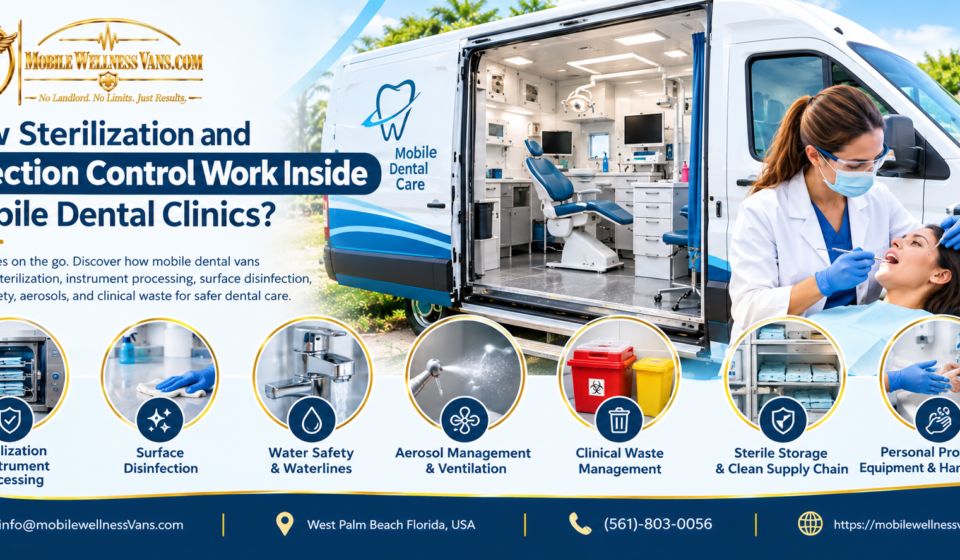

A dental clinic may be on wheels, but its infection-control standards cannot be. Behind every examination light, dental instrument, and treatment chair is a carefully managed process designed to prevent contamination. In a mobile dental clinic, where space is limited and equipment must travel between locations, sterilization and infection control require even greater organization.
Modern mobile dental vans are designed to bring dental care closer to communities while maintaining controlled clinical environments. Their workflows typically follow the same fundamental infection-prevention principles used in conventional dental facilities: clean surfaces, properly processed instruments, appropriate personal protective equipment, safe water management, and careful handling of clinical waste.
Understanding how these systems work helps patients, healthcare organizations, and community programs recognize what safe mobile dentistry involves.
Why Infection Control Matters in Mobile Dentistry?
Dental procedures can involve saliva, blood, aerosols, contaminated instruments, and frequently touched surfaces. Without appropriate precautions, microorganisms can potentially move from one patient, instrument, or surface to another.
The challenge becomes more complex in a mobile setting because the clinic operates within a confined space and may serve multiple locations during a service period. Every stage of patient care therefore needs a defined infection-control workflow.
A well-managed mobile dental clinic separates activities as much as possible into clean and contaminated processes. Instruments used during treatment should never come into contact with sterilized equipment or clean supplies. Staff also need procedures for disinfecting treatment surfaces between patients and safely transporting used instruments for processing.
The Sterilization Process Begins Before the Autoclave
Sterilization is not simply placing dental instruments inside an autoclave. It is a sequence of steps.
After an instrument is used, it is considered contaminated and must be handled accordingly. Depending on the clinic’s established protocols, instruments may be transported in a closed container or designated area before cleaning.
1. Cleaning
Cleaning removes blood, saliva, tissue, and other debris from instruments. This stage is essential because organic material can interfere with the effectiveness of sterilization.
Dental teams may use manual cleaning methods, ultrasonic cleaners, or instrument-washing equipment where appropriate. Staff handling contaminated instruments use suitable protective equipment to reduce exposure.
2. Inspection and Packaging
Once cleaned, instruments are inspected to make sure visible debris has been removed and that the equipment is functioning properly.
Instruments that require sterilization are then packaged using appropriate sterilization pouches or wraps. Packaging allows sterilizing agents to reach the instruments while helping maintain sterility after processing.
3. Sterilization
Heat-resistant dental instruments are commonly sterilized using steam under pressure in an autoclave. The combination of temperature, pressure, and exposure time is controlled according to the sterilizer’s validated operating parameters and the manufacturer’s instructions.
Sterilization is not considered complete merely because a cycle has finished. Dental facilities should also use appropriate monitoring procedures to verify that sterilization processes are working effectively.
How Sterile Instruments Stay Sterile?
Producing sterile instruments is only half the process. They must also remain protected until they are needed.
Sterilized packages should be stored in a clean, dry area where they are protected from moisture, dust, damage, and unnecessary handling. If a package becomes wet, torn, punctured, or otherwise compromised, its sterility may no longer be assured.
This is particularly important for mobile dental vans, where supplies and equipment are transported from one location to another. Organization inside storage compartments helps prevent accidental damage and reduces unnecessary movement of sterile packages.
Surface Disinfection Between Patients
Dental treatment areas contain numerous high-touch surfaces, including dental chairs, light handles, countertops, control panels, and other equipment.
After treatment, clinical staff follow established cleaning and disinfection procedures. Surfaces contaminated during patient care must be appropriately cleaned before applying a suitable disinfectant, because visible debris can reduce the effectiveness of some disinfecting products.
Disposable barriers may also be placed over frequently touched equipment. These barriers are replaced between patients when required, while reusable surfaces are cleaned and disinfected according to the clinic’s protocol and the equipment manufacturer’s instructions.
The objective is straightforward: the treatment environment should be prepared safely for the next patient.
Managing Dental Aerosols and Respiratory Exposure
Certain dental procedures can generate aerosols or splashes. Infection-control planning therefore considers ventilation, personal protective equipment, respiratory hygiene, and procedural techniques.
Depending on the design and services provided, mobile clinics may incorporate ventilation systems or other engineering controls intended to support air-quality management.
Dental professionals also use appropriate protective equipment, which can include gloves, masks or respirators when indicated, protective eyewear or face shields, and protective clothing.
These measures work together rather than functioning as individual solutions.
Water Quality Is Another Important Consideration
Dental treatment equipment may use water during procedures, making water-system maintenance an important part of infection prevention.
Mobile dental clinics need procedures for maintaining dental unit waterlines, managing water supplies, and preventing contamination. Water should be handled according to applicable clinical standards, equipment requirements, and local regulations.
This is one reason mobile dental operations require more than simply installing dental equipment inside a vehicle. The clinic’s infrastructure must support safe clinical workflows from water management to instrument processing.
Clinical Waste Requires Controlled Handling
Used needles, contaminated gauze, extracted teeth, and other clinical materials must be separated and disposed of appropriately.
Sharps are placed into designated puncture-resistant containers. Other regulated medical waste is handled according to applicable waste-management requirements.
Because mobile clinics travel between service locations, waste management must be planned before the vehicle begins its route. Staff need to know how waste will be contained, transported, and transferred for appropriate disposal.
Where Mobile Dental Clinics Fit into Mobile Healthcare?
Mobile healthcare vehicles vary significantly depending on the services they provide. A mobile ultrasound van, for example, has a different equipment profile and infection-control workflow from a dental treatment vehicle.
However, the underlying principle remains consistent: mobile healthcare must combine clinical care with reliable environmental and equipment-safety procedures.
For dental services, this means designing the vehicle around a logical progression from clean storage to patient treatment, contaminated instrument handling, sterilization, waste management, and environmental cleaning.
What Patients Can Look For?
Patients do not need to understand every technical sterilization parameter to recognize signs of a well-organized dental environment.
They can observe whether dental professionals:
- Perform hand hygiene appropriately.
- Use fresh gloves and appropriate protective equipment.
- Open packaged sterile instruments when needed.
- Clean or replace barriers between patients.
- Dispose of sharps immediately in appropriate containers.
- Keep clean supplies separated from contaminated materials.
These visible practices provide insight into how seriously infection prevention is integrated into daily operations.
Conclusion
Effective infection control inside a mobile dental clinic is a carefully coordinated system, not a single sterilization step. Instrument cleaning, packaging, sterilization, sterile storage, surface disinfection, water management, personal protective equipment, ventilation, and waste handling all contribute to patient and staff safety.
For mobile dental vans, the ability to deliver care safely depends on integrating these processes into the vehicle’s design and daily workflow. Mobility changes where healthcare happens, but it does not change the importance of disciplined infection prevention.