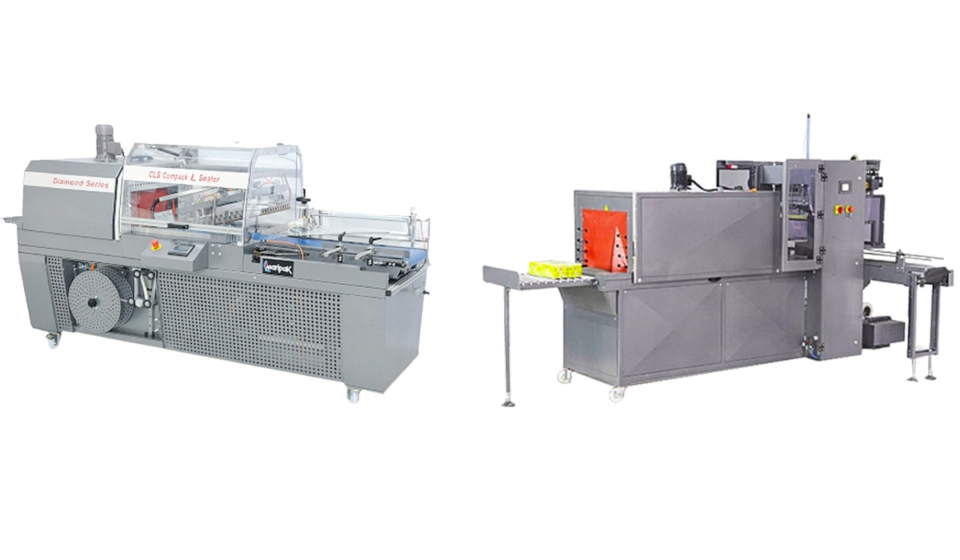

Packaging plays an important role in protecting products, organizing shipments, and presenting finished goods consistently. As production volumes increase, businesses often look for ways to make packaging faster and more repeatable without compromising the quality of the finished package.
A shrink packaging machine can help automate or streamline several stages of the wrapping process. Depending on the equipment configuration, a system may seal products inside shrink film, apply controlled heat to tighten the film, or integrate multiple packaging stages into a production line.
Choosing the right equipment requires more than looking at machine speed. Product dimensions, film type, production volume, available floor space, operator requirements, and future expansion plans should all be considered.
What Is a Shrink Packaging Machine?
A shrink packaging machine is equipment designed to wrap products in shrink film and use controlled sealing and heat-shrinking processes to create a close-fitting package.
Different machines perform different parts of this process. Some combine sealing and shrinking functions, while larger production systems may use separate sealing equipment and heat tunnels.
Industrial equipment manufacturers offer several configurations to accommodate different products and production requirements. Maripak’s current equipment range includes L-sealers, side sealers, polyethylene wrapping systems, heat tunnels, peripheral equipment, and custom-built solutions.
This variety allows packaging operations to select equipment according to their workflow rather than relying on a single machine design.
How Does Shrink Packaging Work?
The process generally involves positioning a product within suitable shrink film, sealing the film around the product, and then applying controlled heat.
The heat causes the film to contract around the product, producing a tighter package. The exact process depends on the film material, product dimensions, machine configuration, and temperature settings.
For higher-volume operations, automation can coordinate product feeding, sealing, film handling, and shrinking. This can create a more consistent packaging process than manually performing each step.
Common Types of Shrink Packaging Equipment
There is no single machine configuration suitable for every application. Several equipment categories are commonly used.
L-Sealers
L-sealers use an L-shaped sealing system to close shrink film around a product. They can be used in smaller operations as well as automated production environments.
Maripak’s equipment range includes both entry-level and more advanced L-sealing systems. Its Compack Series, for example, is positioned as an entry-level option for small to medium-sized packaging operations and includes adjustable settings for different packaging requirements.
Side Sealers
Side sealers are designed for continuous or intermittent wrapping applications and can accommodate different product sizes and packaging films.
Automated side-sealing systems may be appropriate where consistent throughput is important. Maripak’s current range includes automatic side-sealing equipment with servo-driven technology and configurable features.
Heat Tunnels
A heat tunnel is typically used after the film has been sealed around the product. Controlled heat causes the shrink film to contract and conform more closely to the product.
Heat tunnels can differ in airflow design, temperature controls, tunnel dimensions, and conveyor configurations. Maripak currently offers top- and bottom-fan heat tunnel systems, including smaller units designed for controlled film shrinking.
Choosing Equipment Based on Production Volume
Production volume is one of the most important factors when selecting a shrink packaging machine.
A smaller operation with relatively low daily output may not need a fully automated production line. Manual or semi-automatic equipment can sometimes provide an appropriate balance between investment and productivity.
Higher-volume manufacturers may benefit from automatic sealing, integrated feeding, and continuous operation. Automated systems can reduce repetitive manual tasks and provide more consistent processing across large production runs.
The correct choice depends on actual production requirements rather than simply selecting the machine with the highest advertised speed.
Consider Product Size and Shape
Products vary significantly in dimensions, weight, shape, and packaging requirements.
Before selecting equipment, businesses should identify the smallest and largest products that will pass through the packaging system. Product height, width, length, weight, and shape can affect sealing dimensions, film selection, conveyor configuration, and tunnel requirements.
Products with unusual shapes may require specialized equipment or custom modifications. Maripak also offers custom-built equipment for applications requiring specific machine configurations.
Understanding the complete product range can therefore prevent businesses from choosing equipment that only works efficiently for a narrow group of products.
Film Selection Matters
The packaging film is an important part of the overall system.
Different films can have different characteristics, including shrink behavior, thickness, clarity, strength, and sealing requirements. The machine should be compatible with the film being used and capable of maintaining appropriate sealing and shrinking conditions.
Some automated equipment is designed to work with multiple film types. For example, Maripak’s Impack Hybrid Pro Series is described as compatible with films including polyolefin and polyethylene when paired with a shrink-film heat tunnel.
Film selection should therefore be considered alongside machine specifications rather than treated as a separate purchasing decision.
Automation and Operator Requirements
Automation can change how much manual intervention is required during packaging.
Semi-automatic systems may require operators to position products, feed film, or perform other repetitive tasks. Fully automatic systems can integrate more stages of the process, potentially supporting higher production rates.
However, automation also introduces additional considerations, including controls, operator training, maintenance, sensors, and integration with existing equipment.
Businesses should evaluate how a new machine will fit into the entire production workflow instead of considering the equipment independently.
Energy and Operating Efficiency
Operating efficiency is another factor worth examining.
Heat tunnels require controlled heating, while sealing systems may use electrical, pneumatic, or servo-driven components depending on the design. Efficient equipment can help reduce unnecessary energy use and improve consistency.
For example, Maripak describes its heat tunnel range as incorporating energy-efficient designs, while some newer sealing systems use servo motors rather than compressed-air-dependent systems.
Actual operating costs will depend on machine configuration, production volume, film consumption, energy requirements, maintenance, and operating conditions.
Maintenance and Technical Support
Routine maintenance can help packaging equipment remain reliable.
Important maintenance considerations may include cleaning sealing areas, checking moving components, inspecting film-handling systems, monitoring heating elements, and replacing wear components when necessary.
Access to technical support and replacement parts can also affect long-term equipment availability. Maripak states that its technical support and parts fulfillment operations are based in the Greater Tampa, Florida area, with parts available for authorized equipment and service requirements.
When comparing machines, businesses should therefore consider after-sales support alongside the initial equipment specifications.
Installation and Training
Installation should be planned before equipment arrives at the facility.
Businesses should consider available floor space, electrical requirements, product flow, conveyor alignment, ventilation, and access for maintenance. Equipment that connects to an existing production line may also require coordination with upstream and downstream machinery.
Training is another consideration. Operators should understand machine controls, safety procedures, film loading, basic adjustments, and routine maintenance requirements.
Maripak states that it provides installation, setup, and training services for its equipment.
What to Evaluate Before Purchasing
Before selecting a shrink packaging machine, create a clear list of operational requirements. Important considerations include:
- Product dimensions and weight
- Required production volume
- Manual or automatic operation
- Compatible film types
- Sealing configuration
- Heat tunnel requirements
- Available floor space
- Electrical requirements
- Operator training
- Maintenance access
- Spare parts availability
- Technical support
- Future production needs
Comparing these factors can make the selection process more practical and help businesses avoid paying for capabilities they do not need.
Conclusion
A shrink packaging machine can support more consistent and efficient product wrapping across a wide range of manufacturing and distribution environments. The right system depends on production volume, product dimensions, film requirements, automation needs, available space, and long-term operating considerations. For organizations evaluating industrial shrink-wrapping equipment and related support, Maripak USA provides a broad range of machinery and equipment options for different packaging applications. Businesses should compare complete packaging workflows rather than focusing on machine speed alone. Sealing, shrinking, feeding, film handling, maintenance, training, and technical support can all influence the performance of the finished system.