Modern manufacturing environments are increasingly focused on improving productivity without compromising precision. As production volumes grow and components become more complex, manufacturers need workholding systems that can accommodate different workpieces while making efficient use of available machine space. Flexible fixture arrangements can be particularly valuable when several components need to be positioned and processed within the same production environment.
SCHUNK stacking modules can provide a practical approach to creating flexible workholding arrangements for manufacturing applications. By allowing workholding components to be arranged in a structured, space-efficient configuration, stacking solutions can help manufacturers make better use of machine capacity. When combined with technologies such as a hydro pneumatic clamping system, these solutions can support reliable and repeatable workpiece positioning.
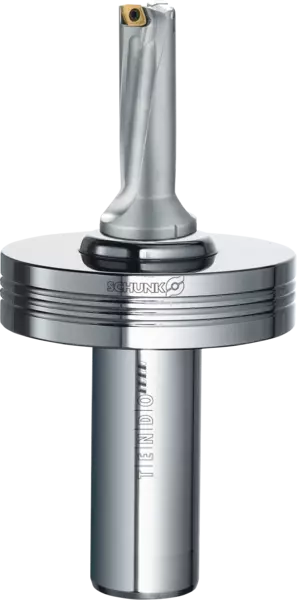
What Are SCHUNK Stacking Modules?
Stacking modules are workholding components designed to allow multiple clamping or fixture elements to be arranged in a stacked configuration. Instead of limiting the fixture to a single horizontal level, stacking technology can help manufacturers use available vertical space.
This can be useful when several workpieces need to be machined in one setup. By arranging components efficiently, manufacturers may be able to increase the number of parts processed during a machine cycle.
The exact configuration of stacking modules depends on the machine, workpiece dimensions, required clamping forces, and machining process. A suitable setup should provide sufficient stability while ensuring that cutting tools can access the required areas of each component.
Why Is Flexible Workholding Important?
Workholding has a direct impact on machining efficiency. Every time an operator loads, aligns, and secures a workpiece, production time is consumed. If several components can be securely positioned in one setup, the number of individual handling operations may be reduced.
Flexible workholding also becomes important when manufacturers produce different component sizes or geometries. A fixture that can be adapted to changing requirements can reduce the need for completely new setups.
Stacking configurations can provide another level of flexibility by making use of machine space that might otherwise remain unused. This can be especially beneficial when machine capacity is limited and manufacturers want to increase output without immediately investing in additional equipment.
Benefits of SCHUNK Stacking Modules
Using an appropriate stacking solution can provide several advantages for machining operations.
Better Use of Machine Space
Traditional workholding arrangements primarily use the horizontal surface of a machine table. Stacking modules can introduce additional levels, helping manufacturers use available vertical space more effectively.
Multiple Workpieces in One Setup
Depending on the machine and fixture design, stacking can allow multiple components to be held simultaneously. This can increase the number of parts processed during a machining cycle.
Reduced Setup Time
Processing multiple workpieces in one setup can reduce repeated loading and alignment operations. This can contribute to more efficient use of machine time.
Flexible Configuration
Stacking systems can be configured according to different workpiece and production requirements. This flexibility can be useful for manufacturers handling varied component types.
Support for Automated Production
Stacking arrangements can also be incorporated into automated machining environments. When designed appropriately, they can work alongside automated loading, unloading, and clamping processes.
Understanding Hydro Pneumatic Clamping
A hydro pneumatic clamping system combines pneumatic and hydraulic principles to generate controlled mechanical clamping force. The system generally uses compressed air as the energy source while hydraulic fluid is used to create or multiply the force applied to the workpiece.
This combination can offer the speed and convenience associated with pneumatic operation together with the higher force and controlled movement associated with hydraulic systems.
Hydro pneumatic technology can therefore be useful in applications where manufacturers require relatively fast actuation along with strong and consistent workpiece holding.
How Does a Hydro Pneumatic Clamping System Work?
The exact operating principle depends on the design of the system, but the basic concept involves using compressed air to drive a hydraulic mechanism.
When compressed air enters the pneumatic section, it moves an actuator or piston. This movement transfers force to a hydraulic circuit. Because hydraulic pressure can generate substantial force, the system can produce the required clamping action without relying solely on high pneumatic pressure.
Once the required clamping position is reached, the mechanism holds the workpiece securely during the manufacturing process. After the operation is complete, the system can be released so that the workpiece can be removed.
This combination of technologies allows manufacturers to balance speed, force, and repeatability within a single clamping arrangement.
Advantages of Hydro Pneumatic Clamping
A hydro pneumatic system can provide several benefits in industrial workholding.
High and Consistent Clamping Force
Hydraulic force multiplication can provide strong clamping performance. This is useful when machining operations generate significant cutting forces.
Faster Operation
The pneumatic portion of the system can help provide rapid actuation, which can be beneficial for repetitive production cycles.
Repeatable Performance
Consistent clamping is important when multiple components must be manufactured to the same dimensional specifications. A properly configured system can provide repeatable workholding conditions.
Reduced Manual Intervention
Automated or semi-automated hydro pneumatic systems can reduce the amount of manual effort required to secure and release workpieces.
Compact Design Possibilities
Combining pneumatic and hydraulic principles can provide considerable clamping force without necessarily requiring a large external mechanism. This can be useful where fixture space is limited.
Combining Stacking Modules With Hydro Pneumatic Clamping
Stacking modules and hydro pneumatic clamping can complement each other in applications where multiple workpieces need to be held securely within a compact fixture arrangement.
The stacking structure can provide the physical framework for positioning several workpieces, while hydro pneumatic clamps can provide the required holding force.
This combination can be particularly useful for high-volume machining. Instead of processing one workpiece at a time, manufacturers may be able to machine several components during the same machine cycle.
However, fixture design must account for the cutting forces generated at each level. The entire structure needs to remain sufficiently rigid and stable, and the clamping force must be appropriate for every workpiece.
Applications of Stacking Workholding
Stacking solutions can be considered for a range of machining and manufacturing operations. CNC milling, drilling, machining of repeated components, and high-volume metalworking are examples of applications where multi-level workholding may provide benefits.
Industries producing large quantities of similar components can particularly benefit from fixture arrangements that increase the number of parts processed per cycle.
The approach can also be useful when floor space or machine availability is limited. Increasing the number of components processed in one cycle can potentially improve machine utilization without requiring additional production equipment.
Factors to Consider When Choosing Stacking Modules
Before selecting a stacking solution, manufacturers should evaluate the dimensions and weight of the workpieces. The fixture needs to provide adequate support at every level while maintaining stability during machining.
The machine’s working envelope is another important consideration. The stacked arrangement must fit within the available height and still allow cutting tools to reach the required machining areas.
Cutting forces should also be analyzed carefully. Higher machining forces may require a more rigid fixture and stronger clamping arrangement.
Manufacturers should consider loading and unloading requirements as well. A highly efficient fixture is only useful if workpieces can be loaded, secured, and removed efficiently.
Automation compatibility is also worth evaluating for facilities using robots or automated machine tending systems.
Maintenance of Stacking and Clamping Systems
Regular maintenance is essential for reliable workholding performance. Stacking components should be inspected for wear, damage, looseness, or contamination.
Clamping mechanisms should also be checked according to the manufacturer’s recommendations. For a hydro pneumatic clamping system, operators should pay attention to pneumatic connections, hydraulic components, seals, hoses, and other areas that could affect system performance.
Machining debris and coolant can accumulate around fixtures, so cleaning should be incorporated into regular maintenance routines. Proper cleaning helps maintain accurate seating and reduces the risk of contamination affecting moving components.
Any unexpected change in clamping force, movement, or fixture stability should be investigated before continued production.
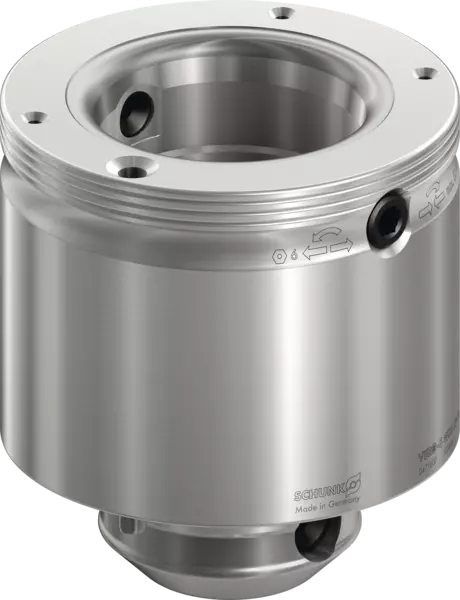
Improving Productivity Through Multi-Part Workholding
Manufacturers are continually looking for ways to increase output while controlling production costs. Multi-part workholding can contribute to this objective by allowing several components to be processed during one machine cycle.
The benefits can extend beyond machine utilization. Fewer individual setups may mean fewer alignment operations, reduced handling, and more consistent positioning.
However, productivity improvements should not come at the expense of machining quality. The fixture must provide adequate rigidity, access, and clamping force for the actual process. Proper engineering and testing are therefore essential before introducing a stacked configuration into regular production.
Conclusion
Efficient workholding can help manufacturers make better use of machine capacity while maintaining consistent machining results. SCHUNK stacking modules provide a flexible approach to arranging workholding components and can help manufacturers use available machine space more effectively.
A hydro pneumatic clamping system can complement this approach by providing strong, controlled, and repeatable clamping force with the operational benefits of pneumatic actuation. Together, these technologies can be considered for applications involving multiple workpieces, demanding machining forces, and automated or high-volume production.
With its expertise in gripping, clamping, and workholding technologies, SCHUNK develops solutions for modern manufacturing requirements. By selecting the appropriate SCHUNK workholding technology and designing the fixture around the specific machining process, manufacturers can improve productivity, repeatability, and overall production efficiency.