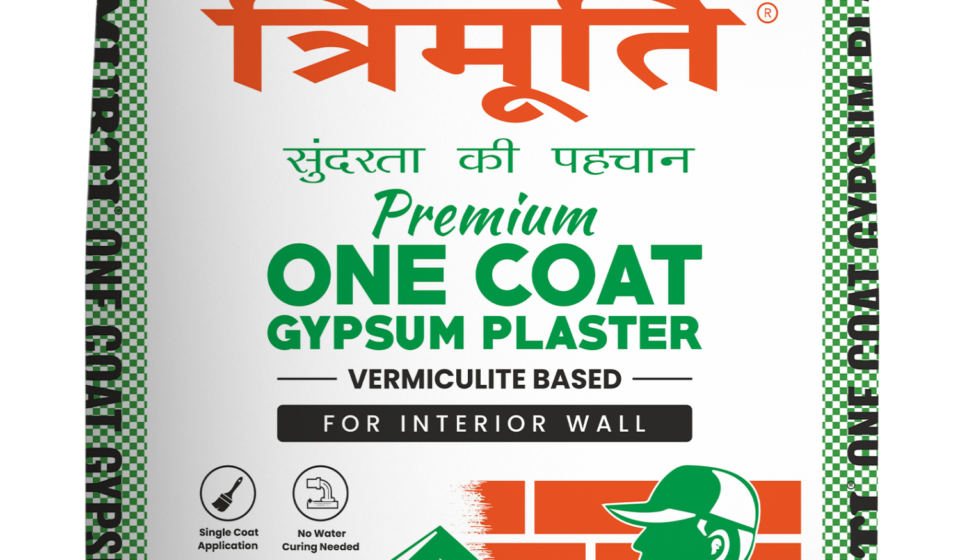

A smooth and durable wall provides the foundation for an attractive interior, whether the final surface is painted, decorated, or finished with another treatment. Achieving this result requires suitable materials, proper surface preparation, consistent application, and adequate drying time. Plaster-based solutions are widely used for interior walls because they can help create an even surface while covering minor irregularities. POP material is particularly useful in applications where a refined finish and workable consistency are important.
When the right product is selected and applied according to recommended practices, it can support a uniform wall surface, improve the appearance of subsequent finishes, and contribute to a well-prepared interior space.
Understanding the Role of POP in Wall Finishing
Plaster of Paris is produced from gypsum and is commonly used for interior finishing, moulding, decorative work, and surface applications. Its fine consistency allows skilled workers to create even surfaces and refine corners, joints, curves, and other details. The material is particularly useful where a clean appearance is required before painting or decorative treatment.
For wall finishing, the material works as part of a larger system rather than as a substitute for every construction layer. The underlying wall must first be properly prepared, and the selected plaster should match the application. Once applied, the surface can be levelled and smoothed so that minor irregularities are less noticeable.
How Smoothness Is Achieved
The quality of a finished wall depends on material consistency, surface preparation, mixing, application technique, and drying. Proper preparation is essential because dust, grease, loose particles, and unstable surfaces can affect adhesion. A clean substrate provides a stronger foundation for the finishing layer. The plaster should be mixed according to the manufacturer’s recommended water-to-material ratio and used within its working time.
During application, controlled trowelling helps create an even layer and minimize visible irregularities. Applying too much material in one area can cause unevenness, while insufficient coverage may expose the underlying texture. Careful finishing strokes help reduce ridges, smooth imperfections, and create a more uniform surface.
Why Material Quality Matters
Not every plaster product performs in the same way. Purity, particle size, setting characteristics, whiteness, strength, and residue can influence workability and the final appearance. High-quality gypsum-based products are designed to provide predictable handling and consistent finishing performance.
The product information available from the manufacturer indicates that its gypsum plaster range is intended for internal plastering, including walls, ceilings, cornices, mouldings, and arches. Published specifications emphasize smooth finish, coverage, strength, and reduced paint consumption. These characteristics show why selecting a product based on application requirements is important rather than choosing only by price.
Supporting Paint-Ready Surfaces
One major objective of interior plastering is to create a suitable base for paint. Uneven walls can require additional preparation, consume more finishing material, and make paint appear inconsistent under different lighting conditions. A smooth plastered surface can reduce these visible variations.
A gypsum plaster powder product, when correctly selected and applied, can help create a uniform base for subsequent finishing. After the plaster has dried adequately, the surface should be checked for remaining imperfections. Depending on the project specification, additional wall-care products, primer, and paint may then be used.
How It Can Contribute to Durability
Durability begins with a sound substrate and suitable material selection. A well-bonded interior plaster layer creates a stable foundation for subsequent finishing, while a smooth surface can reduce repeated corrections and simplify future maintenance or repainting. However, plaster should not be considered resistant to every form of moisture or physical damage.
Gypsum and POP-based products are generally suited to appropriate dry interior applications, while moisture-prone areas require suitable waterproofing systems. Proper storage is equally important, as moisture exposure before use can affect performance. Following manufacturer instructions for storage, shelf life, mixing, application, and drying helps maintain consistent material characteristics and supports reliable wall-finishing results.
Choosing the Right Product for the Project
A suitable selection should consider the substrate, location, required finish, application thickness, working conditions, and finishing sequence. It is also useful to review technical specifications rather than relying on general assumptions about plaster.
For example, products within a gypsum plaster range may be developed for different performance and application requirements. Some are positioned around smooth finishing and coverage, while others are designed for faster construction or specialized interior requirements. Matching the product to the job can improve application control and help avoid unnecessary material use.
Where It Fits in Interior Construction
Plaster-based finishing is particularly relevant to interior walls where appearance, smoothness, and ease of subsequent painting are important. It can also support decorative features such as cornices, mouldings, arches, and ceiling details. The website’s technical material describes gypsum plaster for internal walls and ceilings and notes its suitability for decorative work. This makes product selection important for projects where surface refinement and design flexibility need to work together.
POP and the Broader Wall-Finishing System
A smooth wall is achieved through several coordinated finishing stages rather than one product alone. Masonry or concrete forms the foundation, while plaster creates an even surface. Wall putty can help refine minor imperfections, and primer prepares the surface for better paint adhesion. Finally, paint delivers the desired colour, texture, and appearance. Following each stage correctly helps create a more uniform, visually appealing, and durable interior wall finish.
Conclusion
Smooth and durable interior walls require more than simply applying a finishing compound. They depend on a suitable substrate, consistent material quality, correct mixing, controlled application, adequate drying, and an appropriate finishing sequence. POP material can support this process by helping create refined interior surfaces suited to painting and decorative applications. With careful product selection and good workmanship, plaster-based finishing can contribute to attractive, uniform, and dependable wall results.
With a comprehensive portfolio of quality construction materials and finishing solutions, Trimurti Products offers construction solutions across gypsum plaster, POP, Trimurti putty, ceiling systems, tile adhesives, dry-mix mortars, waterproofing, cement, and paints. Its range supports interior finishing, surface preparation, ceiling work, tile installation, and broader construction requirements. With products designed for different applications, Trimurti Products helps builders, contractors, architects, and homeowners select suitable materials for smoother finishes, efficient construction, and dependable project outcomes across residential and commercial projects.