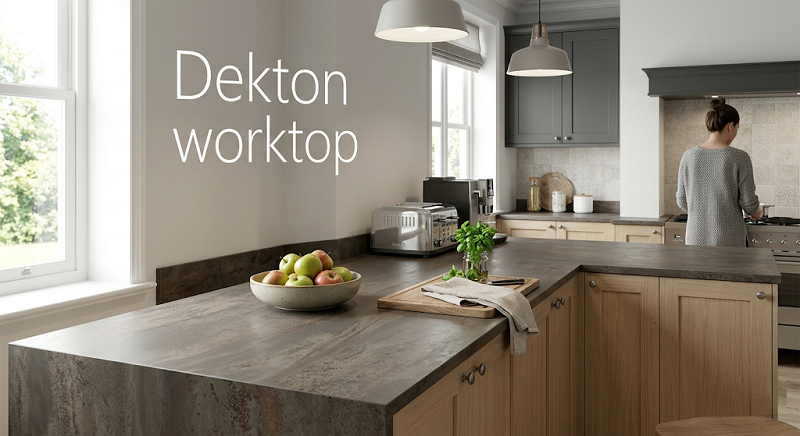

Sintered stone has revolutionised modern kitchen design, offering surfaces that combine the beauty of natural materials with exceptional technical performance. Among the leading options, two names dominate the conversation, and homeowners frequently weigh dekton worktop colours against the qualities of neolith kitchen worktops. At Koliqi Marble, we are often asked which sintered stone is the superior choice, and this article provides a formal comparison to help you decide.
Both materials are produced through advanced manufacturing processes and deliver outstanding durability, yet they possess distinct characteristics that may influence your decision. Understanding these differences is essential before selecting a surface for your kitchen.
As more homeowners discover the advantages of sintered stone, the comparison between these two leading materials has become one of the most common discussions in modern kitchen planning.
Understanding Sintered Stone
Sintered stone is created by compacting natural minerals under intense heat and pressure, replicating the geological processes that form natural stone within a controlled environment. The result is an extremely dense, non-porous surface that resists staining, scratching and heat.
Both Dekton and neolith kitchen worktops fall within this category, offering homeowners highly resilient surfaces. However, the specific properties, finishes and dekton worktop colours available differ, warranting careful consideration.
Dekton
Dekton is renowned for its exceptional hardness and resistance to scratching, ultraviolet light and thermal shock. The extensive range of dekton worktop colours allows homeowners to achieve a wide variety of aesthetics, from minimalist neutrals to bold, contemporary tones.
This versatility, combined with outstanding durability, makes Dekton a popular choice for both indoor and outdoor applications. The breadth of dekton worktop colours is frequently cited as one of the material’s most appealing attributes.
Neolith
Neolith kitchen worktops are equally impressive, produced from entirely natural raw materials without resins or synthetic binders. This composition delivers a non-porous, highly hygienic surface that resists staining, scratching and heat with remarkable consistency.
Neolith kitchen worktops are particularly admired for their convincing reproduction of natural materials such as marble, concrete and metal. For homeowners seeking the appearance of luxurious natural stone with superior durability, neolith kitchen worktops are an outstanding option.
The resistance of Dekton to thermal shock makes it especially suitable for surfaces near ovens and hobs, where sudden changes in temperature might compromise lesser materials.
Comparing Aesthetics and Finishes
When comparing aesthetics, both materials offer an impressive selection. The variety of dekton worktop colours provides extensive design flexibility, while neolith kitchen worktops are celebrated for their realistic, natural-looking finishes.
The choice often comes down to personal preference. Those drawn to a broad spectrum of dekton worktop colours may favour Dekton, whereas those seeking authentic natural-stone aesthetics may prefer neolith kitchen worktops. Both deliver a refined, contemporary finish.
For many homeowners, seeing the finishes in person proves invaluable, as photographs rarely capture the true depth and texture of either surface.
Durability, Maintenance and Suitability
Both materials are exceptionally durable and require minimal maintenance, needing no sealing and only routine cleaning with mild soap and water. Their non-porous surfaces ensure excellent hygiene, making them ideal for food preparation.
In terms of suitability, both perform admirably indoors and outdoors, resisting ultraviolet fading. Whether you select a surface from the range of dekton worktop colours or choose neolith kitchen worktops, you can expect reliable performance for many years.
Which Sintered Stone Wins?
There is no single winner in the comparison between Dekton and neolith kitchen worktops; the right choice depends upon your priorities. If an extensive palette of dekton worktop colours appeals to you, Dekton may be ideal. If authentic natural-stone aesthetics are your priority, neolith kitchen worktops are likely the better match.
At Koliqi Marble, we supply and install both premium sintered surfaces, offering expert guidance to help you select the perfect worktop for your kitchen and ensuring flawless installation to the highest standard.
Ultimately, both materials represent the pinnacle of sintered stone technology, and a visit to the Koliqi Marble showroom will allow you to compare the range of dekton worktop colours alongside neolith kitchen worktops in person.