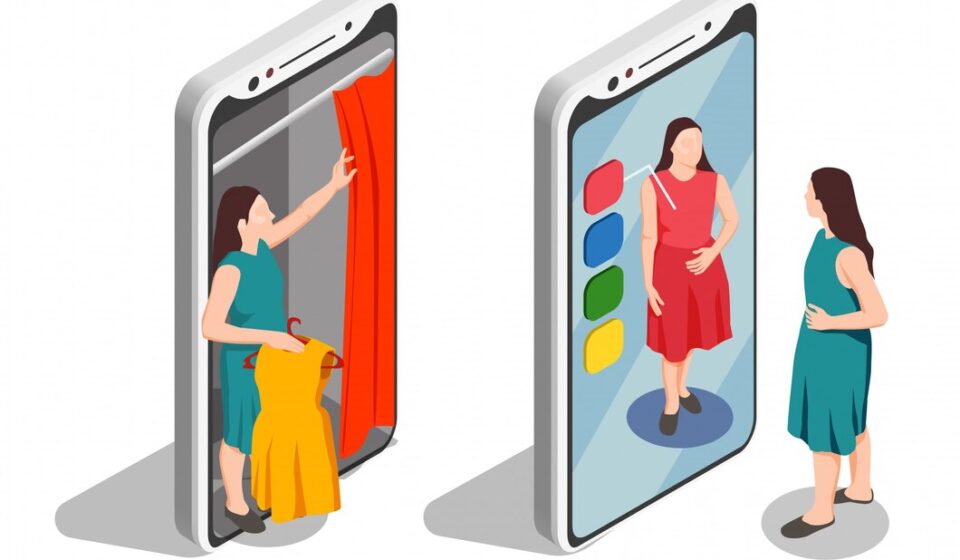

The online shop has radically changed. So soon, tactile uncertainty, which is the inability of a customer to understand whether a dress will fit or a pair of glasses will suit the shape of his/her face, was the main obstacle of e-commerce not long ago. Today, virtual try-on solutions are breaking these boundaries down and offering an experience of seamless integration of the digital experience with the physical one.
By 2026, the retail world will not be online and offline. Instead, it is becoming an integrated, turnkey paradise. The old-time problem of size shopping is eventually resolved using AR technology and advanced AI, and can offer more personalized, more precise, and more engaging shopping experiences.
Why Virtual Try-On Solutions Are Revolutionizing the Retail Experience?
The virtual try-on solutions market in the world has grown exponentially, with a projection of over 15 billion in 2026. This wave cannot be simply defined by the cool factor; it is a direct reaction to a huge change in consumer behavior. The Gen Z and Millennials, who are the current shoppers, require more than just the images on the screen. They want interactivity.
How AI and AR Technology Enhance Virtual Fitting Rooms?
The previous versions of virtual fitting rooms tended to resemble digital stickers overlaid over a picture. Nevertheless, in the current era of virtual try-ons, computer vision and 3D body mapping have been used. These tools have now taken into consideration the fabric drape, the texture, and movement in real time. As a user rotates his or her head or swings his or her arm, the digital garment reacts to this action in a photorealistic physical response.
- Very Fine Precision Accuracy: AI-based algorithms have reached the level of 95 percent accuracy when noticing a smartphone camera feed of a user.
- Instant Cloud Rendering: Cloud-based rendering is a means of rendering these experiences to load immediately on any mobile device without having to download any apps.
- Scalable Accessibility: From luxury jewelry to high-street fashion, the technology can now be scalable to both large and small brands.
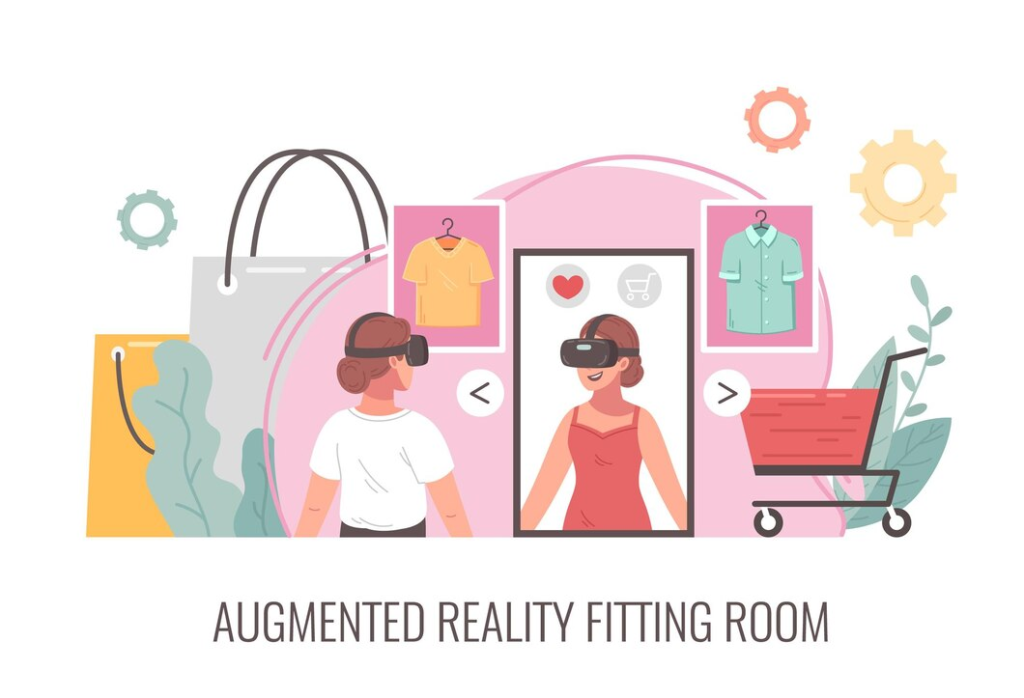
Reducing E-commerce Returns with VR Try-On Solutions
High cost of returns has always been one of the most important pain points of retailers. Return rates in the fashion industry may be in the range of 30%. Virtual try-ons are a solution that is like a potent remedy to this logistical nightmare.
The Financial Benefits of Interactive Shopping Tools
According to recent data in the industry, brands that utilize high-quality augmented reality solutions experience a decline in the return rate (25-40%). The psychological distance between expectation and reality is eliminated when the customer is able to see the product on him/herself after clicking the buy button.
Moreover, metrics of engagement provide an interesting story. Customers take almost 3X the duration of the virtual try-on product pages. This longer dwell time is directly proportional to the increase in conversion rates- eyewear and cosmetics high-intent categories can increase sales by up to 30% as a result of this long dwell time.
Beyond the 360-Degree Tour: Immersion in Modern Property Tech
Virtual Reality in Real Estate in 2026 will be past the days of panoramic photos. Prospective purchasers can now view virtual models of properties that have not even been constructed yet.
- Virtual staging in Real-Time: Buyers are able to change the style of the furniture or wall color in real-time.
- Genuine Real-Life Space Perception: When using VR goggles, users can experience the actual size of the room, and this aspect can never be achieved by a 2D picture.
- Global Property Access: A Singaporean investor can take a stroll in a penthouse in New York and get as close as if there were a person there.
The implementation of VR Try On Solutions into the home decor industry means that the customers will be able to use 3D representations of furniture by placing them in their real living room through their smartphones, which means that the king-size bed will actually fit when the delivery truck comes.
Strategic Advantages of Implementing Augmented Reality Technology
In the case of businesses, implementing augmented reality solutions is no longer a luxury but a necessity in the competition. These tools are able to offer an abundance of data that conventional shopping cannot offer. The retailers are able to monitor the highest and the least frequently tried on item, the different styles that are often discarded, and the impacts of lighting or color changes on the shopping decisions.
Conclusion
The virtual try-on solutions have managed to fill the gap that exists between the comfort of the couch and the confidence of the fitting room. Through incorporating the augmented reality solutions and VR Try On Solutions, brands are building an efficient, sustainable, and human-centric retail space.