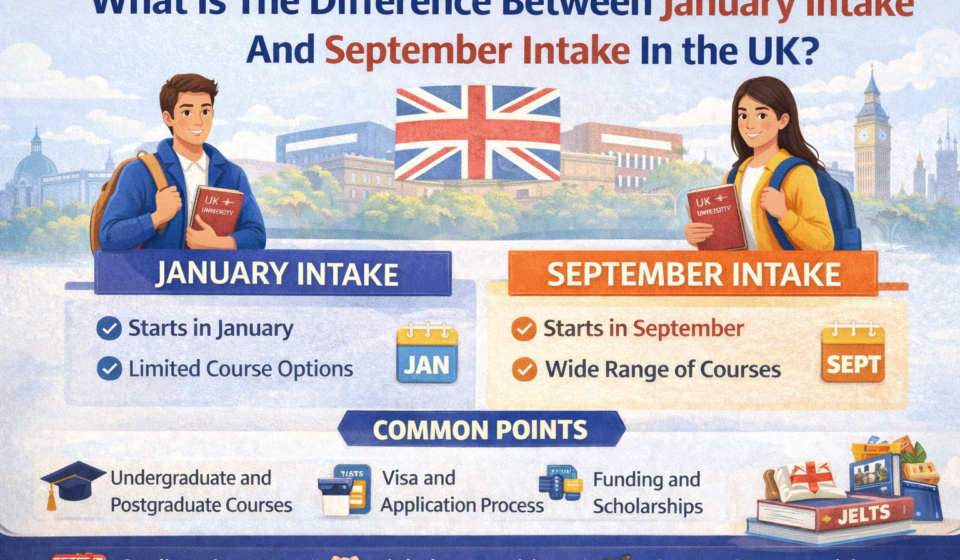

The UK remains a popular destination for Indian students who want to study abroad because its universities hold worldwide respect and its master’s programs require less time to complete and its post-graduation work opportunities. Once you pick your course, one of the earliest real decisions is when to start – September or January. The UK 2026 September intake is the big main entry, while the UK 2027 January intake works as a smaller second option. Knowing how these two differ can save you from rushed applications and mismatched expectations.
September – the main academic start
The UK 2026 September intake is when most things happen in British universities. Almost every undergraduate and postgraduate course begins sometime between late September and early October. It marks the real beginning of the academic year for the majority of students.
This intake gives you by far the widest selection of programmes. You can find options in business, engineering, computer science, healthcare, arts, and plenty of specialised fields that may not be available later. Because so many students join at this time, universities release more scholarships – both their own and some external ones. Campus life also feels more lively, with freshers’ week, orientation events, and bigger class groups that make it easier to meet people and build networks.
Application deadlines for the UK 2026 September intake are spread out nicely. For undergraduate courses through UCAS, the main equal consideration deadline usually lands around January 2026 (earlier for Oxford, Cambridge, or medicine). Postgraduate applications often open early in 2026 and keep accepting entries until June or even July for some universities. This longer timeline means you have enough space to improve your IELTS score, gather documents, and sort out your finances without feeling constantly under pressure.
January – a practical second chance
The UK 2027 January intake is smaller but still very useful, especially for taught master’s programmes in subjects like management, data science, computing, finance, and some health fields. Not every university or course offers a January start – usually only about 40 to 60 percent of what you see in September – and undergraduate choices are even more limited.
Many students turn to the January intake when they miss the September deadlines, need extra months to retake English tests, or complete their current degree later in the year. Competition tends to be lighter, so admission chances can sometimes feel better at certain places. Classes are often smaller, which can mean more direct interaction with professors.
The UK 2027 January intake deadlines have become more difficult to manage. The application period starts in June 2026 and ends in August 2026 while applications conclude between September 2026 and November 2026. Some universities might accept late applications until their capacity reaches full but this option should not be considered reliable.You need to have your test scores, transcripts, and financial proofs ready sooner than you might with a September start.
How the two intakes compare
Here are the practical differences that usually matter most:
- Course options: September gives you almost every programme; January is more restricted, especially for competitive or undergraduate courses.
- Scholarships: More money and more choices are usually linked to September. January has fewer opportunities, though some merit-based awards are still there.
- Competition: September attracts the largest number of applications, so it can feel more competitive. The January period serves as a second application window which brings reduced application pressure.
- Finish dates and career timing: A one-year master’s program that begins in September 2026 will typically conclude between August and September 2027. The program which begins in January 2027 will conclude between late 2027 and early 2028. The minor shift will determine your starting point for both job searching and graduate program applications.
- Visa processing:September gives you more time after receiving an offer to prepare and submit your student visa application. January has a shorter gap which means that any delay in documents will create last-minute stress.
- Campus feel: September brings the biggest wave of new students and a busy, energetic atmosphere. The January intake, which brings fewer students, better serves those who like a more peaceful start to their studies.
Which one fits you better?
If you have a particular course in mind at a well-known university and want the best shot at scholarships plus the full university experience, the UK 2026 September intake is usually the safer and richer choice. It lines up better with most recruitment cycles after graduation too.
But if your preparation is running a bit late, you need more time to arrange funds, or you simply missed the main deadlines and don’t want to wait a whole extra year, the UK 2027 January intake can be a smart backup plan. It keeps your studies moving without a long gap year.
In the end, most students decide based on where they stand right now rather than which month they like more. Starting your planning 12 to 18 months ahead makes everything smoother. No matter whether you aim for September 2026 or January 2027, always double-check the exact course availability and deadlines on the university websites because small changes happen every year.
For Indian students looking to study abroad from India, both intakes open genuine routes into UK education. The real advantage comes from understanding your own timeline and giving yourself enough buffer to prepare properly. That way the choice becomes a helpful strategy instead of a hurried compromise.
read more blog on enterprisingcore.