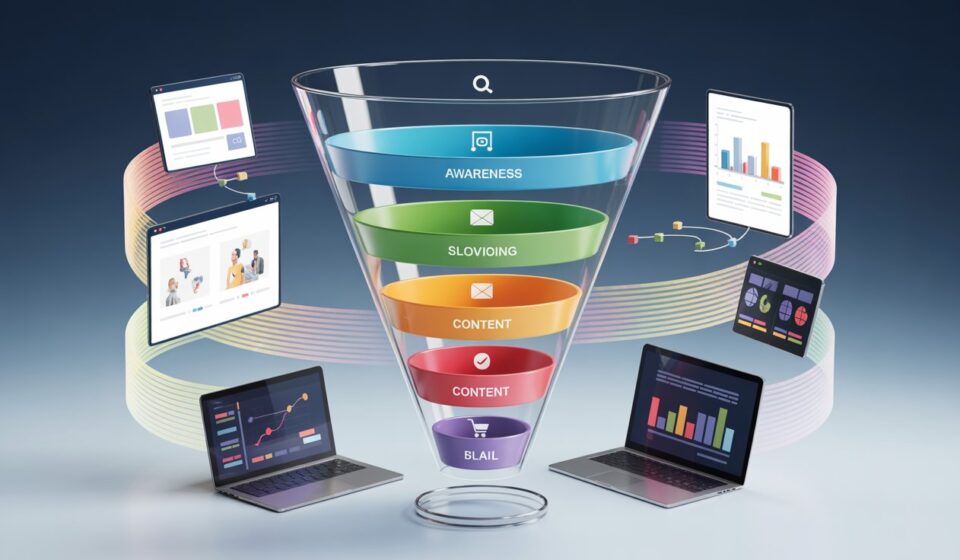

Full funnel digital marketing sounds great in theory. You attract people, nurture them, and eventually convert them into loyal customers. But in practice, many businesses struggle to make it work effectively. The reason? Small but critical mistakes across different stages of the funnel.
If your campaigns feel stuck or inconsistent, chances are you’re making one (or more) of these common mistakes in full funnel digital marketing . Let’s break them down and, more importantly, fix them.
1. Focusing Only on the Bottom of the Funnel
One of the biggest mistakes is obsessing over conversions while ignoring awareness and consideration stages. Many brands jump straight into sales-driven campaigns without building trust first.
Why it’s a problem:
People rarely buy from a brand they’ve just discovered. Without awareness and engagement, your conversion campaigns will underperform.
How to avoid it:
Balance your strategy across all stages:
- Top of funnel: Educational content, social media reach
- Middle of funnel: Email nurturing, retargeting
- Bottom of funnel: Conversion-focused ads and offers
Think of it as a journey, not a shortcut.
2. Ignoring Audience Segmentation
Treating all users the same is another costly mistake. Someone who just discovered your brand shouldn’t see the same message as someone ready to purchase.
Why it’s a problem:
Generic messaging leads to low engagement and wasted ad spend.
How to avoid it:
Segment your audience based on:
- Behavior (website visits, clicks)
- Stage in the funnel
- Interests and demographics
Then tailor your messaging accordingly. Personalization is no longer optional—it’s expected.
3. Lack of Consistent Messaging Across Channels
Your audience interacts with your brand across multiple touchpoints—social media, ads, email, website. If your messaging feels disconnected, it creates confusion.
Why it’s a problem:
Inconsistent communication weakens trust and reduces conversions.
How to avoid it:
Create a unified brand voice and message. Whether someone sees your ad or reads your email, the experience should feel seamless.
4. Not Leveraging Data Properly
Many businesses collect data but don’t actually use it. Or worse, they rely on assumptions instead of insights.
Why it’s a problem:
You end up making decisions blindly, which leads to poor campaign performance.
How to avoid it:
- Track key metrics at each stage
- Analyze user behavior regularly
- Optimize campaigns based on real data
Staying updated with the Latest Digital Trends also helps you understand what’s working in the market and adapt quickly.
5. Weak Retargeting Strategy
Retargeting is where a lot of conversions happen, yet it’s often underutilized or poorly executed.
Why it’s a problem:
You lose potential customers who were already interested in your product or service.
How to avoid it:
- Create specific retargeting campaigns for different actions (e.g., cart abandonment, page visits)
- Use compelling creatives and offers
- Avoid showing the same ad repeatedly without variation
A strong retargeting strategy can significantly boost your ROI.
6. Overlooking Content for the Middle Funnel
Brands often invest heavily in awareness and conversion but neglect the nurturing stage.
Why it’s a problem:
Users get interested but don’t get enough information to move forward.
How to avoid it:
Focus on content that builds trust:
- Case studies
- Testimonials
- Product comparisons
- Educational blogs
This is where you turn curiosity into intent.
7. Not Testing and Optimizing Campaigns
Launching a campaign and leaving it untouched is a common mistake.
Why it’s a problem:
Digital marketing is dynamic. What works today might not work tomorrow.
How to avoid it:
- Run A/B tests on creatives, headlines, and CTAs
- Continuously optimize based on performance
- Experiment with new formats and technologies like Augmented Reality in Digital Marketing to create more engaging user experiences
8. Misalignment Between Marketing and Sales
If your marketing promises one thing and your sales process delivers another, you lose trust instantly.
Why it’s a problem:
Leads drop off before converting, even after showing strong interest.
How to avoid it:
Ensure both teams are aligned on:
- Messaging
- Target audience
- Customer expectations
A smooth transition from marketing to sales is crucial for full funnel success.
Final Thoughts
Full funnel digital marketing isn’t just about running ads or creating content. It’s about guiding your audience through a complete journey—from discovery to decision and beyond.
Avoiding these common mistakes can make a significant difference in your results. Start by identifying gaps in your current strategy, fix them step by step, and keep optimizing along the way.
When done right, full funnel marketing doesn’t just drive conversions—it builds long-term relationships with your customers.